
Bangkok to ban mobile phone use during class at 437 BMA schools from May 18
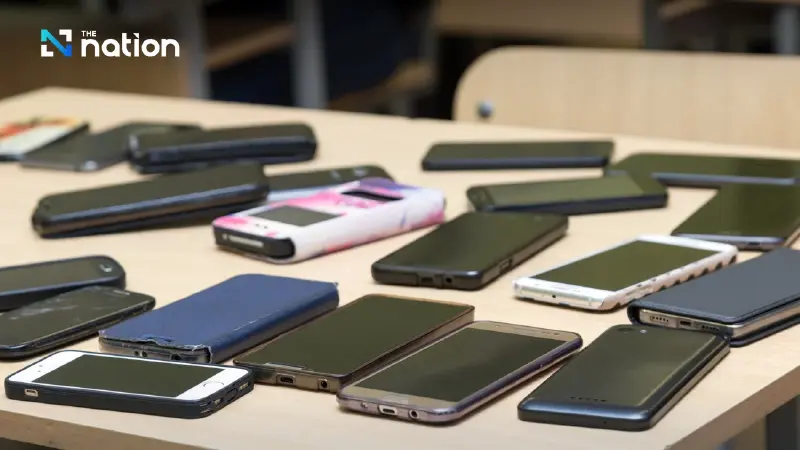


Bangkok Governor Chadchart Sittipunt has announced “Phone Off, Learning On”, restricting mobile phones and electronic devices during lessons across 437 Bangkok Metropolitan Administration schools from the next academic year, citing learning, wellbeing and cyber-safety concerns.
Bangkok Governor Chadchart Sittipunt has announced a proactive measure to regulate and oversee the use of digital devices (mobile phones and electronic devices) in schools under the Bangkok Metropolitan Administration (BMA), under the programme “Phone Off, Learning On”. The initiative aims to strengthen an effective learning environment and prevent health and behavioural impacts from excessive screen time. The announcement was made at Wat Sutharam Secondary School in Khlong San district on Friday.

Chadchart said today’s children are the first generation for whom digital technology plays a major role in daily life. The BMA sees the need to lay foundations for appropriate use, and has therefore set “digital device use control measures”, noting that many countries have similar policies. He said the key reasons for controlling these devices are that young people interact less with friends, show less interest in learning, spend more time in virtual worlds, and face higher rates of obesity due to reduced exercise.
To ensure consistent practice across all BMA schools, the measures will apply as a common standard. For subjects where digital devices are necessary, teachers will grant permission. In emergencies, parents will be able to contact schools via Line or phone numbers provided for urgent needs.

The measure will take effect from the next academic year, with implementation beginning May 18. The “Phone Off, Learning On” programme is built on three core principles:
- Purposeful learning: encouraging digital devices to be used as learning tools under teacher supervision in appropriate lessons, rather than for aimless entertainment.
- Wellbeing and social development: establishing Digital-Free Zones at certain times (such as lunchtime) or in shared areas, to encourage social interaction, exercise, and resting eyes from screens.
- Cyber safety: creating a monitoring system to prevent cyberbullying and access to inappropriate content in schools.

UNESCO GEM report: key points linked to phones and electronic devices among children
- In 2024, new terms entered the Oxford Dictionary such as “doomscrolling” and “brain-rot”, reflecting excessive social media use driven by AI algorithms.
- The UNESCO GEM 2023 report notes that technology supports learning only in certain contexts and when used appropriately, while overuse may harm learning.
- Smartphones in classrooms can disrupt learning.
- Research across 14 countries, from early childhood to higher education, found mobile phones distract students from learning.
- Even having a phone nearby and receiving notifications can distract students from the task at hand.
- After being interrupted by a phone, it can take up to 20 minutes for students to regain focus.
- Removing smartphones from schools in Belgium, Spain and the United Kingdom was found to improve learning outcomes, especially among lower-performing students.
