
Last-Mile Revolution: Bangkok's Delivery Ecosystem Is Rewriting the City's Physical Design


Bangkok's army of motorcycle delivery riders has done more than change how the city eats — it has physically restructured its malls, towers, and traffic zones in ways planners never anticipated
- Shopping malls and commercial towers have been physically altered to include dedicated delivery collection zones on ground floors and in basements to manage the high volume of motorcycle riders.
- Residential buildings are being redesigned to incorporate new features such as dedicated waiting areas for riders, secure parcel lockers, and controlled access points.
- The influx of packages is also influencing interior architectural design, leading to new residential towers with larger storage rooms, wider corridors, and integrated parcel management technology.
Bangkok's army of motorcycle delivery riders has done more than change how the city eats — it has physically restructured its malls, towers, and traffic zones in ways planners never anticipated.
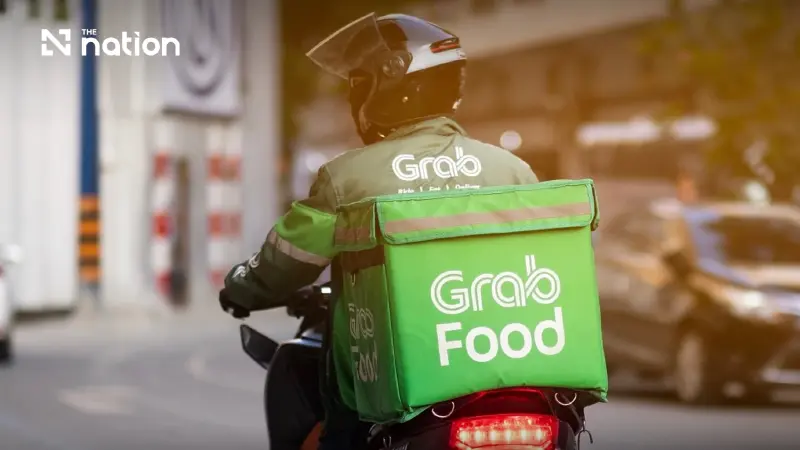
Stand at any major Bangkok intersection during the lunch hour, and the signal is unmistakable: a stream of motorcycles in colour-coded jackets — GrabFood dark green, LINE MAN light green, and foodpanda pink — weaving between lanes at controlled speed.
What began as a pandemic-era convenience has consolidated into a permanent, pervasive layer of urban infrastructure that is quietly restructuring the city's physical design.
The coronavirus pandemic of 2020 was the inflection point.
According to a study in December 2025, the online food delivery surged by 62 per cent at its 2021 peak, as lockdowns, curfews, and work-from-home policies drove residents to rely on platforms including GrabFood, LINE MAN Wongnai, foodpanda, and ShopeeFood.
By 2025, delivery had evolved beyond food: the same platforms handle parcels, groceries, pharmaceuticals, and same-hour courier services at rates that often undercut conventional logistics providers.
Grab Thailand, reinforcing its position as the country's leading ride-hailing and food delivery platform, announced a 2025 strategy under the "S.M.A.R.T" vision — encompassing Sustainability, Market Expansion, Affordability, Retention, and Technology — signalling long-term commitment to the Thai market.
The urban design implications are structural and accelerating. Bangkok's major shopping malls and commercial towers were historically designed around pedestrian foot traffic and valet parking.
The sudden arrival of thousands of motorcycle delivery riders per day required rapid, unplanned adaptation. Delivery collection zones — temporary at first, then formalised — have been added to building ground floors and basement levels.
Residential towers began incorporating dedicated rider waiting areas, parcel lockers, and controlled access points into their common areas. The interface between the delivery platform and the physical building has become a new design category.
Research from King Mongkut's University of Technology Thonburi, published in Sustainability in October 2025, found that urban mobility in Bangkok is constrained by "congestion, modal fragmentation, and gaps in First and Last Mile access" — a framework that places delivery motorcycle networks as a critical, if underplanned, component of the city's mobility ecosystem.
The study proposed a GIS-based approach to optimise coverage and connectivity between transport nodes and last-mile delivery points.

The broader Southeast Asian context matters here.
In contrast to cities where delivery services are analysed primarily through financial or technological metrics, Bangkok's particular urban form — dense, underserved by pedestrian infrastructure, highly traffic-congested — has made the motorbike delivery rider a structural problem-solver as much as a commercial operator.
The rider does not merely bring food. He navigates a city that was not designed to be navigated on two wheels at speed, and his daily improvisation is effectively mapping the gaps in Bangkok's formal planning.
The implications extend to residential interior design as well.
High-density towers in Bangkok are increasingly incorporating larger storage rooms to accommodate package volumes, wider corridors to allow trolley access, and concierge technology — including app-integrated parcel management — that would have seemed unnecessary a decade ago.
The motorcycle rider's box has become a catalyst for a quiet architectural rethink.
