
Tempeh, cassava will easily fill stomachs in future, forum hears
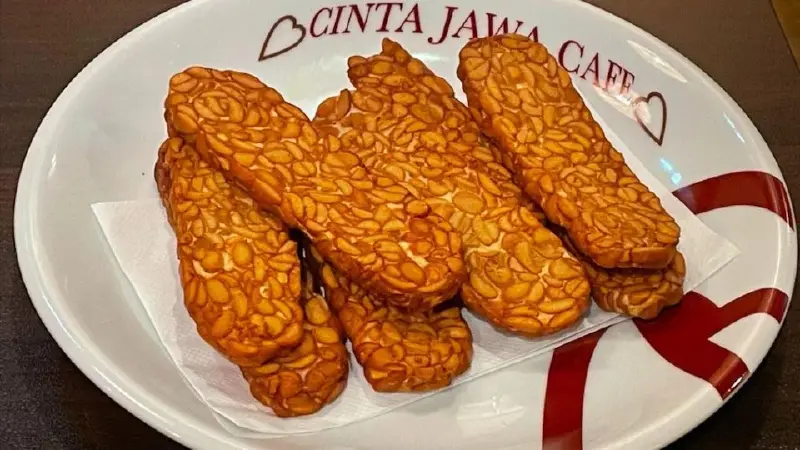


Speaking at the Global Food Security Forum held on the sidelines of the G20 Summit in Bali, Indonesian Tempeh Movement co-founder Amadeus Driando Ahnan-Winarno said tempeh could help tackle food insecurity.
The forum was organised by the United States think-tank the Atlantic Council.
“In terms of nutrition, tempeh contains similar amounts of energy, protein and iron compared to beef. It has significantly higher levels of fibre and calcium and significantly lower levels of salt and saturated fat,” Amadeus said on Sunday.
He said tempeh can produce the same amount of protein as beef, with four times less energy consumed and twelve times less emissions released, at an eight times cheaper price, which translates to a greener solution for food production.
Amadeus added that the fermentation process, which originated in Indonesia 300 years ago, was very versatile when it came to basic ingredients.
“Tempeh is a fermentation process that we can apply to almost every grain except for legumes. Here I have mombin tempeh, kidney bean tempeh, black bean tempeh and almond bean tempeh. It’s a process,” he said.
“My grandpa used to eat tempeh made using the tofu industry by-product okara in the form of tempeh gembus because he couldn’t afford the whole bean tempeh,” he added.
“Tempeh is just one out of so many foods in which the research and design process has been done by our ancestors years ago that are waiting for us to dig into as treasures, as the future foods that we need to feed the people, to feed us, to feed the planet in the most sustainable ways possible.”
As well as tempeh, the forum also addressed the importance of cassava. The subject was brought up by Indonesian Defence Minister Prabowo Subianto who said: “Cassava will prove to be the saviour crop of the world.”
Prabowo said cassava was the most efficient crop as it could produce 250,000 calories while only needing 65 cubic meters (cbm) of water per tonne, which was far less than rice, which needed 1,139cbm, wheat 954cbm and maize 815cbm.
“Indonesia can become the foremost producer of cassava. […] Cassava is now a strategic food crop,” Prabowo said, adding that the country was already producing instant noodles and pasta from cassava.
On top of that, he said, cassava could also be processed into bioethanol, alcohol, vitamins, bioplastics, glue, explosives and cattle feed while being 100% gluten-free with a low glycaemic index, high in iron and calcium.
Speaking at the forum, University of Jember’s agricultural technology professor Achmad Subagio said cassava could offer a solution to replace rice as Indonesia’s staple food.
“[Cassava] is very, very efficient in photosynthesis, two times more [efficient than] corn, and is also better than [many] other crops, including wheat,” Achmad said.
Indonesia has to feed a population of 273 million and for that, the country requires 45 million tonnes of carbohydrates per year.
Achmad added that Indonesia would not have enough land to feed so many mouths if it only relied on rice, as that would require a lot of water and fertiliser among other things.
“[We can’t grow rice on just any land] but we can grow cassava very well on sub-optimal land,” Achmad said, pointing out that with current technology, Indonesia could alter the prejudice against cassava being the “food of poor people” by mixing it with other ingredients to produce desirable food.
“I think for [the next] 10 years, we need to grow about 5 million hectares of cassava [so] we can provide a lot of food for the people,” he said, adding that the plant could also end up in the bioindustry development as it contained sugar that can be used to produce monosodium glutamate, sorbitol and lecithin.
The Jakarta Post
Asia News Network
