
Kenya hunger cult deaths reach 89 after more bodies found
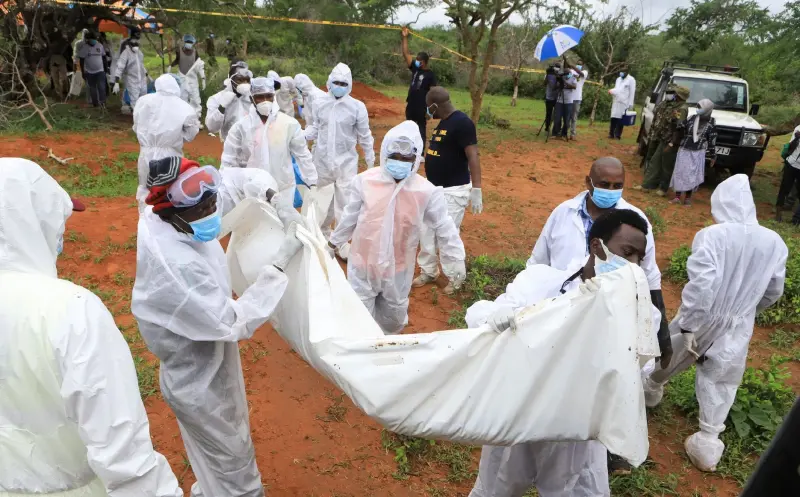


The death toll among followers of a Kenyan cult who believed they would go to heaven if they starved themselves has risen to 89, authorities said on Tuesday as more shallow graves were revealed amid ongoing exhumations in an 800-acre area of the Shakahola forest where the self-proclaimed Good News International Church was based.
Exhumation sites were cordoned off and teams of men, some wearing white protective overalls and masks, could be seen carrying away corpses wrapped in blue and white body bags. Kenya's Interior Minister Kithure Kindiki called for the group's leader to spend the rest of his life in prison and that anyone who assisted him by digging graves or disposing of bodies should also face the harshest penalties under the law.
Most of the dead were recovered from shallow graves, while a small number were found alive and emaciated but later died. Kindiki said three more people had been rescued, bringing the total number of survivors found to 34.
The death toll could rise further. The Kenyan Red Cross said more than 200 people had been reported as missing to a tracing and counselling desk it has set up at a local hospital.
Kenya's Office of the Director Of Public Prosecutions said preliminary investigations showed that the suspects might have committed crimes including murder, radicalisation and threatening public safety.
The cult's leader, Paul Mackenzie, was arrested on April 14 following a tip-off and another 14 cult members are in custody, according to police. Kenyan media have reported that Mackenzie is refusing food and water. Reuters was not able to reach any lawyer or representative for Mackenzie.
Executive Director of rights group Haki Africa said more should have been done sooner.
"So far we have received a positive response from the police but we also received information that the same information was shared with them much earlier. But the response was not very good. He said.
Shakahola resident, Chrispus Jefa, says his sister took her children and joined the cult. He told Reuters that even though they rescued her from the group, she went back to it.
"We wondered what kind of power they used." He said one of her children died and was buried in the forest. Even though she is back home now, he says she has become incapacitated.
Reuters
