
Finance Ministry insists Thai Airways won’t return to state-run model
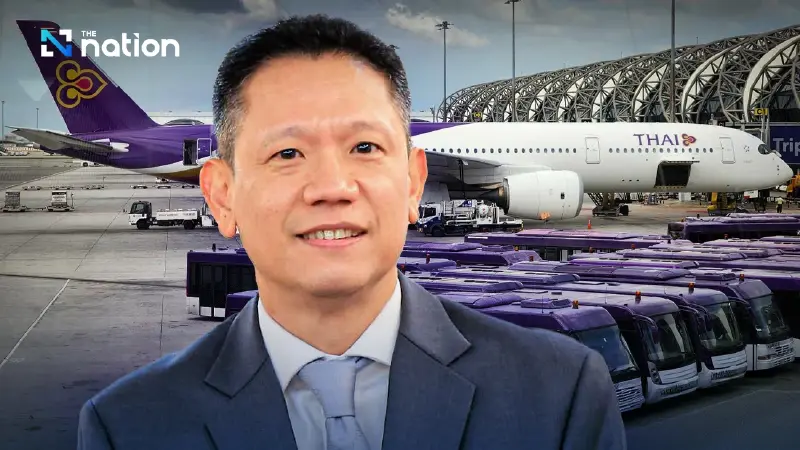


As Thai Airways’ major shareholder, the Finance Ministry plans to nominate professional candidates, mostly from the private sector, to join the airline’s board and safeguard the company’s interests.
The Ministry of Finance has dismissed speculation that Thai Airways International Plc is returning to a state-enterprise management model following reports of a proposal to appoint a new board of directors and expand its size from 11 to 15 members.
Lavaron Sangsnit, Permanent Secretary of the Finance Ministry and Chairman of Thai Airways’ Board, said on Friday (October 10) that the airline is not managed as a state enterprise and continues to operate fully as a listed company.
“Thai Airways has always been a professional, transparent company,” Lavaron said. “All board members are committed to the best interests of the airline. As long as I remain chairman, there will be no corruption; everything must be done transparently.”
He added that leaks and conflicting statements from within the boardroom could harm the company’s reputation, emphasising that internal discipline and unity were crucial to maintaining public confidence.
Board expansion ‘necessary for governance efficiency’
Lavaron explained that increasing the number of directors from 11 to 15 is necessary to enhance corporate governance and enable the airline to form additional subcommittees, which are essential for large organisations.
Currently, Thai Airways has only two board committees, the Audit Committee and the Nomination and Remuneration Committee, as required by the Stock Exchange of Thailand.
Under company rules, members of the Audit Committee must be independent directors, who are prohibited from serving on other committees.
“With only 11 directors, and seven of them already serving in key roles, there are not enough members left to form a Risk Management Committee, which is vital for a company of this scale,” Lavaron said.
He stressed that the nomination process is in line with the standards for listed companies, not those of state enterprises. Shareholders holding more than 5% of total shares may also nominate candidates for consideration.
Currently, 17 names are on the shortlist, proposed at a board meeting on October 9. Lavaron said most candidates nominated by the Finance Ministry are professionals from the private sector, with only one from the civil service.
“It’s too early to name any candidates,” he added. “The nominations will remain open until October 19 for shareholders with at least 5% equity. The final eight candidates will be selected by the Nomination Committee and presented to the board on October 23, before being submitted to the Annual General Meeting (AGM).”
Thai Airways to hold first AGM in December
Lavaron confirmed that the upcoming AGM in December will be Thai Airways’ first regular shareholders’ meeting since its restructuring, following previous Extraordinary General Meetings (EGMs) held under the rehabilitation plan.
Two key items will be on the agenda:
- Approval of directors’ remuneration, which has not been paid during the past four months pending shareholder approval; and
- Approval of the board expansion from 11 to 15 members to facilitate the formation of new subcommittees.
Lavaron reiterated that Thai Airways remains a publicly listed company, with the Finance Ministry holding a 38% stake. The government has no plan to increase its shareholding, he said, but continues to monitor the airline closely since public funds of 40–50 billion baht were injected during the rehabilitation process.
“Our responsibility is to protect public investment while ensuring the company operates under good governance and professional management,” Lavaron said.
