
Japanese confidence rebounds for 2026; 23% to expand Thai investment
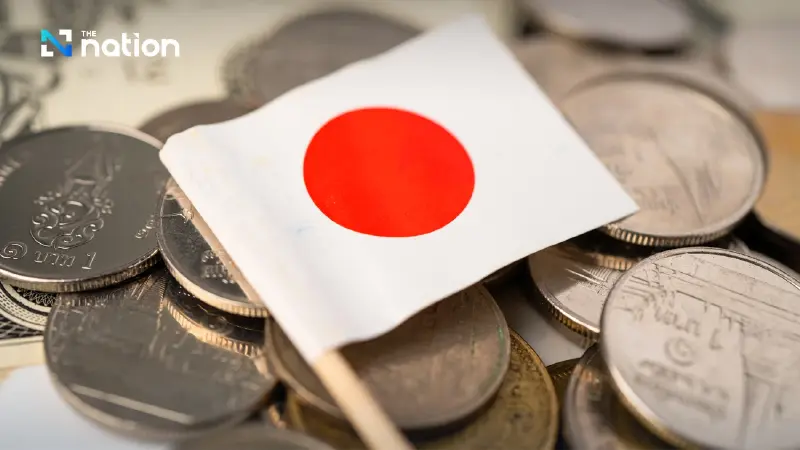


Latest survey from Japanese Chamber of Commerce, Bangkok, reveals a positive shift in Thai economic landscape, with electronics and chemical sectors leading a new wave of capital injection while investors urge government to tackle household debt.
- A survey by the Japanese Chamber of Commerce, Bangkok (JCCB) shows that Japanese business confidence in Thailand has significantly rebounded for the first half of 2026, with a key index rising to +1 from -12 in the previous period.
- Reflecting this renewed confidence, 23% of surveyed Japanese companies plan to increase their investment in Thailand in 2026, particularly in the electronics and chemical sectors.
- To maintain this positive momentum, Japanese businesses have urged the Thai government to implement economic stimulus measures, address household debt, and improve tax systems.
It is undeniable that "Japanese investment" has long served as a deeply rooted economic partner and the backbone of Thailand's industrial sector.
Recently, the Japanese Chamber of Commerce, Bangkok (JCCB), released a key index reflecting confidence in the Thai economy.
This index signals a recovery that extends beyond mere statistics; it is translating into real capital, with 23% of Japanese entrepreneurs announcing plans for additional investment, particularly in strategic sectors such as electronics and chemicals.
However, to ensure smooth economic momentum, the Japanese private sector has voiced recommendations for the current and incoming governments to accelerate economic stimulus measures.
They emphasised addressing household debt and improving tax systems to create a more favourable business environment.
This comes amidst global economic challenges and the impact of US tariffs, which most firms currently view as manageable but are already preparing for.
JCCB Reveals Japanese Business Confidence in Thai Economy is Rising
According to reports on January 27, the JCCB disclosed the results of its survey on the economic trends of Japanese joint ventures in Thailand.
The survey is conducted twice a year, with the latest iteration taking place between November 25 and December 16, 2025, receiving responses from 521 companies.
Key findings from the perspective of Japanese joint ventures in Thailand are as follows: Regarding the overall business climate reflected by the Diffusion Index (DI), the index for the first half of 2026 rose to 1.
This is a significant recovery from the second half of 2025, where the DI dropped to -12 due to factors such as slowing domestic demand, especially in automotive-related industries, and the impact of US reciprocal tax measures.
The DI for the first half of 2026 increased based on expectations of rising demand, particularly in new business segments across various industries, despite ongoing concerns regarding price competition from Chinese products.
23% of Companies Ready for Additional Investment
Regarding investment in factories and machinery, 23% of Japanese joint ventures indicated they will increase investment in 2026.
Meanwhile, 43% reported that investment would remain stable, and 19% expect a decrease.
Within the group, planning more investment, over 22% are in the electrical and electronics industry, followed by the chemical industry at 18%.
Additionally, 12% of trading companies intend to increase their investment in 2026.
On the export front, over 35% of Japanese joint ventures believe they will be able to export more in the first half of 2026, specifically in electrical and electronics, transport machinery, and chemicals.
Conversely, 45% expect exports to remain stable, while 20% anticipate a contraction during the first half of the year.
Recommendations for the Thai Government to Boost the Economy
Japanese joint ventures in Thailand have submitted several proposals to the Thai government.
Approximately 42% of entrepreneurs suggest that the government implement measures to stimulate consumption.
Furthermore, 32% recommend that the government expedite solutions for household debt.
There are also calls to improve tax refund and audit processes, such as simplifying refund procedures and addressing inconsistencies in official practices.
Additionally, the government is urged to seriously enforce measures regarding air pollution.
Praise for Government Digitalisation
Regarding areas of improvement, over 20% of Japanese joint ventures noted that the Thai government has successfully increased the use of digital technology in public sector operations.
As for the impact of the 19% US customs tariff policy, 44% of surveyed companies believe they are not yet affected.
Approximately 26% reported being affected or expecting a negative impact, while 22% are still uncertain.
The survey found that regarding countermeasures for the 19% US tariff imposed on Thailand, 54% are maintaining their current status.
Meanwhile, 22% are consulting with business partners and considering passing on costs through product and service prices, and 13% plan to expand their domestic distribution channels.
