
Thailand’s Electronics Sector Hit by Cheap Chinese Imports


The ongoing global trade war is starting to rattle Thailand’s electronics industry. An influx of low-priced Chinese products into the Thai market is raising alarms, especially for small and medium-sized enterprises (SMEs) in the supply chain. Meanwhile, major Chinese brands like Midea and TCL appear unaffected by trade tariffs and are eyeing the highly competitive air-conditioner market.
A new round of international trade tensions was triggered when the United States announced tariff hikes on imported goods from several countries. Thailand was among those affected, facing a potential 37% tariff rate effective April 9. However, the US has since postponed implementation by 90 days, creating further uncertainty. This situation has had varying degrees of impact on Thai exports, particularly in the electronics sector, where air conditioners are a major outbound product.
In 2025, the Thai air-conditioner market is expected to grow by 6%, reaching a total value of around 34.5 billion baht, according to forecasts from leading brands such as LG. This is a slowdown from the 14% growth seen the previous year, when the market was valued at 32.6 billion baht, largely due to delayed summer heat this year. Nonetheless, Thailand's air-conditioning market still holds strong potential for growth. Household penetration stands at just 43–44%, and demand in rural areas remains relatively low, indicating ample room for expansion.
Concerns Grow Over Influx of Low-Cost Chinese Goods into Thailand

Chanchai Phanthufak, General Manager of All Value Insight Data Co., Ltd., a company specialising in big data for small household appliances, expressed concern about the potential impact of a new round of trade tensions between the US and China. With the US planning to significantly raise tariffs on Chinese imports and China responding in kind with tariffs on American goods, Chinese manufacturers may increasingly look for alternative export markets, particularly in ASEAN, with Thailand seen as a key target.
Thailand’s household appliance sector is likely to face intensified competition, making it harder for local and foreign manufacturers with production bases in Thailand to compete. Domestic producers, especially SMEs operating small factories, could be severely affected, with a potential rise in factory closures.
According to the company's assessment, small household appliances such as fans, irons, rice cookers, and toasters are likely to be directly impacted. Other affected categories may include general electronics like headphones, tablets, and water purifiers, as well as home electrical products and decorative items. Currently, small appliances from China are priced about 10% lower than comparable Thai brands. With the looming tariff changes, there’s also a possibility that Chinese manufacturers may shift production bases to Thailand.
To address these challenges, Thailand should take proactive steps. This includes enforcing strict product standards to ensure imported goods meet the same requirements as locally made products, adjusting import tax structures appropriately, and imposing higher tariffs on unfairly priced low-cost imports. At the same time, support for Thai SMEs is essential, enabling better access to high-quality machinery, working capital, and e-commerce platforms to reduce production costs. Additionally, investments from China should be carefully monitored to ensure alignment with Thailand’s national development goals—such as employing local labor, fostering local technology development, and increasing value in Thailand’s supply chain.
“As for the air conditioner market, it contracted by 10–15% in the first quarter due to unexpectedly mild weather,” Chanchai added. “Going forward, brands will need to step up marketing efforts, run aggressive promotions, and offer steeper discounts to revive sales.”
Air Conditioner Market Heats Up with Fierce Price Competition as Brands Push for Sales Growth
Wiwatchai Sirithawon, Marketing Manager at MD Consumer Appliance (Thailand) Co., Ltd., the distributor of Midea products in Thailand, noted that the air conditioner market—both domestically and across the ASEAN region—is expected to become increasingly competitive. This shift is largely due to global appliance brands that had previously focused on exports now turning their attention toward developing markets in Southeast Asia.
Midea, which operates an air conditioner manufacturing plant in Thailand, continues to focus on both domestic sales and exports within ASEAN and to South America. In the US market, Midea has already established a local manufacturing presence, insulating the company from recent tariff-related trade policies.
Thailand’s air conditioner market showed signs of strong recovery during the hot season in March–April 2025. With rising temperatures, consumer demand surged, leading to a 20% year-over-year increase in the April market—a stark contrast to previous years when milder weather delayed purchases and dampened market momentum. This late-season heatwave has triggered brands to compete more aggressively on price in an effort to hit their sales targets.
In response, Midea has ramped up its marketing efforts across both online and offline channels, including prominent billboard campaigns in key urban areas. These initiatives have paid off—Midea’s air conditioner sales have doubled, achieving the highest growth rate in the past five years.
TCL Sees 35% Sales Growth, Focuses on Value and Energy Efficiency

Gary Zhao, Managing Director of TCL Electronics (Thailand) Co., Ltd., offered a slightly different outlook. He acknowledged that Thailand's economic slowdown, coupled with waning consumer confidence and volatility in financial markets, has shifted consumer focus toward high-value, cost-effective home appliances.
TCL, which imports all its air conditioners from China and does not operate a local factory in Thailand, has remained unaffected by trade tariffs. The brand has prioritised value-for-money products, competitive promotions, and energy-saving technologies to appeal to budget-conscious consumers.
As a result, TCL anticipates robust growth in 2025, projecting total air conditioner sales of 500,000 units, equivalent to approximately 5 billion baht in revenue. This would represent a 35% increase compared to 2024.
Power Mall Highlights Thailand as One of the World’s Most Price-Competitive Markets
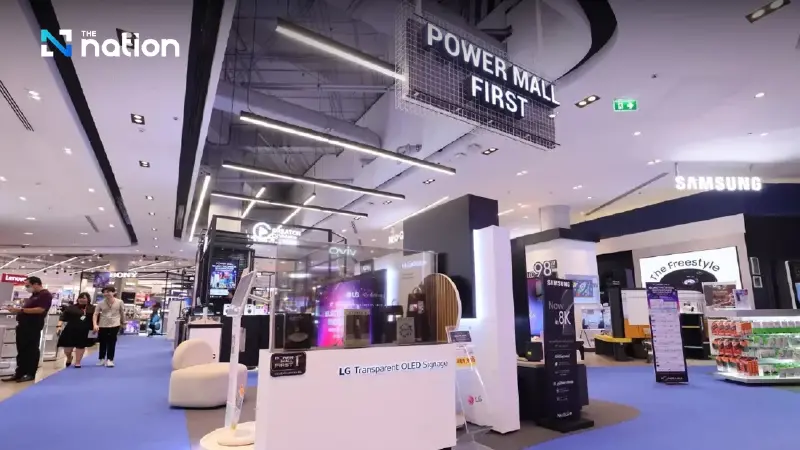
According to Ratchata Suthapatthanon, Chief Merchandising Officer of Power Mall under The Mall Group Co., Ltd., Thailand remains one of the most competitive markets in the world in terms of pricing, particularly in the urban electrical appliances sector. He explained that global trade tensions and rising tariffs—especially those imposed by the United States—have had indirect effects on Thailand. These impacts have contributed to a global economic slowdown, affecting Thai consumers' confidence and spending behaviour. As a result, businesses across sectors are feeling the ripple effects.
Thailand’s electrical appliances market has long been known for fierce price competition. Its strategic importance has led many global brands to establish major production bases and regional headquarters in the country. "Thailand is one of the markets with the lowest prices for electrical appliances globally. This is because many brands have set up manufacturing facilities here, enabling lower pricing strategies and intensifying ongoing price competition," Ratchata said.
Despite uncertainty in the second half of the year, such as the recent major earthquake that significantly impacted Thailand, and the latest news about potential US tariff hikes, Power Mall’s electrical appliance segment has shown steady, if not dramatic, growth. To navigate these unpredictable factors, the company is preparing proactive risk management plans. This includes a strong focus on cost control to ensure sustainable and efficient business expansion throughout the second half of 2025.
