
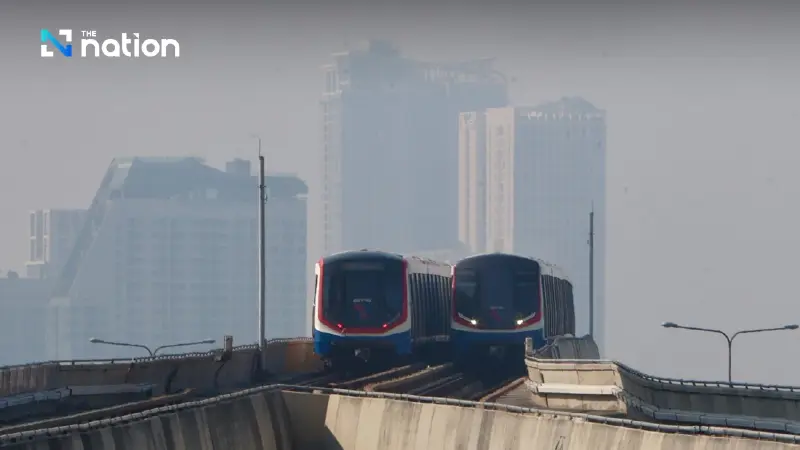
Bangkok’s PM2.5 rises above standard, orange-level alert citywide


Play
Widespread PM2.5 exceedances were recorded across Bangkok, with several central districts seeing the highest concentrations and health warnings issued for both the public and at-risk groups.
- Bangkok has issued a citywide orange-level alert due to high levels of PM2.5 air pollution.
- The average PM2.5 reading across the city was 48.2 µg/m³, which is above the standard of 37.5 µg/m³.
- The current air quality is categorized as "starting to affect health," with the Pathum Wan district recording the highest pollution level at 72.8 µg/m³.
- Residents are advised to wear PM2.5 masks when outdoors and limit strenuous activities, especially at-risk groups.
The Bangkok Air Quality Information Centre reported an orange-level air-quality situation across Bangkok at 7am on Friday (January 2) with fine particulate matter (PM2.5) exceeding the city standard in many areas.
The citywide average PM2.5 reading was 48.2 µg/m³, above the standard of 37.5 µg/m³, placing overall air quality in the category of “starting to affect health.”
Highest PM2.5 readings by district
- Pathum Wan: 72.8 µg/m³
- Bang Rak: 67.6 µg/m³
- Sathon: 64.1 µg/m³
- Chatuchak: 61.7 µg/m³
- Bang Sue: 58.4 µg/m³
- Samphanthawong: 56.4 µg/m³
- Bang Khun Thian: 53.4 µg/m³
- Khlong Sam Wa: 53.0 µg/m³
- Khlong Toei: 52.7 µg/m³
- Bang Phlat: 52.1 µg/m³
- Bangkok Noi: 51.9 µg/m³
- Bang Kho Laem: 51.9 µg/m³
Air quality across six Bangkok zones
- North Bangkok: 40.0–61.7 µg/m³
- East Bangkok: 37.8–53.0 µg/m³
- Central Bangkok: 38.4–56.4 µg/m³
- South Bangkok: 38.9–72.8 µg/m³
- North Thon Buri: 42.2–52.1 µg/m³
- South Thon Buri: 44.2–53.4 µg/m³
The centre said PM2.5 levels were expected to ease, but overall air quality remained at a level beginning to affect health.

Health advice for orange-level air quality
General public
- Wear protection such as a PM2.5 mask whenever outdoors.
- Limit time spent on strenuous outdoor activities or exercise.
- Watch for symptoms such as coughing, breathing difficulty, or eye irritation.
At-risk groups
- Wear protection such as a PM2.5 mask whenever outdoors.
- Avoid strenuous outdoor activities or exercise.
- Follow medical advice, and seek medical attention promptly if symptoms occur.
