
Thailand rebrands hot springs into Asian wellness hub destinations
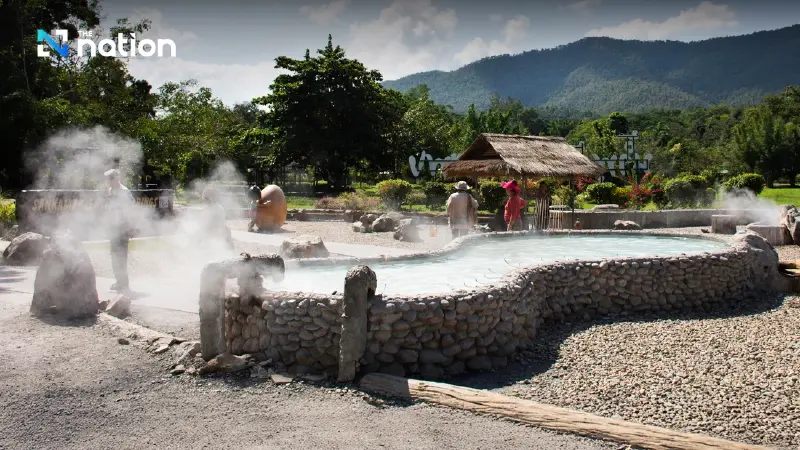


A draft standard will rank wellness hot springs from natural sites to five-star destinations, integrating Thai medicine, local food and herbs.
- Thailand is rebranding its 110-118 hot springs under the “Thai Wellness Destination: Namphu Ron” project to transform them from leisure spots into integrated health service destinations and establish the country as an "Asian Wellness Namphu Ron Hub."
- A new manual has been drafted to standardize the hot springs, creating a four-tier assessment system (from Natural to Excellence Level) to ensure service quality, safety, and international competitiveness.
- The rebranded wellness model is uniquely Thai, integrating traditional medicine, local herbs, and cuisine to create holistic health programs that focus on the "six sense bases" (eye, ear, nose, tongue, body, and mind).
- This initiative is expected to boost Thailand's wellness economy by increasing tourism revenue by 15-20% within five years and creating up to 10,000 jobs in local communities.
Thailand is turning “assets beneath the ground” into an “economic treasure” by rebranding around 110-118 hot springs nationwide as a key mechanism for driving the economy and public wellbeing.
Under the “Thai Wellness Destination: Namphu Ron” project (namphu ron means “hot springs” in Thai), the focus is on moving from general leisure attractions to integrated health service systems with international standards and a distinctive Thai identity.
The aim is to push Thailand towards becoming a global centre for wellness tourism and to create a new image for the country as an “Asian Wellness Namphu Ron Hub”.
However, past development has still lacked clear central standards and the systematic integration of health knowledge.

Five-star wellness hot springs
The Department of Thai Traditional and Alternative Medicine has therefore prepared the draft “Manual on Standards for the Assessment and Development of Thailand’s Wellness Hot Springs” to serve as a framework for upgrading service quality, strengthening confidence in safety among service users, and preserving Thai wisdom through innovation and international standards, to create a Thai wellness experience that is distinctive on the global stage. Explore Thailand’s wellness destinations.
The scope of the assessment criteria for the “wellness hot spring site standard” covers operations from potential analysis, quality assessment and development of service components to the upgrading of sites into standardised wellness tourism destinations that can compete internationally.
It covers seven key areas:
- Assessment of hot spring resources and related facilities.
- Assessment of safety, sanitation and water quality.
- Assessment of personnel and health service systems.
- Design of health service processes and holistic user experiences, covering the concept of the six sense bases.
- Integration of knowledge in Thai traditional and alternative medicine, including local Thai cuisine, herbs and Thai treatments.
- Management of hot spring sites in terms of sustainability and the creation of a Thai wellness identity.
- Development of products and services related to wellness tourism.
The assessment across all seven criteria will divide wellness hot springs into four levels.
- Level 1, natural hot spring sites, or Natural Namphu Ron, refers to sites that have not yet clearly developed health services or have not yet met overall wellness standards. This reflects the initial potential of areas that can be further developed in the future.
- Level 2, basic wellness hot spring sites, or Thai Wellness Destination: Namphu Ron – Basic Level, covers 3-star sites that meet basic standards, can provide initial health services, and have begun applying elements of Thai traditional and alternative medicine or health promotion in their services.
- Level 3, advanced wellness hot spring sites, or Thai Wellness Destination: Namphu Ron – Advanced Level, covers 4-star sites with systematic development, a clear ability to integrate health knowledge into services, and readiness to be upgraded into wellness tourism destinations.
- Level 4, destination-level wellness hot spring sites, or Thai Wellness Destination: Namphu Ron – Excellence Level, covers 5-star sites with high potential in every dimension. They can be developed into quality health destinations at national and international levels, with services focused on concrete health outcomes and wellness experiences.
Therapy reaching the “six sense bases”
Dr Pongsadhorn Pokpermdee, director-general of the Department of Thai Traditional and Alternative Medicine, told Bangkokbiznews that the heart of upgrading wellness hot springs was the concrete integration of Thai traditional medical wisdom with natural mineral water resources, with three pillars at the centre of service design: local Thai cuisine, Thai herbs and Thai treatments.
Upgrading hot springs under this standard will not be merely about soaking in water for traditional relaxation.
It will create holistic health programmes covering physical, mental and emotional dimensions, with experiences designed through the “six sense bases”: eye, ear, nose, tongue, body and mind.
This is intended to help service users achieve real health outcomes, such as using suitable temperatures and durations in line with hydrotherapy principles, using herbs in steaming or compress treatments to enhance health care or treatment, and providing local Thai cuisine adjusted to balance a person’s constitutional element.
In terms of health impact, developing hot springs into centres for systematic preventive and rehabilitative health care includes health screening before users receive services and personalised advice from specialised personnel.
The expected results are to help improve people’s quality of life, reduce stress and promote appropriate long-term health behaviour, in line with global health care trends that emphasise restoring balance in life and preventing chronic non-communicable diseases (NCDs).
Economic figures to watch
In terms of economic momentum, upgrading wellness hot springs is seen as an important opportunity to generate revenue for the country and stimulate the grassroots economy.
Based on 2023 data, Thailand’s wellness economy was worth as much as THB1.4 trillion, with wellness tourism generating more than THB419 billion, while the Thai wellness market grew by 28.4% within a single year and was worth more than US$40.5 billion in total.
Developing “hot springs” to international standards is forecast to help increase added economic value and wellness tourism revenue by 15-20% within five years.
It is also expected to create more than 5,000-10,000 jobs in local communities through the development of entrepreneurs and wellness personnel nationwide.
When compared with international hot spring development, the model reflects diverse approaches to value creation and management according to each country’s context.
Japan, for example, places importance on preserving cultural identity alongside service standards, with onsen culture systematically linked to lifestyles, health and relaxation.
European countries such as Germany and Hungary, meanwhile, have developed hot springs in a therapeutic medical model, integrating them with public health systems and strict certification standards.
“Thailand is creating a new standard led by Thai identity and wisdom, setting it apart from Japanese onsen or Europe’s therapeutic medical hot spring model. It will enhance Thailand’s competitiveness in the global market and attract tourists, with Thailand positioned as an Asian Wellness Namphu Ron Hub.”
The development of “wellness hot springs” under the “Thai Wellness Destination: Namphu Ron” standard is therefore not merely a tourism site development project, but a strategy to turn natural resources into economic and health assets.

