
The Gilded Bean: How Thailand’s GI Revolution is Transforming Local Terroir into Global Luxury
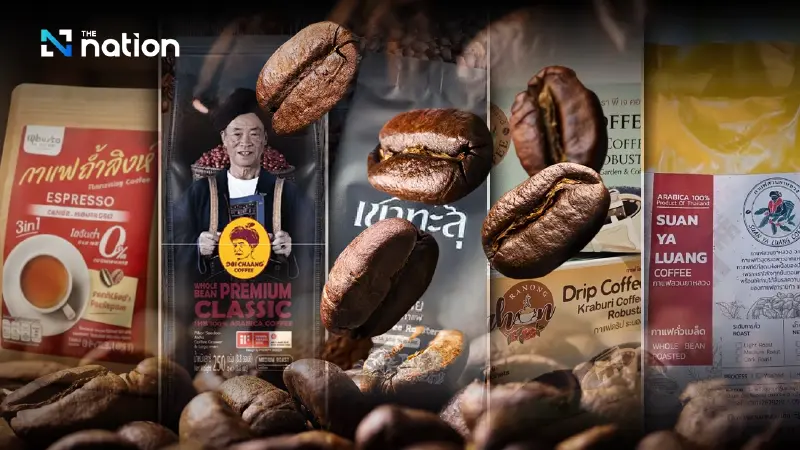


Thailand’s premium GI coffee reached a 1.49-billion-baht milestone in 2025, blending unique terroir and folk wisdom into high-value intellectual property.
Thailand’s coffee landscape is being rewritten. Once seen mainly as a local staple or bulk commodity, Thai coffee is evolving into a globally recognised premium product. A major driver is the Geographical Indication (GI) framework—GI is a form of intellectual property protection that identifies goods as originating in a specific place, where their quality, reputation, or characteristics are essentially linked to that origin. By tying a product’s identity to its geography, the Department of Intellectual Property (DIP) is helping protect cultural heritage while repositioning agricultural output as high-value intellectual property with stronger market appeal.

This strategic pivot reached a historic milestone in 2025. According to DIP data, sales of GI-registered coffee products surged to 1.497 billion baht. This figure represents more than a fiscal triumph; it is a successful synthesis of "folk wisdom" and rigorous modern standards. The economic success of the sector is now inextricably linked to the "terroir"—the unique environmental soul—of Thailand’s diverse provinces, moving the needle from volume-based farming to identity-driven commerce.
The Terroir of Wisdom: Defining Thai GI Coffee
The GI framework is the cornerstone of Thailand’s strategy to protect the local farming know-how that differentiates its beans from mass-market alternatives. Unlike generic blends, a GI coffee is a sensory map of its origin, dictated by precise altitudes and micro-climates. To achieve this prestigious status, a Thai coffee must stand upon four essential pillars:
- Geographic Specifics: Strict adherence to defined boundaries, such as the 1,000–1,700 metre ranges for Northern Arabica or the specific coastal plains of Ranong—the largest Robusta producer in Thailand’s Andaman-side South.
- Environmental Nuances: The influence of specific conditions, including mineral-heavy soils enriched by natural bat guano and the unique humidity of the southern limestone foothills.
- Folk Wisdom: Generational techniques in cultivation, bespoke fermentation processes, and meticulous hand-sorting that preserve the "soul" of the bean.
- Standardised Excellence: Rigorous quality control overseen by the DIP. Consumers can verify authenticity via the DIP certification logo or the department’s 1368 Hotline, ensuring every gram meets international expectations.

The "Big Five": Profiles in Premium Excellence
The "Big Five" GI brands have fundamentally redefined the value proposition for Thai growers. Most notably, we are witnessing a "Robusta Renaissance." Traditionally viewed as a filler bean, varieties from Ranong and Chumphon are now commanding luxury prices that rival high-altitude Arabicas, with Ranong seeing a staggering 7.5-fold price increase. Collectively, these five products accounted for 1.318 billion baht of the 2025 revenue.

The Excellence Matrix: Top 5 Thai GI Coffees
|
|
|
|
|
|
|
|
|
|
|
|
|
|
|
|
|
|
|
|
|
|
|
|
|
|
|
|
|
|
Cultural Innovation: The Art of the Thai Blend
The value of the Thai bean is further enhanced by how it is served. Through "Cultural Innovation," local baristas integrate indigenous ingredients into coffee preparation, serving as a quick big win for market differentiation. This practice turns a morning cup into a narrative of Thai biodiversity.

The "Thai Touch" utilizes distinct local resources:
- Herbs & Spice: Pandan for a mellow aroma, Cardamom for complexity, and Ginger for a refreshing zing.
- Botanicals: Butterfly Pea and the Siam Tulip (Dok Krachiao), which provide delicate floral notes and striking visual appeal.
- Fruits: Makham Pom (Indian Gooseberry) and the Bengal Currant (Carissa carandas), which offer a bright, acidic contrast to the coffee’s natural bitterness.
This creativity ensures that Thai coffee remains a unique cultural signature in a crowded global specialty market.

A Sustainable Future in Every Cup
The success of the GI programme represents a tectonic shift in Thailand’s agricultural outlook. By elevating coffee from a commodity to a premium brand, the Department of Intellectual Property is directly strengthening farmer livelihoods and local resilience.
Aligned with the Ministry of Commerce’s vision, the focus has shifted to quality over quantity to ensure sustainable incomes. With international recognitions already secured in the EU and Japan for varieties like Doi Chang, Thailand is cementing its position as a global leader in specialty coffee. The future of the kingdom’s "liquid gold" is bright, sophisticated, and unmistakably Thai.
SOURCE: www.thailand.go.th
