
Soft power in Japanese movies: The expert vs the loser


Tickets to the Japanese Film Festival held in Bangkok from February 10-19 were sold out despite each of the 10 films being screened 3-4 times throughout the event. The festival now moves to Chiang Mai on February 25-26.
The audience turnout proves that Japanese films enjoy a greater appeal in Thailand compared to other foreign films. Besides Thai cinephiles, who always show up at every major film festival, the event also saw Japanese expats in Thailand bringing their families to see films that remind them of their homeland.
The festival is a collaboration between The Japan Foundation Bangkok, House Samyan Cinema and Dude, Movie with support from the Embassy of Japan and the Japanese Association in Thailand.
The festival aims to present Japanese culture to foreigners as well as promote Japan’s tourism. After each round of screening, each participant was given a questionnaire with questions like: “Do you understand Japanese culture better after seeing the film?” and “Does the film make you want to visit Japan?”
After seeing the clean, tidy city atmosphere, a peaceful society and the delicious cuisine presented in the film, I believe everyone will answer “yes” to the second question. My friends were even amazed, and felt a little bit weird, that even a murder-suspense film is able to attract potential tourists.
This is truly the magic of soft power!
However, what make Japanese films unique are not merely atmosphere and foods. Two characteristics that are rarely found in other foreign films are Japanese people’s idiosyncrasies when they are surprised, which might seem ridiculous to foreigners, and their notion of cheering themselves or others to do the best they can. You can expect to hear the phrase “Ganbatte Ne”, which means “Keep it up!” or “Do your best!” in almost all Japanese films.
It has been said that Japan’s movie industry has been focusing on communicating with domestic viewers. After all, it’s one of the few countries where local films are able to outperform Hollywood blockbusters. This is the reason why some of the portrayed cultures in Japanese films are not geared towards foreign audiences. The difference is huge when compared to Japan’s neighbour, South Korea, whose films aim primarily to add international elements to attract foreign viewers.
Although the trend of Japanese films is starting to change in later years due to pressure from international rivals, forcing directors to find ways to capture foreign viewers’ interest, the long standing culture of “Japanese viewers first” is still present in most Japanese films nowadays.

The expert
Japanese directors are experts when it comes to portraying the country’s sub-culture in the films. “Happy Flight” (Shinobu Yaguchi, 2008) hilariously tells a story of havoc at an airport and on an aeroplane, caused by a man firing a bird repellent gun near the runway. “BL Metamorphosis” (Shunsuke Kariyama, 2022), portrays the unlikely friendship of a high-school girl and an older widow, who share an interest in homo-erotic comic books or BL (boy love). The details in these movies help those who are not familiar with these sub-cultures to learn more about Japan while enjoying the story with greater understanding.
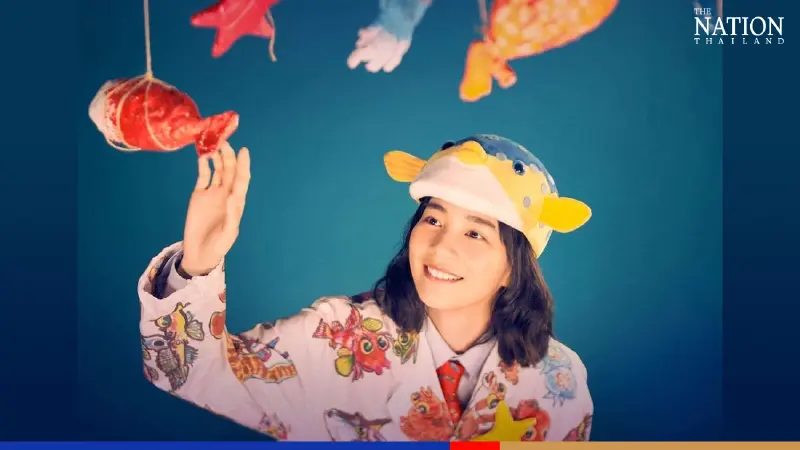
One of the most outstanding feature films in the Japanese Film Festival 2023 was “The Fish Tale” (2022) by director Shunichi Okada, who is already famous in Thailand for hit films like “A Story of Yonosuke” (2013), “Mohican Comes Home” (2016), and “The Chef of South Polar” (2009).
Okada is a master of crafting natural-looking comedic scenes that always draw laughter from viewers. In “The Fish Tale”, he tells the story of Mibou (Nounen Rena), a girl whose interest in fish is revealed at young age. As a kid, she would visit local aquariums and stay until closing time. She also loves eating fish and drawing them from memory and from books that she reads, then posts the pictures in school newspapers and on notice boards. This leads to her hilarious encounter with a local delinquent gang, who later give in to her nerdy love for fish and her willingness to share freshly caught fish with them.
As the movie progresses to act 2, Mibou graduates from high school with no clear goal in life, except for her interest in fish that seems to be growing. She tries getting jobs related to her aquatic friends, from being an aquarium staff, a seafood cook, and a fish tank decorator at a dental clinic. Without any proper experience, she ends up getting fired and eventually ends up with a part-time job at a local pet shop.
In the conflict resolution phase, the movie introduces the “Ganbatte Ne” notion, a Japanese belief that everything can be achieved through sheer endeavour and dedication, coupled with the willingness to retry no matter how many times you failed. Mibou’s childhood friend Socho (Hayato Isomura), who is working in the TV business, invites her to demonstrate her expertise in fish in a TV show. Mibou’s pure and refreshing personality as well as her exceptional fish knowledge eventually capture the audience’s hearts.
The film concludes with the implicit message that if you dedicate yourself to something, you will eventually become an expert, and the world will see it and give you the opportunity to shine. This is a very Japanese way of thinking, and it does not surprise me why Japan has so many TV shows similar to “TV Champion”, which rewards participants who are experts in any professional or daily-life subjects.
Non-Japanese viewers may compare this notion to the “American Dream” that has become a central theme of many Hollywood films. Some might question whether this is how the real world works or is it just a fictional account?
Whether intentional or not, it is undeniable that the “Ganbatte Ne” notion is one of the factors that has helped shape the landscape of Japan’s soft power.

The Loser
While “The Fish Tale” celebrates a person’s dedication to becoming an expert, another Japanese film featured in the festival swims in the opposite direction.
“Blue” (2021) by director Keisuke Yoshida tells a story of three boxers who are always in a blue corner, which is traditionally assigned to a challenger and never a champion.
Urita (Kenichi Matsuyama) is a veteran boxer who is an expert in fight analysis but has an unimpressive career record of 2 wins and 8 losses. Ogawa (Masahiro Higashide) is the club’s No. 1 boxer who is just diagnosed with deteriorating brain symptoms after being injured in a fight. Lastly, Narazaki (Tokio Emoto) is a newbie who enters the sport because he loves the cool boxing stance shown in his favourite comic series “Fighting Spirit” (by Joji Morikawa).
“Blue” is worlds apart from traditional sport-themed films that usually focus on a character’s journey towards victory, either in terms of match outcome or other achievements – eg. Rocky winning the audience’s hearts despite losing the match against a former heavyweight champion.
In “Blue”, the three boxers experience nothing but failure in achieving the target they set their eyes on. Despite his superior insights on the sport, members in the club avoid sparring with Urita, while others doubt whether his advice to new boxers could actually lead to victory. With his self-esteem undermined, Urita finally hangs up his gloves and leaves the club for good.
Ogawa, who is on track to be Japan’s champion, is now suffering from a brain condition that makes him forget things; he’s unable to balance himself on a bike and in the ring. The movie shows the price that boxers have to pay to be on the path to a championship, and most of the time the price is too heavy with dedication alone.
Narazaki is the only boxer who maintains a positive outlook towards the sport, despite narrowly losing his first professional fight. As someone who used to doubt Urita, Narazaki’s loss has made him realise that he wants to try harder, so that he could experience a victory at least once in his life.
As the curtains came down, I had a chat with staffers of Japan Foundation, organiser of the event. They told me that most Japanese viewers were not impressed with “Blue”. The Japanese staffers were surprised that I liked the film, and that it drew several positive reviews among Thai film buffs.
I believe Japanese people could not connect with “Blue” because it represents a notion opposite to the “Ganbatte Ne” concept that all endeavours will be rewarded in the end. The film, however, received a favourable response among non-Japanese viewers, including Thais, who are not predominated by the “Ganbatte Ne” idea.
After watching “Blue”, I realised that not all people can be Ippo Makunouchi, the protagonist of “Fighting Spirit”, who eventually becomes Japan’s featherweight champion. Many of us are merely supporting characters who experience both wins and losses in life, while some could end up with nothing but failure no matter how hard they try.
