
Korean Templestay: Where Tradition Meets Modernity
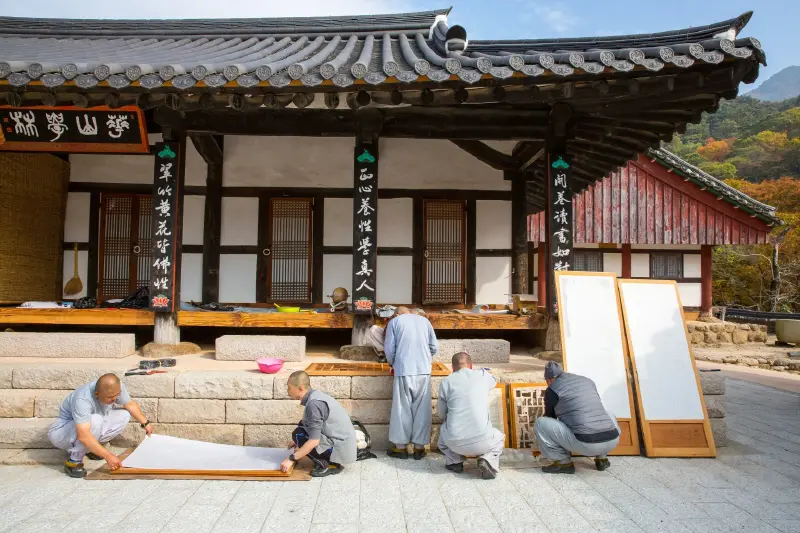


During the 2023-2024 Visit Korea period, Templestay announced that it will continue next year under the name of Special Templestay at major temples in English for foreigners.
Temples embody the living essence of Korea's 1700-year-old Buddhist tradition, offering an experience of the past in the present moment. Templestay is a program that allows visitors to stay within temples and immerse themselves in the temple's history and traditions.
Temples are not static relics of history but vibrant places where monks continue to live, eat, sleep, and practice just as their predecessors did 1700 years ago.
While times have changed, traditions have persevered through the ages. To preserve and pass on the unique cultural heritage of Korean Buddhism, monks maintain and operate temples, engaging with the public. In a temple, anyone can have a chance to experience the lives of monks spanning from the past to the present.

A day in a temple is bustling. Monks awaken all living things with the striking of the wooden handbell (Mok-tak), a ritual known as Doryangseok, at around 3 to 4 a.m., then proceed to recite Buddhist scriptures during the early morning Yebul (Buddhist ceremony), committing to follow Buddha's path to enlightenment.
Yebul occurs three times daily, and outside of these sessions, temple visitors participate in temple upkeep activities (Ulreok) or fulfil designated roles. Monks praying and dedicating themselves to meditation are part of daily temple routines.
Participants in the Templestay program typically spend one night and two days at a temple, engaging in activities akin to the monk's routines. They join in Yebul to clear their mind and body and learn the practice of 108 bae (108 prostrations) and Chamseon, or Seon meditation.
Additionally, they take part in making yeoman, and Buddhist prayer beads, or engage in conversations with monks over a cup of tea to learn about the mindset of a practitioner and find time for healing their minds.
Temple food provides a unique experience for people in modern society. Prepared healthily without chemical additives and using ingredients foraged from nature, temple cuisine reflects a dietary culture that has sustained the physical health of practitioners throughout history.
Embedded within this temple food are traditional values encapsulated as simple gratitude for everything. Modern individuals accustomed to abundant food experience gratitude towards ingredients sourced from nature through temple food, learning the principle of; moderation, consuming only what the body needs.
Fully concentrating on the act of eating is presented as a unique experience, an act of meditation where one observes and acknowledges their body state.
In this context, Templestay will be a unique program to experience when visiting Korea. For those seeking an immersion in Korea's past and present and to feel the essence of Korean
Buddhism and Templestay will be an excellent choice.
