
7 hospitals shut in border clashes; Health Ministry moves to protect patients
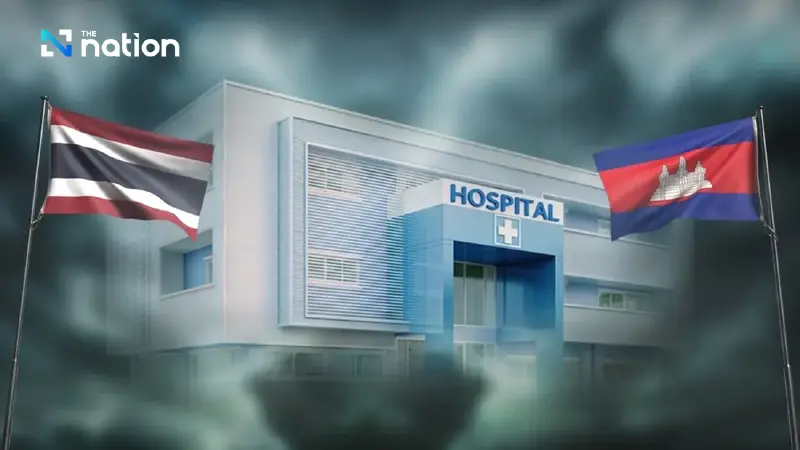


Ministry of Public Health (MOPH) evacuates over 500 patients, opens hundreds of shelters and activates more than 4,000 backup beds in Thai–Cambodian border crisis.
- Seven hospitals in high-risk border areas have temporarily suspended all services due to clashes, with an additional 12 providing only partial care.
- The Health Ministry has evacuated 534 patients from the affected zones to safer facilities, ensuring continuity of care.
- Over 4,000 hospital beds have been put on standby in safer regions to accommodate the transferred patients and any future needs.
- A broader public health response is underway for over 130,000 evacuees in shelters, involving more than 2,500 personnel providing medical and mental health support.
At the MOPH, Dr Ekachai Piensriwatchara, Deputy Permanent Secretary of the MOPH, briefed reporters on Tuesday (December 9) after a meeting chaired by Permanent Secretary Dr Somrerk Chungsaman to monitor the situation and readiness of medical and public health services following clashes along the Thai–Cambodian border.
He said that over the past 24 hours, there had been exchanges of fire at several points along the border in Ubon Ratchathani, Si Sa Ket, Surin, Buri Ram and Sa Kaeo.
The Second Army Area had warned of the risk of Cambodian forces firing weapons into Thai territory, prompting the evacuation of civilians from several districts.
283 health facilities affected, 19 hospitals disrupted
The latest assessment found that 283 health facilities under the Public Health Ministry had been affected.
Nineteen hospitals in border areas have been impacted, with 12 providing only partial services, such as limiting outpatient or inpatient care and seven forced to suspend all services temporarily in high-risk zones.
The hospitals temporarily closed in high-risk areas are:
- Ubon Ratchathani: Nam Yuen Hospital, Na Chaluai Hospital and Nam Khun Hospital
- Si Sa Ket: Kantharalak Hospital and Phusing Hospital
- Surin: Kap Choeng Hospital and Phanom Dong Rak Chalerm Phra Kiat 80th Anniversary Hospital
In addition, around 164 subdistrict health-promoting hospitals across the five provinces have been affected, with many converted into temporary shelters and support points for humanitarian operations.
Over 4,000 beds on standby, 534 patients already moved
To keep services running smoothly, the ministry has activated a patient evacuation system, moving people out of closed or high-risk hospitals to safer facilities.
So far, 534 patients have been transferred.
All patients in “red” zones have been moved to nearby hospitals with sufficient capacity in the same province or neighbouring provinces, to ensure referral systems continue to function effectively.
Ekachai said hospitals outside the immediate conflict zones have enough capacity to take extra patients, with more than 4,000 beds on standby, including both general and ICU beds.
603 shelters open, 130,000 evacuees already inside
A total of 603 evacuation centres have now been opened in seven border provinces, with capacity for more than 370,000 people.
Over 130,000 evacuees are currently sheltering there, including more than 40,000 in Si Sa Ket, over 50,000 in Surin and about 25,000 in Ubon Ratchathani.
More than 2,500 public health personnel have been deployed in rotation to provide round-the-clock services at the shelters.
Nearly 20,000 evacuees are classified as vulnerable, including older people, young children, bedridden patients, dialysis patients and people with mental health conditions.
To support them, the ministry has deployed specialist teams such as those caring for patients on continuous dialysis, bedridden patients, young children and pregnant women to ensure uninterrupted treatment.
Emergency response teams have also been mobilised, including more than 115 Advanced Life Support (ALS) ambulance teams, disease-control units and Mental Health Crisis Assessment and Treatment Team (MCATT) to assist evacuees experiencing stress or anxiety.
So far, more than 12,000 people in high-risk areas have undergone mental health screening.
Those with high stress levels, particularly in larger provinces such as Ubon Ratchathani and Si Sa Ket, are being followed up closely by MCATT, with high-risk cases referred individually to psychiatrists.
Special Environmental Health Response Team (SehRT) is also working to support overall health and hygiene in the affected communities.
One death linked to panic during evacuation
“There has been one reported death linked to the situation,” Ekachai said.
“The person experienced severe panic due to the sound of gunfire during the evacuation, then developed chest tightness, difficulty breathing and lost consciousness.
Medical teams provided full emergency care, but were unable to save the patient.
“However, there have been no reports so far of civilians injured directly by the fighting,” he added.
Ekachai stressed that evacuees do not need to worry about medical documents.
Identity verification is sufficient for health workers to access their medical records from their original hospitals via systems now activated in all seven provinces, ensuring continuous care.
He also urged people who can do so to donate blood at their nearest hospital, especially provincial hospitals in high-risk areas.
The ministry, he said, has sufficient medical and public health capacity for the current situation and will continue to monitor developments closely.
Contingency plans if hospitals are attacked
On contingency plans for hospitals in “red” zones, Ekachai said there are clear protocols to move patients out of danger immediately if any facility is attacked.
Staff are on standby 24 hours a day, with designated backup hospitals ready to receive transfers, especially critically ill patients who need ICU or general beds without delay.
Field medical units can also be set up in emergencies.
He emphasised that protecting the safety of health personnel and patients is the top priority.
The ministry is working closely with the military, which is responsible for securing evacuation routes and protecting areas where medical teams are operating, while public health staff focus on patient care.
“What we most need from the military is protection of areas around hospitals in the event of an attack, support for patient transfers, keeping evacuation routes safe, and assistance with critical infrastructure such as communications and backup power systems,” he said.
“This will ensure we can continue caring for patients even in the most high-risk situations.”
Red-zone hospitals partially open
Several hospitals in red-zone areas remain open but have reduced services, particularly outpatient care. These include:
- Si Sa Ket: Khun Han Hospital
- Surin: Prasat Hospital, Sangkha Hospital and Buached Hospital
- Buri Ram: Ban Kruat Hospital (emergency department only), Lahan Sai Hospital (emergency department only)
- Sa Kaeo: Khok Sung Hospital, Ta Phraya Hospital, Aranyaprathet Hospital and Khlong Hat Hospital all closed to both inpatients and outpatients.
