
Stop the firing, not just talk of a ceasefire: Thai foreign minister tells Cambodia
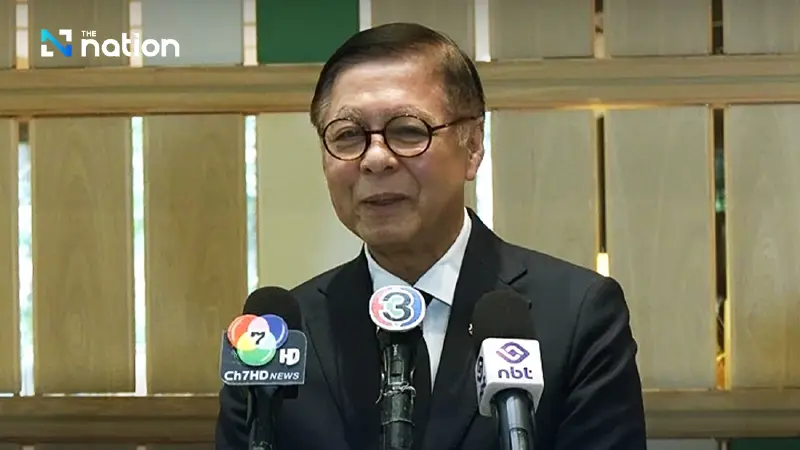


Foreign Minister Sihasak Phuangketkeow said on Sunday (December 14) that any talk of a Thailand–Cambodia ceasefire must be backed by genuine action, arguing that Cambodia has repeatedly spoken of de-escalation while continuing attacks that have killed Thai civilians.
- Thailand's Foreign Minister, Sihasak Phuangketkeow, demands that Cambodia take genuine action by stopping its attacks, not just talk about a ceasefire.
- He accuses Cambodia of hypocrisy, pointing to a "gap between its words and behaviour" where it speaks of de-escalation while continuing attacks like rocket fire that have killed Thai civilians.
- Sihasak states that progress towards peace depends on Cambodia's readiness to act, asserting that if Cambodia truly wanted a ceasefire, it would simply stop firing.
Speaking about his discussions on the border situation with Vietnam’s foreign minister, Le Hoai Trung, Sihasak said Vietnam understood what was happening and favoured a peaceful settlement and de-escalation.
He added that progress depended on Cambodia’s readiness to act, saying recent events showed a gap between its words and behaviour.
He pointed to Cambodia’s BM-21 rocket fire into Thai territory, which he said resulted in civilian deaths and multiple injuries, and questioned whether Cambodia was truly prepared to stop.
Sihasak said those urging an end to the fighting, especially the United States, needed to understand the situation as it actually stood, including how Thai people and Thailand felt about the ongoing attacks.
He also insisted Thailand’s concerns were real, including incidents involving landmines, which he said were not accidents.
If there were to be a ceasefire, he said, both sides would have to prove sincerity through concrete steps.
Asked about Malaysian Prime Minister Anwar Ibrahim’s message to Prime Minister Anutin Charnvirakul regarding a ceasefire, Sihasak said Anwar had called for an end to provocations, but had not referred to a ceasefire.
On concerns that Cambodia was trying to portray itself as the victim and whether that could put Thailand at a disadvantage, Sihasak said Thailand had consistently wanted serious talks on contentious issues to find a way out.
However, he said if Cambodia was not ready to engage, the situation would remain as it was.
He said there were effectively two paths: escalating conflict with greater losses on both sides, or peace through dialogue.
Cambodia, he said, had yet to decide which path it would take, adding that Thailand could not move towards peace alone.
Pressed on what would demonstrate Cambodia’s willingness to talk, Sihasak replied that if Cambodia truly wanted a ceasefire, it could simply stop firing, rather than speaking about a ceasefire while continuing attacks “again and again”.
On plans to bring Thai nationals back from Cambodia at a rate of up to 1,000 seats per day, Sihasak said that if departures via border checkpoints, particularly Poipet, were not possible, commercial flights could be used instead.
He said there were flights to Siem Reap, which he understood operated three times a day, and these could gradually bring Thai citizens who wished to return home back to Thailand by air.
Regarding a possible ASEAN foreign ministers’ meeting that Anwar may call, Sihasak said Thailand was ready to attend, depending on whether the meeting could be arranged and whether other countries could participate.
He added that an in-person meeting would be more effective than an online session for discussing sensitive issues in depth.
Thailand had indicated its earliest availability as Tuesday (December 16), but the date had not yet been finalised. He said the meeting might not be held in Kuala Lumpur, as Thailand had proposed Jakarta, ASEAN’s headquarters, as the venue.

On the military’s request for the Foreign Ministry to help brief the international community after the reported discovery of a notebook containing coordinates related to landmine placement by Cambodian troops, Sihasak said Thailand had raised the issue at every opportunity and in multiple forums, including at meetings linked to the Ottawa Convention (Mine Ban Treaty) in Geneva.
He said Thailand had presented statements and video material, citing multiple incidents in which Thai soldiers stepped on landmines.
Asked whether Cambodia’s renewed strikes on civilian areas warranted stronger measures beyond condemnation, Sihasak said operational decisions were for the military, which knew what to do, while diplomacy stood ready to support military actions.
He also rejected claims that Thailand was acting aggressively, saying Thailand’s stance was about protecting national interests, not adopting an unnecessarily hard line.
He argued that responding firmly on the international stage after Thai soldiers suffered severe injuries should not be seen as aggression.
