
Thai–Cambodian border scam hubs still under close watch
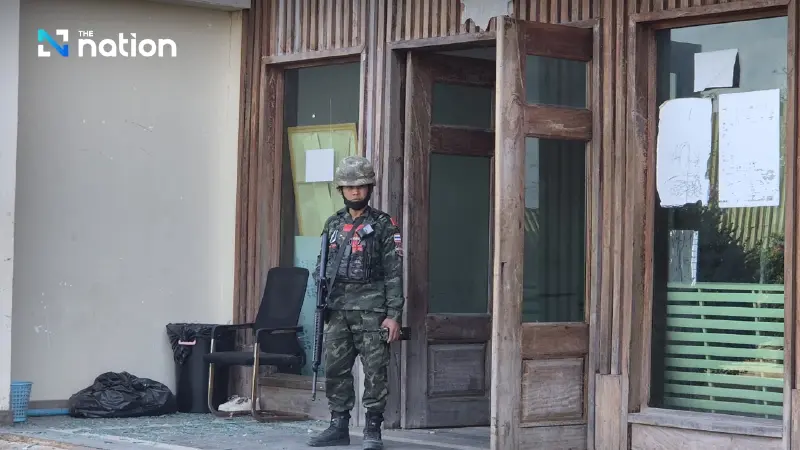


Authorities say signs of unlawful confinement and discarded passports have emerged during inspections, prompting plans for deeper cross-border cooperation and further evidence gathering.
- Thai police, in collaboration with international partners including the FBI, are closely monitoring scam operations along the Thai-Cambodian border due to their direct link to human trafficking cases.
- Authorities report that call-centre scam gangs are adapting to crackdowns by relocating their bases from Cambodia to neighboring countries or moving further inland from border areas like Poipet.
- Despite the surveillance, officials cannot confirm the scam hubs will be eliminated, as the buildings used for operations remain and there has not yet been a significant decline in cases.
- The investigation involves gathering evidence, such as discarded passports, to pursue legal action for crimes including unlawful confinement and call-centre scams.

At the Chong Chom–O'Smach checkpoint in Surin province on Monday (February 2), Pol Gen Thatchai Pitaneelaboot, Deputy Commissioner-General of the Royal Thai Police, spoke about the overall situation involving scammers along the Thai–Cambodian border.
He said his primary responsibility, as assigned by the national police chief, is to oversee human-trafficking cases.
However, this is linked to the crackdown on scam operations because Thais and other nationalities have fallen victim.
During today’s visit, the team brought in the FBI and representatives from other countries to observe, with a view to future cooperation, as the information found is connected to human trafficking, such as unlawful confinement.

This can be seen from passports found discarded in the area, and investigators must determine who these individuals are.
Evidence is also being gathered to support further legal proceedings, as the matter is linked to human trafficking and call-centre scams.
Thatchai also acknowledged that call-centre gangs have been relocating bases from Cambodia to neighbouring countries.
In the Poipet area opposite Sa Kaeo province, operations have shifted further inland, and there are continued reports of people from various countries being deceived into entering the area.
As for the pattern of scam gangs on the Cambodian side, he said it mirrors what is seen on the Myanmar side, except that in Cambodia, it is Thais who cross the border, while in Myanmar, it tends to be foreign nationals.
Asked whether scammers in the O'Smach area would disappear after the fighting, Thatchai said he could not confirm that they would be eliminated, as the buildings remain.
Any demolition would fall under the military’s responsibility.
At present, the area is under control.
The area remains under close watch, and there are not yet figures showing a significant decline in human-trafficking and scam cases.
As for the situation on February 8, election day, relevant agencies are monitoring developments.
Scam operations in the O'Smach area appear to include premises used as government offices of other countries, but not Thailand’s.
Thatchai said the site adapted for a Thai government office may instead be in Poipet.
As for whether this is linked to local or national politicians, he said no information has been found so far.
