
Korea begins dismantling Kori-1, eyes $368b global nuclear decommissioning market
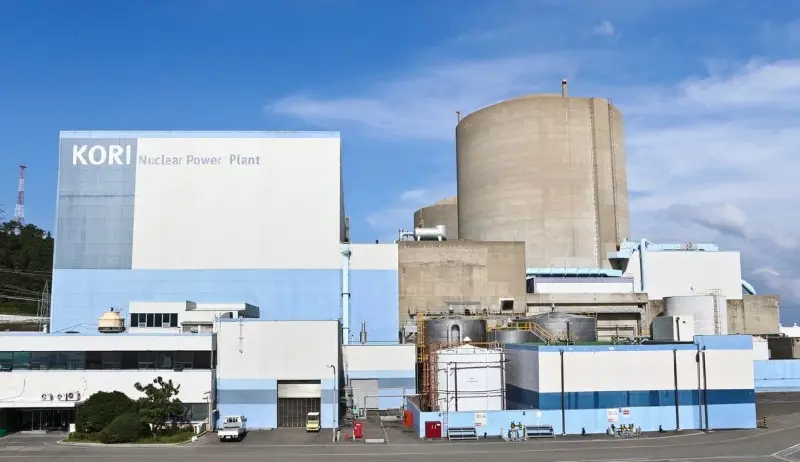


South Korea has begun dismantling its first commercial nuclear power plant, the Kori-1 reactor, marking the country's first-ever nuclear decommissioning project and paving the way for Korea to enter the 500 trillion won ($368 billion) global nuclear decommissioning market.
The Nuclear Safety and Security Commission on Thursday approved Korea Hydro & Nuclear Power’s plan for decommissioning the reactor.
Kori-1, a 595-megawatt pressurised water reactor supplied by US firm Westinghouse, is located in Busan's Gijang County. It began commercial operations in 1978 and was permanently shut down in June 2017 after nearly four decades of service.
KHNP plans to dismantle the reactor in phases over the next 12 years, with the goal of complete site restoration by 2037. It aims to remove all spent nuclear fuel by 2031 and begin site restoration by 2035.
Initial dismantling work is scheduled to begin next month, starting with nonradioactive facilities such as turbine equipment, desalination systems and outdoor tanks. The first phase is expected to take about 30 months.
The total cost of the decommissioning project is estimated at 1.71 trillion won.
Industry experts believe Korea’s first nuclear decommissioning project could serve as a springboard for entering the global market. As of May, only four countries — the US, Germany, Japan and Switzerland — have decommissioned nuclear plants, according to the NSSC. So far, 25 reactors have been dismantled: 20 in the US, three in Germany and one each in Japan and Switzerland.
Currently, 214 reactors across 22 countries have been permanently shut down and are awaiting decommissioning.
If Korea completes the Kori-1 decommissioning project, it would gain a competitive edge in the growing international market. Industry estimates suggest dismantling a single nuclear reactor costs between 750 billion and 800 billion won.
The country has already secured 96 nuclear dismantling technologies — 38 developed by the Korea Atomic Energy Research Institute and 58 by KHNP.
KHNP said it is expanding international cooperation with agencies including the UK’s Nuclear Decommissioning Authority, France’s Orano, Canada’s Kinectrics and Candu Energy and Slovakia’s Javys. The company is also training decommissioning specialists and investing in research and development.
“We will carry out the decommissioning of Kori-1 transparently and in close communication with local communities,” said KHNP CEO Whang Joo-ho.
Jo He-rim
The Phnom Penh Post
Asia News Network
