
Thailand's Oil Fund to be debt-free by 2029


Thailand projects crude oil at US$60-70 per barrel until 2026. Oil Fund debt is expected to be cleared by 2029, followed by a review of diesel and LPG price caps
- Thailand's Oil Fuel Fund is on track to be debt-free by 2029, paying down its current THB31 billion debt from a peak of over THB105 billion.
- This outlook is supported by projections of stable global oil prices, with crude oil expected to be between US$60-70 per barrel in 2026 due to slow economic recovery and oversupply.
- A new Fuel Price Crisis Management Plan for 2025-2029 is being prepared to manage future price volatility and review current price ceilings on fuels like diesel and LPG.
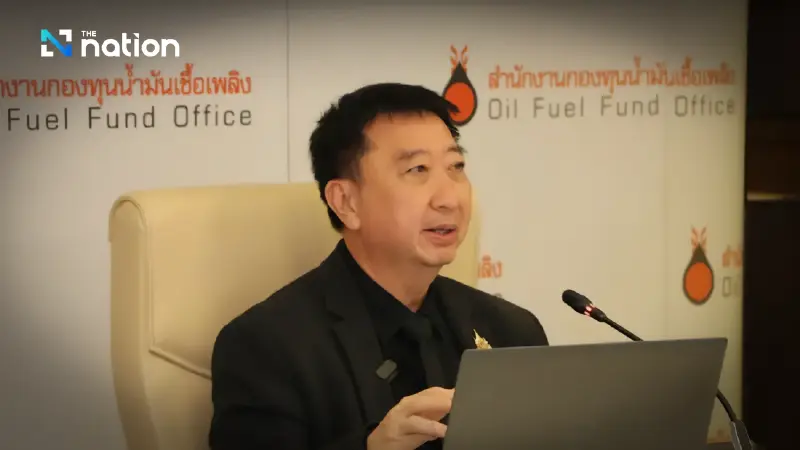
Pornchai Chirakulpaisan, Director of the Policy and Planning Office, Oil Fuel Fund Office (OFFO), disclosed on Wednesday (November 5), the outlook for global oil prices for the end of this year and 2026, stating that they are expected to remain stable.
Price Projections
End of this year: Crude oil is anticipated to be around US$70 per barrel and LPG (cooking gas) at US$548 per ton.
2026: Crude oil is projected to be between US$60-70 per barrel, and LPG is expected to range from US$460-500 per ton.
Reason: This is attributed to the slow global economic recovery, the oversupply of oil, and the ongoing conflict between Russia and Ukraine.
Debt and Fund Status
Regarding the OFFO operations plan for 2025, Pornchai stated:
The Fund currently has an outstanding loan debt of approximately THB31 billion, down from a total debt of THB105.333 billion incurred since the 2022 oil price crisis.
The Fund is currently making monthly repayments of THB1.5 to 2 billion.
The entire debt is expected to be settled by 2029 as scheduled, or possibly sooner if global prices are not overly volatile.
The current status of the Oil Fuel Fund is a deficit of THB13 billion, broken down into an oil account surplus of THB27 billion and an LPG account deficit of THB41 billion.
New Crisis Management Plan
Pornchai also mentioned that the Fund is preparing to propose a new Fuel Price Crisis Management Plan for 2025-2029, as the previous 2020-2024 plan is set to expire.
The new plan will define guidelines for managing oil and LPG prices to cope with global market volatility.
It will include a review of the current price ceilings for diesel (set at THB30 per litre) and LPG (THB423 per 15 kg), to ensure they are appropriate for the current economic conditions.
The plan will be proposed to Auttapol Rerkpiboon, the Minister of Energy, in his capacity as Chairman of Thailand's Fuel Fund Executive Committee, before being submitted to the National Energy Policy Council (NEPC) and the Cabinet.
The inability to appoint a new OFFO Director does not affect the submission of the plan, as the Fuel Fund Executive Committee is in charge of its administration.
Retail Price Management and Biofuel Subsidy
Regarding the management of retail oil prices, Auttapol has emphasised keeping prices in check to mitigate the impact on the public's cost of living, using methods like price reductions and caps. The Fund will monitor prices closely.
Whether a price reduction will be implemented for the New Year 2026 as a gift to the public is dependent on Auttapol's policy and the global market situation. Typically, oil traders maintain price caps during the New Year period.
Finally, Auttapol confirmed that the plan to cease the use of Fund money to subsidise biofuel blended into gasoline-group fuels, set for September 24, 2026, under the Oil Fuel Fund Act, remains on track.
The Fund will only use the money for subsidies during a genuine crisis, and it has already begun to collect funds for various fuel types for this purpose.
