
Thai Baht at multi-year peak piles pressure on Thai exporters
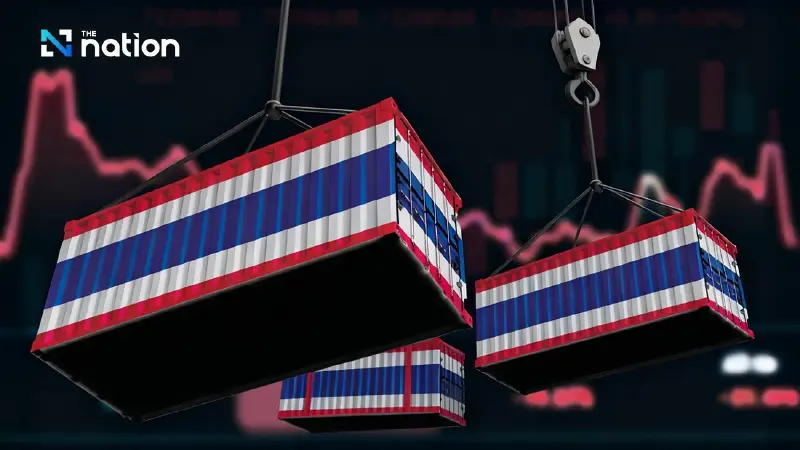


Thailand’s currency has strengthened on shifting global monetary conditions and capital inflows, prompting calls for stronger FX (Foreign Exchange) risk management as volatility remains elevated.
- The Thai Baht has strengthened to its highest level against the US dollar in over four and a half years, driven primarily by the US Federal Reserve signaling a shift towards interest rate cuts, which weakens the dollar.
- This appreciation pressures Thai exporters because most international trade is settled in US dollars, meaning they receive fewer Baht for their export earnings, which squeezes their profit margins.
- Increased foreign capital flowing into Thailand, attracted by economic stability, is also contributing to the Baht's strength.
- Business leaders are urging exporters to manage the financial risk by using hedging tools like forward contracts to lock in exchange rates and protect their income from currency volatility.
Thailand’s baht has continued to strengthen, hitting THB31.44 per US$ on Monday (December 15), its strongest level in more than four and a half years, since mid-2021, and outperforming other regional currencies.
Wisit Limluecha, vice-chairman of the Thai Chamber of Commerce, said global monetary policy was entering a new period of volatility as the United States shifted its policy direction, sending ripples through financial markets and world trade.
He said the US dollar had weakened notably after the Federal Reserve (Fed), which had maintained a tight policy and raised interest rates in the post-Covid period to curb inflation, signalled a clearer pivot towards gradual rate cuts.
He attributed the shift to US inflation easing back into the target range, prompting the Fed to place more emphasis on supporting growth amid concerns that prolonged tight policy could trigger a sharper slowdown.
The prospect of lower rates, he said, amounted to monetary easing that pushed the dollar down immediately.
Markets are also watching whether the Fed could move into a broader easing stance, though it remains unclear whether quantitative easing would return after a period of quantitative tightening.
Wisit stressed that despite the dollar’s recent weakness, it remains the main currency in global trade, meaning US policy volatility is hard for other countries to avoid.
He said most international trade is still priced and settled in dollars, even when the US is not directly involved, largely because of familiarity and convenience in the global financial system.
He added that many countries’ financial systems are still not set up for widespread direct use of local currencies in cross-border trade, forcing transactions to be converted through the dollar.
That, he said, raises FX conversion costs through multiple layers of fees, and makes changes in US interest-rate policy and the dollar’s direction quickly feed into prices, trade costs and competitiveness.
While the interest-rate outlook may keep the dollar softer for a time, Wisit said currency markets remain uncertain because exchange rates also depend on US economic data such as employment, GDP growth and recession risks, with fresh releases potentially driving continued swings.
He said currency volatility remains a major challenge for Thai businesses, especially exporters and importers that still rely heavily on the dollar, because sudden moves can distort pricing, squeeze margins, and complicate planning.
As a practical response, he urged firms to focus on managing risk rather than trying to profit from currency moves, recommending hedging tools such as forward contracts to lock in exchange rates, even if that comes with additional costs.
Looking ahead, Wisit said the baht could continue to firm for a period on expectations of Fed rate cuts, though volatility will persist because the exchange rate will still track the broader US economic picture.
He urged businesses to monitor key US indicators closely.
Thanakorn Kasetsuwan, chairman of the Thai National Shippers' Council (TNSC), said the baht’s sharp appreciation was linked to clearer US signals on rate cuts and expectations of further reductions.
He said some capital had shifted out of the US into Asia, with Thailand seen as an attractive destination due to confidence in the government and economic stability, encouraging more foreign inflows.
However, he warned that those inflows were also lifting the baht and hurting exporters, since most trade is settled in dollars.
He said that when the baht strengthens, exporters receive fewer baht for each US dollar earned.
Comparing previous levels of around THB32.5–33 per US$ with about THB31.5 per US$, he estimated export income could fall by roughly 6%, a hit he said would become clearer in this month’s export numbers.
For the next three months, Thanakorn said the baht could strengthen further, but the situation was unlikely to become severely alarming, given that the US economy is not yet robust and may require continued monetary easing.
He urged exporters, especially SMEs, to accelerate FX risk management through hedging, noting that commercial banks typically allow forward contracts of up to around six months.
He also called on the Bank of Thailand to ensure the baht moves at an “appropriate” level to ease the impact of volatility on exports, and said policymakers should also compare currency movements and management measures among neighbouring countries when shaping Thailand’s approach.
