
NOAA issues G4 solar storm alert; power and satellites may be affected
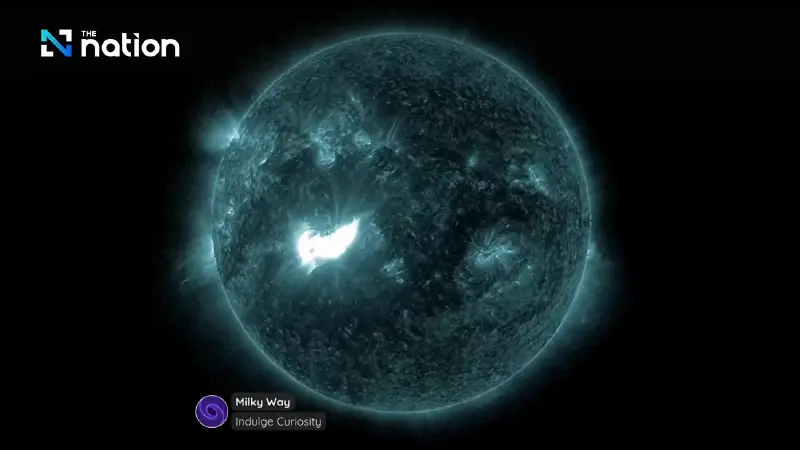


Severe geomagnetic storm is forecast for January 20, which could disrupt electricity systems, satellites and some radio communications.
- The National Oceanic and Atmospheric Administration (NOAA) has issued an alert for a severe (G4) geomagnetic storm, the third strongest event of its kind since 1976.
- The storm could cause widespread voltage control problems in power grids and induce currents in pipelines.
- Spacecraft operations may be affected by surface charging, potentially leading to communication and attitude-control issues.
- Other potential impacts include intermittent disruption of high-frequency radio communications and auroras visible at lower latitudes (magnetic latitude 45°).
The US National Oceanic and Atmospheric Administration (NOAA) has issued a warning for Tuesday (January 20) of a severe geomagnetic storm (G4), describing it as the third strongest event of its kind since records began in 1976.
Possible impacts of a severe geomagnetic storm (G4)
- Auroras may extend to magnetic latitude 45°.
- Widespread issues may occur in power-grid voltage control systems.
- Spacecraft may experience surface charging and possible communication and attitude-control problems.
- Electrical currents may be induced in pipelines.
- High-frequency (HF) radio communications may be intermittently disrupted.
The Thai Astronomical Society said this geomagnetic storm does not affect people living in Thailand.
The society said the storm is linked to an X-class solar flare (X1.9) on January 18, which ejected a large coronal mass ejection (CME) directed at Earth at speeds of more than 1,000 kilometres per second.
Geomagnetic storm intensity scale (G1–G5)
G5 (Extreme): Widespread damage to voltage-control and protection systems; power-grid collapse or prolonged outages possible; spacecraft may suffer severe charging and major communication/control problems; very large currents in pipelines; HF radio may fail; auroras may reach magnetic latitude 40°.
G4 (Severe): Widespread problems possible in voltage-control systems; spacecraft surface charging and communication/attitude-control issues; currents in pipelines; auroras may reach magnetic latitude 45°; intermittent HF radio disruption.
G3 (Strong): Power-system voltage irregularities but generally manageable; satellite component charging and possible attitude-control issues; intermittent low-frequency radio problems; auroras may reach magnetic latitude 50°.
G2 (Moderate): Voltage issues at high latitudes; prolonged events may damage transformers; satellite orientation may be affected, but typically controllable; HF signals may weaken at high latitudes; auroras may reach magnetic latitude 55°.
G1 (Minor): Small power-grid voltage fluctuations; migratory animals using Earth’s magnetic field may be affected; auroras at high latitudes.
