
Thailand’s Japanese restaurant market hits maturity as numbers dip
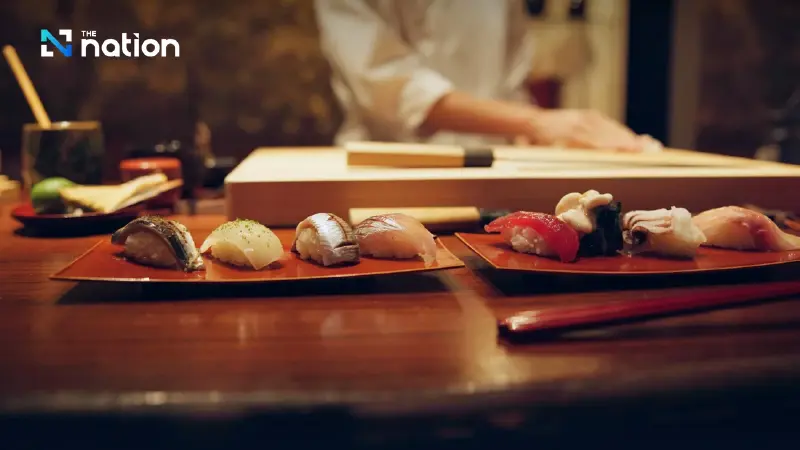


Japan External Trade Organisation’s Bangkok office says Thailand had 5,781 Japanese restaurants in 2025, down 2.2% from a year earlier, first decline since survey began in 2007.
- For the first time since surveys began in 2007, the number of Japanese restaurants in Thailand declined by 2.2% in 2025, signaling the market has entered a mature phase.
- The decline is seen across most segments, especially higher-priced ones like yakiniku, with only ramen shops and Japanese cafés (driven by the matcha trend) still experiencing growth.
- The market is polarizing, with large, established chains surviving while smaller, single-outlet restaurants are closing due to rising costs and intense competition.
- A weak yen is also a factor, as Thai consumers are increasingly choosing to save their money for more authentic and better-value dining experiences during trips to Japan.
For almost 20 years, Japanese restaurants have been among the fastest-growing and most stable businesses in Thailand.
What began as small eateries serving Japanese residents in Sukhumvit has expanded into sushi, ramen, yakiniku, and Japanese cafés on almost every street corner.
But in 2025, that buzz began to shift in a noticeable way.
On January 20, 2026, a survey by the Japan External Trade Organisation (JETRO) Bangkok found that Thailand had 5,781 Japanese restaurants in 2025, down 2.2%, around 135 outlets, from the previous year.
It marked the first official decline since the survey began in 2007.
The drop may look modest, but for an industry that had expanded steadily for years, it signals the market is truly entering a “mature” phase.
Japanese restaurant numbers fall across all areas.
The decline has been seen everywhere, in Bangkok, the metropolitan area, and upcountry provinces.
Bangkok fell by more than 2%, the metropolitan area dropped even more, and closures have become more visible in provincial markets as well.
Even so, Bangkok remains the country’s densest hub for Japanese restaurants, with more than 2,600 outlets, followed by Chonburi and Nonthaburi.
Since 2020, Japanese restaurants have expanded to every province nationwide, meaning there is little new territory left for growth.
A closer look by segment shows the shift more clearly.
General Japanese restaurants remain the largest group, followed by sushi outlets and ramen shops.

Matcha trend helps keep Japanese cafés growing
Notably, among all Japanese restaurant types, only “ramen shops” and “cafés” are still growing, especially Japanese cafés, which have expanded the fastest on the back of the matcha trend, Japanese desserts, and café culture that suits eating, photographing, and sharing on social media.
By contrast, Japanese yakiniku has contracted the most, reflecting more cautious spending on higher-priced meals.
Rice-bowl outlets and standard menu formats that once expanded easily are now facing intense competition and are finding it harder to survive.
Another clearer picture is market polarisation.
Large Japanese restaurant brands with dozens of branches can still hold their ground thanks to management systems, cost control, and stable customer bases.
In contrast, single-outlet operators and smaller brands are gradually disappearing amid rising ingredient costs, wages, and rents, especially in a market where customers have so many choices that they no longer feel the need to “try a new place” the way they once did.
On pricing, most Japanese restaurants still sit in the THB101–500 per head range, with the largest cluster priced at THB250 or below, showing consumers are prioritising value over luxury.
Japanese restaurant market enters a “fully mature” phase
JETRO sees Thailand’s Japanese restaurant market as having entered a “fully mature” phase.
Consumers are more knowledgeable and can better judge what is genuinely good versus what is overpriced, meaning “Japanese food” alone is no longer a sufficient selling point.
Today, customers choose based on:
- a clear specialism
- tangible ingredient quality
- a distinct experience
- a story worth sharing
“Eat less in Thailand, save it for Japan” phenomenon
External factors are also having a strong impact, including the yen’s continued weakness, which has made trips to Japan feel more accessible for Thai travellers.
As a result, many consumers are choosing to hold off on omakase, wagyu, or high-priced sake in Thailand, and instead spend that budget in Japan, for the experience, original ingredients, and a sense of better value. The trend becomes even clearer as the domestic economy slows, with consumers spending more rationally.
To survive now, it must be more than just “a Japanese restaurant”
JETRO expects openings and closures in Thailand’s Japanese restaurant market to continue in parallel.
Restaurants that can survive and grow will need a clear target audience, specialist menus, and an experience customers remember.
At the same time, Japanese restaurants that adapt flavours to Thai preferences, as well as those that grow through online trends, will play a bigger role in a market where competition is measured not only by taste, but also by storytelling, communication, and building lasting customer ties.
In an era when Japanese food is no longer hard to find, the business question is no longer “what are we selling?”, but “why should customers choose us?”
