
Thailand Moves to Secure Protected Status for Four More Agricultural Products in Japan


Thailand moves to register four additional agricultural products in Japan while deploying AI tools to modernise intellectual property services
- Thailand is seeking Geographical Indication (GI) protected status in Japan for four additional agricultural products to expand its presence in the luxury food market.
- The specific products are Phetchabun sweet tamarind, Nong Bua Daeng golden bananas, Phitsanulok golden nam dok mai mangoes, and Sangyod Muang Phatthalung rice.
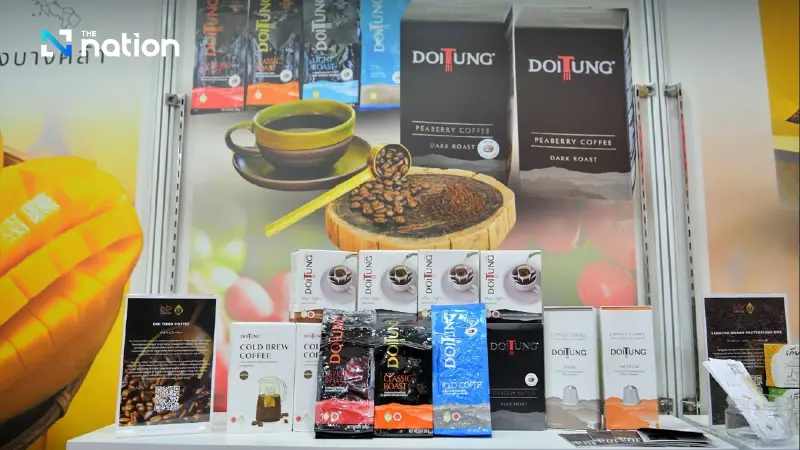
- This initiative builds on the previous successful GI registration of three other Thai products in Japan: Doi Tung coffee, Doi Chang coffee, and Huai Mun pineapple.
- The move is part of a bilateral cooperation with Japan's Ministry of Agriculture, Forestry and Fisheries, as Japan also has six of its own GI products registered in Thailand.
Thailand moves to register four additional agricultural products in Japan while deploying AI tools to modernise intellectual property services.
Thailand is making a significant push to expand its footprint in Japan’s luxury food market, seeking protected status for four additional agricultural products under the Geographical Indication (GI) framework.
Auramon Supthaweethum, director-general of the Department of Intellectual Property (DIP), met with Atsushi Suginaka of Japan’s Ministry of Agriculture, Forestry and Fisheries (MAFF) to discuss elevating bilateral cooperation.
The move follows the successful registration of Doi Tung coffee, Doi Chang coffee, and Huai Mun pineapple in Japan.
A Growing Portfolio
The Thai government has formally requested GI status for Phetchabun sweet tamarind, Nong Bua Daeng golden bananas (Chaiyaphum), and Phitsanulok golden nam dok mai mangoes. Plans are also underway to submit an application for Sangyod Muang Phatthalung rice.
In exchange, Japan currently holds six GI registrations in Thailand, including the world-renowned Kobe, Tajima, and Kagoshima beef, alongside Yubari melons. Both nations have pledged to share technical expertise to resolve registration hurdles and enhance the efficiency of the GI system.
Premium Retail Strategy
A key pillar of the DIP’s strategy is a new partnership with high-end department store Siam Takashimaya. Discussions are currently focused on securing dedicated retail space for Thai GI products in Japan and Japanese GI goods in Thailand.
This initiative aims to target high-net-worth consumers through curated exhibitions and joint promotional events.
Digital Transformation and AI Integration
The diplomatic mission also extended to the Japan Patent Office (JPO), where Auramon met with Mr Kasai Yasuyuki to modernise patent processing.
The two offices are collaborating on the Patent Prosecution Highway (PPH Navigator) and "Prior Art Search" initiatives to increase the speed and precision of patent approvals.
Thailand further highlighted its transition into a "digital-first" intellectual property hub. The DIP showcased its Fast Track Plus+ programme, designed to accelerate registrations for future-growth sectors such as e-commerce, digital innovation, and automotive components.

Central to this digital push are two new AI-driven tools:
AI Image Search: A sophisticated tool for detecting similar trademarks.
Trademark Checker: A 24-hour self-service platform allowing entrepreneurs to assess the probability of successful registration.
These advancements come as Thailand prepares to join the Hague Agreement for the international registration of industrial designs, a move that will further integrate the Kingdom into the global intellectual property landscape.
