
Thailand Abandons ‘Low-Cost’ Strategy to Pivot Thai Rice Towards $43bn Premium Market
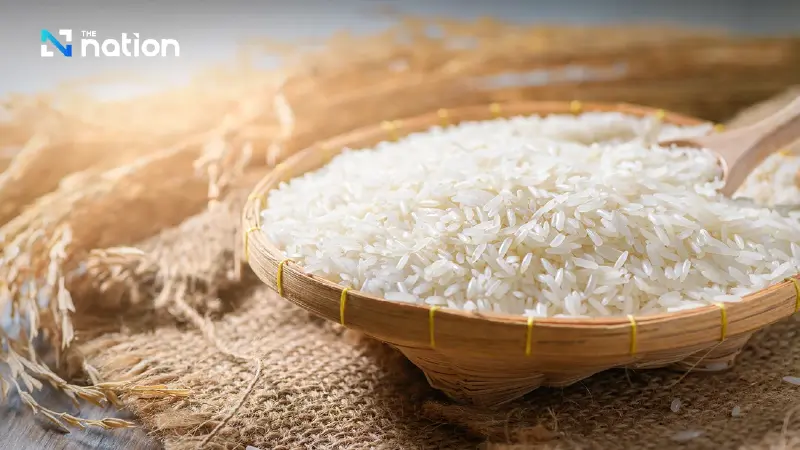


The NIA and Thai Rice Foundation target high-value niche markets, including functional foods and low-carbon rice, to move past the era of low-cost exports
- Thailand is abandoning its strategy of competing as a low-cost, bulk rice exporter to target a high-value global premium market projected to be worth over $43 billion.
- The pivot focuses on health-centric innovation, developing functional rice varieties like Low-GI and high-antioxidant rice, as well as high-margin products like nutraceuticals, alternative proteins, and cosmetics derived from rice.
- To attract premium Western consumers, the strategy includes promoting "Low-Carbon Rice" through sustainable farming practices and Green Label certification, adding environmental value to the product.
The NIA and Thai Rice Foundation target high-value niche markets, including functional foods and low-carbon rice, to move past the era of low-cost exports.
The era of Thailand competing solely on price as a bulk agricultural exporter is coming to an end.
The National Innovation Agency (NIA), in partnership with the Thai Rice Foundation, has announced a strategic shift towards "Niche Markets," targeting a global rice sector projected to reach $43.51 billion by 2026.
As the global market transitions from basic staples to health-centric innovation, the NIA identifies "preventive nutrition" as the primary growth driver.
While the Asia-Pacific remains the largest consumer base, North America is emerging as the fastest-growing market for functional and alternative rice products.

The Rise of Functional Rice and Nutraceuticals
Dr Krithpaka Boonfueng, executive director of the NIA, noted that 35% of Thai consumers are already altering their diets to manage glucose and cholesterol.
This shift has catalysed demand for high-antioxidant varieties, such as Riceberry and Sangyod, alongside Low-Glycaemic Index (Low-GI) rice, which is gaining traction among urban populations and an ageing society.

The innovation extends beyond the dinner plate into high-margin industries:
Nutraceuticals: Rice bran extracts and germinated rice products are seeing 8% annual growth in the medical food sector.
Alternative Proteins: Rice protein is being positioned as a hypoallergenic, easily digestible alternative to soy, now featuring in 21% of plant-based meat products.
Cosmeceuticals: Fermented rice bran is becoming a staple in premium Asian skincare and haircare brands.
The Green Mandate: Low-Carbon Rice To secure
"Top of Mind" status among Western consumers, the NIA is championing "Low-Carbon Rice" and Green Label certification.
By working with the Rice Department to promote organic fertilisers and water management techniques that reduce methane emissions, the agency aims to add environmental value to the grain.
"We must penetrate high-end markets that demand 'Healthy Living' solutions," Dr Krithpaka stated. "While these products carry a price premium, they represent the future. However, the state must take a proactive role in educating farmers on these green standards to ensure we don't leave them behind."

Structural Hurdles and Digital Solutions
Despite the potential, challenges remain. Darunee Edwards, secretary- general of the Thai Rice Foundation, warned that bureaucratic delays in seed registration are stifling innovation.
She urged the government to align regulatory frameworks with modern scientific capabilities to ensure farmers can access new varieties more rapidly.
To combat rising costs and the "middle-income trap," the NIA is promoting "Large-Scale Farming" models.
By grouping smallholders together, the agency aims to increase bargaining power, reduce logistics costs for exports, and implement "Smart Farming" technologies—such as using microorganisms to decompose straw instead of burning it, which helps mitigate the regional PM2.5 air pollution crisis.
To further drive commercialisation, the NIA and the Thai Rice Foundation have launched the 18th Thai Rice Innovation Awards.

Since its inception, the contest has seen 821 entries, with the NIA investing over 50 million baht into 100 projects, generating an economic impact of nearly 400 million baht.
Dr Sumet Tantivejkul, chairman of the Thai Rice Foundation, noted that this year’s competition—open for entries from 1 February to 30 June 2026—will focus on health, NCD prevention, and biotechnology.
"Our goal is to prove that Thai research is not just academic but commercially formidable on the world stage," he said.
