
Cities worldwide begin banning high-carbon adverts to cut emissions
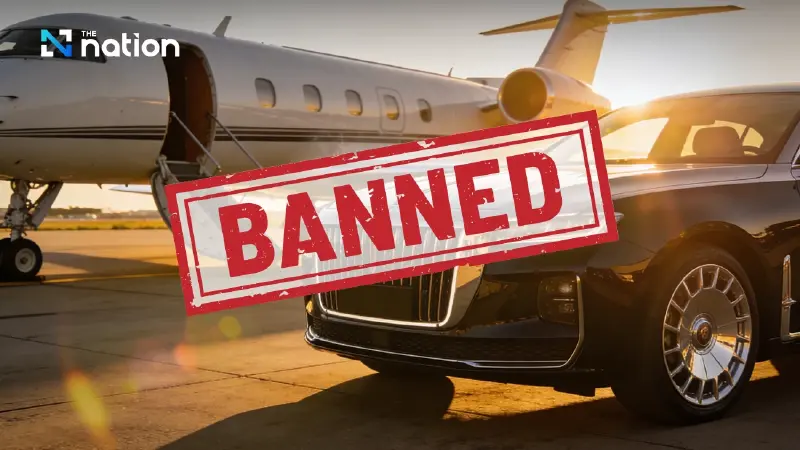


From The Hague’s 2024 local ban to Amsterdam’s wider restrictions due in 2026, a growing number of councils are removing promotions for flights, fossil fuels and petrol-powered cars from public spaces as part of a broader push towards net zero.
- Cities worldwide, including The Hague, Amsterdam, Stockholm, and Sheffield, are banning public advertisements for high-carbon products like SUVs, airlines, and fossil fuels to reduce emissions.
- Proponents, including UN and WHO officials, justify the bans by comparing fossil fuels to "the new tobacco," arguing that the ads normalize harmful consumption and undermine climate goals.
- The policy is supported by evidence suggesting ad bans can shift consumer behavior, referencing studies linking advertising to increased emissions and the success of similar bans on junk food and alcohol.
- Implementation faces challenges such as legal opposition from industry groups, constitutional protections for advertising in the US, and the difficulty of regulating online ads.
At present, many major cities around the world are beginning to remove advertising that promotes air travel, sport utility vehicles (SUVs), cruise ships and internal combustion engine cars, as part of a serious push to cut greenhouse gas emissions.
The shift is becoming visible in public spaces that once overflowed with billboards for overseas destinations or new car models, but are now being replaced with advertising for more environmentally friendly products.
The Hague in the Netherlands was the first city in the world to pass a local law in 2024 banning all forms of advertising for high-carbon products.
It was followed by Amsterdam, which became the first capital city in the world to pass a law banning advertising for fossil-fuel products.
The law will be fully enforced in 2026 and will also cover a ban on meat advertising, in addition to earlier bans on low-cost flights and fossil products.
Beyond the Netherlands, the advertising ban trend has spread to other major cities, including the Saint-Gilles district in Belgium, Stockholm in Sweden, and, most recently, Florence in Italy.
In the United Kingdom, Edinburgh and Sheffield have officially banned adverts for fossil fuel companies, airlines, airports and petrol-powered cars on city council advertising spaces.
At the national level, France became the first country in Europe to ban fossil-fuel advertising through a climate law in 2022.
Spain’s government has also recently voted to approve a draft law to ban advertising for vehicles powered exclusively by fossil fuels, as well as adverts for short-haul flights where more sustainable alternatives exist.
Fossil fuels are the “new tobacco”
Robert Barker, Deputy Mayor of The Hague, said that as a city seen as a hub of international justice and peace, allowing fossil-fuel advertising in public spaces is contradictory, especially when governments are urging people to cut emissions.
He compared fossil fuels to a “new tobacco”, saying they are “destroying the lungs of the planet” much like cigarettes damage human lungs.
António Guterres, the United Nations secretary-general, has said the fossil-fuel industry spreads distorted climate information, with advertising and public-relations firms acting as “aiding and abetting” forces.
He has called on every country worldwide to impose a complete ban on advertising by the industry.
Maria Neira, the World Health Organisation (WHO)’s director for public health and climate, has also described fossil fuels as the “new tobacco”, arguing that such advertising normalises and promotes unsustainable behaviour.
She said banning adverts is a key mechanism for breaking the consumption cycle that harms the planet.
Cassie Sutherland, Managing Director for Climate Solutions and Networks at C40 Cities, said advertisers would not spend huge sums year after year if their adverts did not affect human behaviour.
For that reason, controlling the information consumers receive is seen as a key lever for shifting everyday behaviour from the ground up.
Multiple studies suggest that advertising carbon-intensive goods and services increases demand for them, and drives up greenhouse gas emissions as a result.
One 2022 study found that airlines with the largest advertising budgets had higher ticket sales, pointing to a direct link between ad spending and demand for flights.
Another study found that advertising overall is linked to as much as a 32% increase in carbon emissions across the United Kingdom.
Banning ads can change consumer behaviour
The Intergovernmental Panel on Climate Change (IPCC) estimates that demand-side strategies, including advertising controls, could cut global emissions by as much as 40–70% by 2050.
That suggests shifting consumer behaviour can have an outsized impact on net-zero goals.
A 2024 survey by CAPABLE, an EU climate policy development project, covering more than 19,000 people across 13 EU member states, found that 46.6% supported banning fossil-fuel adverts in public spaces, while only 24.9% opposed it.
The countries showing the strongest support were Greece, Italy, France and Spain.
Support for advertising bans was found across all age groups and education levels, reflecting the view that such a policy could succeed quickly because it is easy to implement, relatively straightforward, and carries limited direct costs for governments or consumers compared with introducing new forms of taxation.
This mirrors London’s experience with banning junk-food advertising across its transport system in 2019.
That campaign led households to buy around 1,000 fewer calories per week on average.
It did not reduce the city’s advertising revenue; instead, revenue rose as other advertisers adjusted.
Similarly, in Chile, restricting fast-food advertising helped cut purchases of sugary drinks by 24%.
In Norway, banning alcohol advertising encouraged companies to develop low- or no-alcohol beer instead, an approach experts hope could also emerge in the energy industry.
In Australia, 19 jurisdictions, including Sydney, have voted on, or begun applying, some level of restrictions on fossil-fuel advertising.
In New Zealand, the Wellington Regional Council agreed to stop fossil-fuel advertising on public transport and council assets starting in 2023.
Belinda Noble, founder of Comms Declare, said local authorities have significant influence over what people see every day, and often respond more effectively to community demands than national governments.
She added that local bodies are also typically under less pressure from coal and gas industry interests.
Elisa Morgera, the UN Special Rapporteur on human rights and climate change, said fossil-fuel advertising has shaped public perception for decades by emphasising economic growth, while failing to address human-rights impacts.
Morgera said banning these adverts would challenge unnecessary overconsumption and help address systemic inequality driven by the dominance of fossil-fuel products in daily life.
The shift, she argued, is not only about the environment, but also about social justice.
Business opposition
Enforcement has not always been smooth.
In the Netherlands, the travel trade association ANVR sued The Hague, arguing the ban violated freedom of expression.
The court ruled in favour of the city, saying the ban can help tackle global warming and protect public health.
In the United States, adopting advertising bans is difficult because advertising is protected under the First Amendment to the US Constitution.
As a result, climate campaigners there have focused more on legal action to hold fossil-fuel companies accountable for climate-related impacts.
Researchers have also raised concerns that cleaner products could be used to “greenwash” a company’s image, helping to sell more dangerous legacy products.
One proposal is to allow advertising for sustainable alternatives only once companies can demonstrate that those products are being sold at a meaningful scale.
In addition, advertising bans may be limited to offline spaces, as governments have little ability to regulate online advertising.
There is also uncertainty about where the line should be drawn, for example, whether adverts promoting overseas tourism destinations that can only be reached by plane should be considered part of the banned category.
Experts stress that ad bans must be used alongside other policies to genuinely shift consumer behaviour.
For example, The Hague has promoted electric vehicles by expanding charging points, and has offered interest-free loans for households to install heat pumps and insulation.
The ultimate aim of advertising bans is to change the social attitudes that link “success” and “wealth” with the consumption of high-pollution goods and services.
Once these adverts disappear from billboards, it may mark the beginning of a new set of values, one that could help ease the climate crisis.
