
UN declares water bankruptcy era, hurting billions worldwide
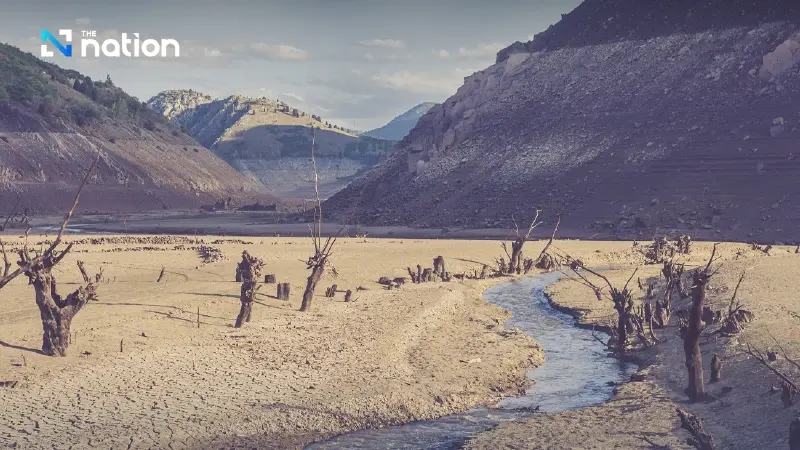


The United Nations announces the world has entered the “water bankruptcy era,” where global water sources have deteriorated beyond recovery, impacting billions.
A recent report from the United Nations has officially declared that the world has entered the “global water bankruptcy era,” a situation more severe than previous warnings. Many of the world’s water systems can no longer be restored to their original state, leading to permanent consequences for billions of people globally.
The United Nations compares the water shortage to bankruptcy, with two key characteristics: excessive water use and the release of pollutants beyond nature's ability to replenish, akin to insolvency. The second factor is irreversibility, meaning natural water sources like wetlands and lakes have been damaged beyond recovery.
Kaveh Madani, Director of the United Nations University Institute for Water, Environment and Health (UNU-INWEH), said that water sources in most regions of the world are now barely recognisable compared with their normal state.
Madani explained that a crisis refers to an abnormal event we hope to recover from. However, the harsh reality is that many vital water systems have already “gone bankrupt,” and it is unclear when others will follow suit. Acknowledging this reality is a crucial first step towards shifting from a short-term crisis response to long-term structural management.
Currently, water security is in a critical state, with 75% of the world’s population residing in countries suffering from severe or imminent water scarcity. Additionally, around 4 billion people face severe water shortages for at least one month each year.
These figures show that the problem is not limited to arid regions but has become a global threat linked to trade, migration, and geopolitics.
Agriculture is the world’s largest water consumer, using 70% of all fresh water used by humans. The report notes that more than half of the world’s food is grown in areas where water storage is declining or unstable.
Once a region’s water sources “go bankrupt,” farming becomes difficult and costly, directly affecting food prices and agricultural exports globally, such as rice from India and Pakistan.
The signs of bankruptcy are evident in the loss of natural water storage sources. More than half of the world’s large lakes have seen water levels drop since the early 1990s.
Additionally, wetlands, which act as water filters and flood buffers, the size of the European Union, have disappeared over the past 50 years. Losing these is like losing a “natural savings account” that helps maintain ecological balance.
Another concerning issue is the over-extraction of groundwater, leading to land subsidence over 6 million square kilometres, affecting over 2 billion people. Major cities such as Mexico City, Jakarta, Manila, Lagos, and Bangkok are sinking. Once the underground structure collapses, these areas will no longer be able to store water as they once did.
Many major cities face alarming rates of subsidence, with Mexico City sinking by about 21-25 cm per year, Tulare in the US by 28 cm per year, and Rafsanjan in Iran by 30 cm annually. The most visible signs of this are the over 700 sinkholes observed in agricultural areas in Turkey.
The climate change crisis is exacerbating these problems, as extreme weather events make water management even more challenging. For instance, dams now must choose between keeping water levels low to prevent flooding or storing more for drought periods.
As glaciers—vital sources of freshwater—melt more rapidly, water shortages will become more pronounced. Glaciers have shrunk by 30% since 1970, and global warming is increasing crop water demand, requiring more water to generate electricity.
Even the United Kingdom, a country with relatively high humidity, faces risks due to its dependence on food imports and products requiring water in their production processes.
The report stresses that the world is interconnected. Water bankruptcy in one area creates pressure in others, escalating tensions locally and internationally.
Madani warned that water scarcity means food scarcity, leading to hunger, unemployment, chaos and revolution.
Conflicts over water-related issues have skyrocketed, from just 20 incidents in 2010 to over 400 in 2024. Notable examples include the conflict over water allocation in the Colorado River in the US and the dispute over a major dam on the Nile River between Egypt, Sudan, and Ethiopia, highlighting the need for updated laws and treaties in line with current climate data.

To resolve this, the UN suggests the world must transition from responding to crises to managing water bankruptcy in a structured way.
This begins by accepting realistic water budgets instead of over-exploiting resources through deeper drilling or diverting water. With honesty, courage, and political will, we can’t recreate the lost glaciers, but we can prevent further loss.
Immediate measures include transforming water-intensive sectors like agriculture and industry by shifting crop types, using more efficient irrigation systems, and reducing water loss in urban areas.
Governments may need to limit groundwater extraction and enforce stricter regulations to prevent agricultural chemicals from contaminating remaining water sources. These decisions must be fair, protecting the most vulnerable populations, who often bear the heaviest burdens of water bankruptcy.
Madani believes water is a topic everyone agrees on, regardless of political stance, North or South. In a divided world, water can act as a “bridge” for cross-border cooperation to preserve resources vital for humanity’s survival.
Additionally, modern technologies such as satellite-based remote sensing and AI will play a crucial role in monitoring groundwater levels, land subsidence, and water quality, providing accurate data for planning.
The report concludes by emphasising the need to move away from outdated data and redesign cities, food systems, and economies to align with stricter new hydrological limits. Sustainable water management is now at the heart of maintaining social stability and security.
The world is at a critical turning point, and we must learn to live within the bounds of available resources. Ignoring this reality will only increase the “debt” of resources to an unmanageable level.
Madani concluded that the longer action is delayed, the greater the debt will grow, adding that the only solution is to act decisively now to protect people, economies and ecosystems in the future.
