
Iran war: Survey shows concern over Thailand’s stance and energy crisis
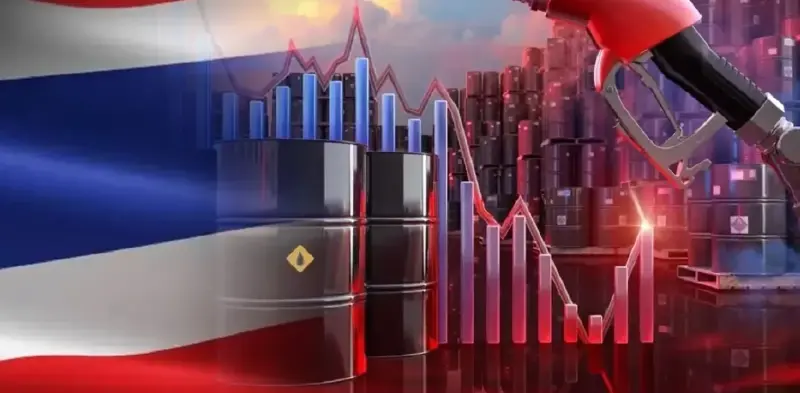


Public concern over the Iran conflict is mounting, with online discussions focused on Thailand’s position, energy costs and pressure on the economy.
- A survey of Thai netizens found their top concern (37%) is Thailand's foreign policy, with most urging the government to remain neutral in the conflict.
- The second-largest concern (31%) is a potential energy crisis, with fears that rising oil prices will increase the cost of living and slow the Thai economy.
- Other notable concerns include the risk of the war escalating into a wider conflict (24%), the spread of misinformation (5%), and the safety of Thai workers in the region (3%).
RealWatch Lab, the Research and Data Analytics unit of Real Smart Public Company Limited, an AI-Transformation and AI-Data Driven Technology company, has disclosed the findings of a survey on the concerns of Thai netizens.
After the United States and Israel attacked Iran on February 28, 2026, the war has continued for the past 10 days.
The survey collected opinions from February 28, after the incident occurred, to March 10, 2026, across all social media platforms, covering 34,009 messages discussing concerns arising from the conflict.
It found that:
The top concern among Thai netizens, accounting for 37% of all messages, was Thailand’s foreign policy stance towards the conflict.
Most netizens said they wanted the Thai government to remain neutral in the situation.
The second-largest concern, accounting for 31%, was the impact of energy prices, which could affect the Thai economy.
Most comments expressed concern that oil prices would rise and push up the cost of living.
This also included concern over the impact on the Thai economy, as the World Bank forecast that, if the war were prolonged, oil prices would rise by 10-13% to US$80-82 per barrel, with the possibility of reaching US$100 per barrel.
Higher oil prices would also push inflation up by 0.5-0.8%.
This trend would slow global growth, with the world economy expected to expand by 2.6%, down from an earlier forecast of 3.3%.
Meanwhile, the National Economic and Social Development Council (NESDC) analysed the impact of the situation on the Thai economy under two scenarios.
The first scenario is that, if the war spreads across the Middle East and ends within one month, maritime transport through the Strait of Hormuz would face only short-term disruption.
Under this scenario, global crude oil prices would be in the range of US$95-105 per barrel, causing Thailand’s economy in 2026 to grow by around 1.6%, down from the earlier forecast of 2%.
The second scenario is that, if the war escalates or widens across the Middle East and drags on, the Strait of Hormuz is closed, and oil can no longer be transported, affecting the Global Supply Chain.
This would push oil prices up to US$115-125 per barrel, leaving Thailand’s economy to grow by only 1.3%, down from the previous forecast of 2%.
The third concern was war risk and security threats, accounting for 24%.
Netizens were concerned about whether the war could spiral into World War III or become more severe, and how it might affect Thailand.
The fourth concern, accounting for 5%, was whether the information they were receiving was false or had been distorted by either side.
The fifth concern, accounting for 3%, was the safety of Thai workers in the conflict area.
Most messages expressed concern for those living in the affected area.
