
Chulalongkorn Hospital succeeds with nerve stimulation surgery for sleep apnoea
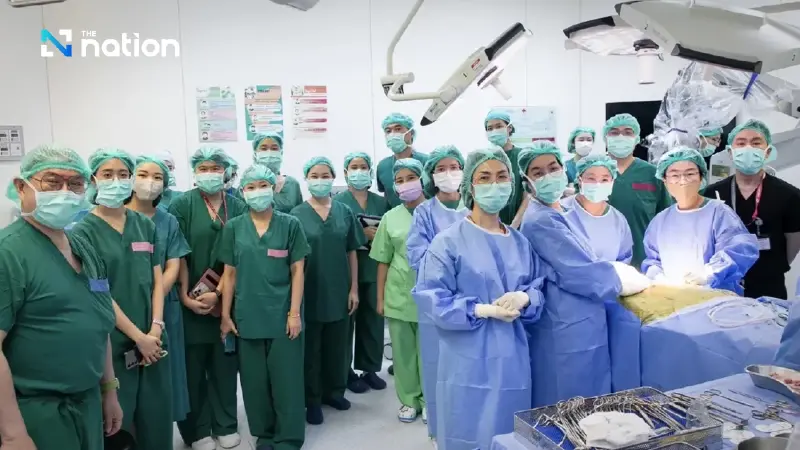


Chulalongkorn Hospital has become the first in Thailand and the fourth in Asia to use hypoglossal nerve stimulation to treat obstructive sleep apnoea, offering new hope to patients who cannot tolerate CPAP.
- King Chulalongkorn Memorial Hospital is the first in Thailand and fourth in Asia to successfully perform Hypoglossal Nerve Stimulation (HGNS) surgery for obstructive sleep apnoea (OSA).
- The procedure is a new treatment option for patients with moderate to severe sleep apnoea who are unable to tolerate traditional CPAP therapy.
- The surgery involves implanting a small, remote-controlled device that stimulates the hypoglossal nerve to prevent the tongue from blocking the airway during sleep.
King Chulalongkorn Memorial Hospital, The Thai Red Cross Society, has announced a major medical milestone.
It is the first hospital in Thailand and the fourth in Asia to successfully perform surgery on patients with moderate to severe obstructive sleep apnoea (OSA) using Hypoglossal Nerve Stimulation (HGNS).
The procedure has helped transform the lives of patients who cannot tolerate continuous positive airway pressure (CPAP), allowing them to sleep soundly again and become free of the disorder.
Assoc Prof Dr Jiruth Sriratanaban, Director of King Chulalongkorn Memorial Hospital, The Thai Red Cross Society, said the medical team had successfully applied the HGNS technique, which is supported by research demonstrating long-term effectiveness, to treat OSA patients for the first time in Thailand and as the fourth centre in Asia.
The hospital is now ready to offer this treatment to patients who meet the clinical indications, expanding treatment options and improving quality of life in line with its mission to advance care through the most modern medical technology.
Prof Naricha Chirakalwasan, head of the Sleep Medicine Centre at King Chulalongkorn Memorial Hospital, The Thai Red Cross Society, and president of the Sleep Society of Thailand, added that obstructive sleep apnoea affects up to 14% of the general population.
It can cause snoring, daytime fatigue, and an increased risk of cardiovascular disease.
The main treatment for OSA is continuous positive airway pressure, or CPAP, but for patients who cannot use CPAP, HGNS offers a new option that can address the condition over the long term.
Assistant Professor (Special) Dr Natamon Charakorn, head of the Sleep Otolaryngology Unit, Department of Otolaryngology, King Chulalongkorn Memorial Hospital, The Thai Red Cross Society, further explained that HGNS is a technology approved by both Thai and US regulatory authorities, with the following key features:
Smart operating principle: A small electronic device is implanted in the chest to deliver electrical signals that stimulate the hypoglossal nerve, preventing the tongue muscles from collapsing and blocking the airway during sleep.
Easy fingertip control: Patients can switch the device on and off using a remote control with a single button.
Small incisions, quick recovery: The surgical technique minimises tissue injury, allowing patients to return to normal life quickly.
Representatives of the first and second patients treated with HGNS at King Chulalongkorn Memorial Hospital, The Thai Red Cross Society, said the innovation had truly changed their lives.
Previously, they had struggled with poor sleep and discomfort from using CPAP.
They can now sleep fully, free from snoring, and wake refreshed.
Their Sleep Test results were consistent with this improvement, confirming that they were free of OSA while the device was in use.
Assoc Prof Dr Rattaplee Pak-Art, Deputy Director for Support Services at King Chulalongkorn Memorial Hospital, said this treatment innovation was the result of collaboration by a multidisciplinary team, including specialists in sleep medicine, otolaryngology, internal medicine, anaesthesiology and nursing, who jointly carried out comprehensive assessments to provide personalised care.
In addition, the hospital has expanded its Sleep Test service under the Comprehensive Medical Corridor project in collaboration with Dusit Thani Public Company Limited to provide patients with more options and greater convenience, while fully maintaining the hospital’s high medical standards.
Patients with moderate to severe obstructive sleep apnoea who are interested in HGNS treatment can contact the Sleep Medicine Centre at King Chulalongkorn Memorial Hospital, The Thai Red Cross Society, for further information and assessment.
