
Bangkok Airways raises domestic fares after jet fuel price surge
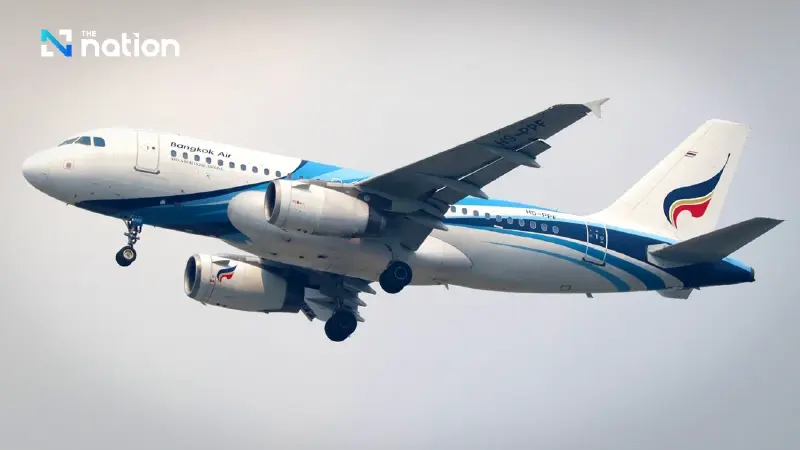


Bangkok Airways will raise some domestic ticket prices by 15-20% from April 1 after jet fuel costs surged, though fares will stay within CAAT's ceiling.
- Bangkok Airways is increasing domestic fares by an average of 15-20% due to a surge in jet fuel prices that raised company costs by 20%.
- The price hike is a direct result of jet fuel costs nearly doubling from $80-90 to $170-180 per barrel, which the airline's 30% fuel hedging could not sufficiently offset.
- The new fares will take effect on April 1, 2026, impacting routes such as those to Samui, Chiang Mai, and Phuket, but will remain within the government-approved price ceiling.
- As part of the Airlines Association of Thailand, the company has asked the government to reduce the excise tax on jet fuel to help ease the cost burden on airlines and passengers.
Puttipong Prasarttong-Osoth, president of Bangkok Airways Public Company Limited, said on March 27, 2026, that rising jet fuel prices had increased the company’s costs by 20%.
At present, the company has hedged about 30% of its fuel costs at US$80-90 per barrel, which helps average out costs over the year.
However, with fuel costs rising from US$80-90 per barrel to US$170-180 per barrel, hedging just 30% is still not sufficient to offset the increase.
As a result, the airline will have to raise domestic air fares by an average of around 15-20%, with ticket prices on some routes to be adjusted from April 1, 2026.
These include the Bangkok-Samui route, where a morning flight that previously offered a special fare of 2,000 baht per seat will have to be increased, as well as flights to Chiang Mai and Phuket.
However, the fare adjustment will remain within the approved ceiling set by the Civil Aviation Authority of Thailand, or CAAT.
For international routes, the airline is already able to increase the fuel surcharge in line with higher oil prices under market mechanisms.
Routes such as the Maldives and Cambodia will also see increases in April.
“The current oil price situation remains volatile and unstable, so the company has to monitor it almost every one to two weeks to assess the impact and review its targets.”
He added that, in the name of the Airlines Association of Thailand (AAT), a proposal has been submitted to the government asking it to consider reducing the excise tax on jet fuel from the current 5 baht per litre.
The association is seeking a temporary tax reduction similar to the Covid period, when the Excise Department cut the rate to 20 satang per litre, to help ease the cost burden so that too much of it is not passed on to passengers.
If possible, I would like the same rate used during COVID to be reinstated.
Puttipong said further that, for its 2026 targets and business plan, the company would adopt a conservative strategy, focusing on maintaining stability in passenger numbers and revenue, as well as careful route selection.
It will operate only routes that are profitable and beneficial, while loss-making routes will be removed.
This is to achieve the most suitable position for the current situation.
The company will first make sure it can maintain its current position firmly before expanding further.
Bookings for Songkran remain normal and have not declined.
As for the impact of the situation in the Middle East, it may affect only European flights that pass through the region.
There was an impact in the first week, but if passengers travel to Thailand without passing through the Middle East, fares from Europe to Thailand may become more expensive.
Domestic routes, however, have not yet seen any significant impact.
