
Interior Ministry orders tougher PM2.5 curbs in 17 northern provinces
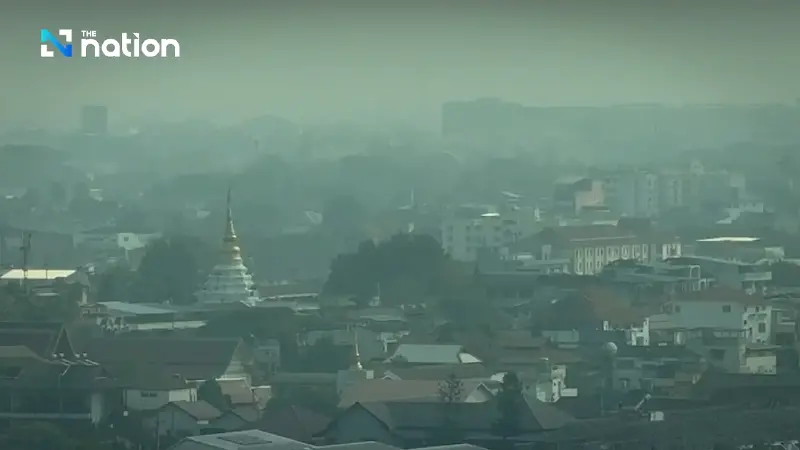


The Interior Ministry has ordered governors in 17 northern provinces to intensify PM2.5 mitigation, enforce the law strictly and sustain action until conditions return to normal.
- The Interior Ministry has issued an urgent order to the governors of 17 northern provinces to step up measures against severe PM2.5 pollution.
- The directive was prompted by dust levels in the region exceeding safety standards and posing a risk to public health.
- The intensified measures include strict legal enforcement against human-caused hotspots and mobilizing all available resources to fight forest fires.
- Provincial authorities must continuously report their progress to the national disaster command until the situation returns to normal.
The Permanent Secretary for Interior has issued the most urgent order to the governors of 17 northern provinces to step up measures to reduce the impact of the PM2.5 situation seriously and continuously until conditions return to normal, with strict enforcement of the law.
Unsit Sampuntharat, Permanent Secretary for Interior, in his capacity as deputy commander for national disaster prevention and mitigation, said that Prime Minister Anutin Charnvirakul, in his capacity as commander for national disaster prevention and mitigation, is concerned about the overall PM2.5 situation nationwide, which remains at a high level, particularly in 17 northern provinces: Kamphaeng Phet, Chiang Rai, Chiang Mai, Tak, Nakhon Sawan, Nan, Phayao, Phichit, Phitsanulok, Phetchabun, Phrae, Mae Hong Son, Lampang, Lamphun, Sukhothai, Uttaradit and Uthai Thani.
Many provinces have recorded dust levels above the standard and at levels affecting people’s health.
To ensure effective action to address wildfires, haze and fine particulate dust (PM2.5) in the area, the national disaster prevention and mitigation command has therefore instructed provincial incident command centres to intensify operations under four measures to reduce the impact of the PM2.5 situation seriously and continuously until conditions return to normal, as follows:
- Closely monitor the situation by integrating efforts with all sectors to resolve the problem and ease hardship for the public in every dimension.
- If hotspots caused by human action are found, strictly enforce the law.
- Mobilise all personnel resources and all types of equipment to put out forest fires to reduce the severity of the situation and restore normal conditions as quickly as possible.
- Coordinate operations with relevant agencies at both central and regional levels by mobilising resources in every aspect, and if the situation exceeds provincial capacity, urgently seek support from the national disaster prevention and mitigation command.
Unsit said provincial incident command centres must continuously report the situation and progress in tackling the problem in their areas to the national disaster prevention and mitigation command through the central command of the Department of Disaster Prevention and Mitigation (DDPM) until conditions return to normal.
If members of the public spot a forest fire, they can call the 1784 safety hotline 24 hours a day, with officials on standby to respond immediately.
