
Finance minister’s Big Win to unlock THB480bn BOI investment, push Let’s Go Halves Plus
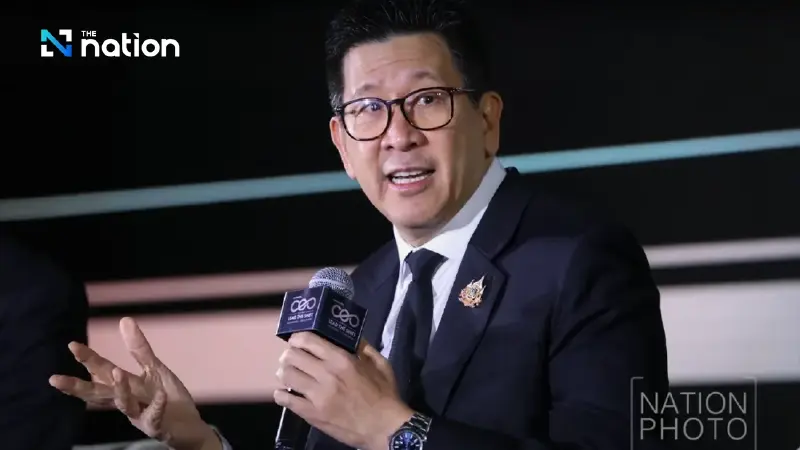


With no extra budget required, the BOI fast-track plan aims to pull private capital into the economy this year, while phase two of Let’s Go Halves Plus adds reskill/upskill conditions and keeps the focus on small shops nationwide.
- The government will use a "BOI Fast Pass" mechanism to unlock over THB480 billion in pending private-sector investment to stimulate the economy immediately, bypassing potential budget delays.
- The unlocked investment will focus on three key sectors: Smart Agriculture, Modern Industry (including EVs and smart electronics), and Premium Services (such as wellness tourism).
- The "Let’s Go Halves Plus" policy is confirmed to continue, with a future phase that will add a "skills upgrade" condition for participants to help increase income for small businesses.
Ekniti Nitithanprapas, Deputy Prime Minister and Minister of Finance, told Nation Group about the approach to driving Thailand’s economy after the election, saying work must proceed on three fronts at the same time: short-term economic recovery, long-term economic restructuring for sustainable growth, and income redistribution to reduce inequality, at the heart of the “10 Plus” policy the government intends to pursue.
On public investment that must wait for the FY (fiscal year) 2027 budget, which could be delayed by the election certification process, Ekniti said measures had already been prepared.
The government will use the “BOI (Board of Investment) Fast Pass” mechanism to unlock more than THB480 billion in pending private-sector investment awaiting approval, so money can flow into the economy immediately, supporting both short-term recovery and long-term growth in tandem.
He said the initiative is designed to accelerate investment into the economy within this year.
A key strength of the measure is that it does not require additional budget spending and can be implemented continuously right away without legal constraints.
In addition, strategies have been set in three main sectors to attract investors and raise national income:
- Smart Agriculture: using technology to cut costs and upgrade agricultural products to premium grade, to meet the needs of the global food industry.
- Modern industry: continuing investment in electric vehicles (EVs) and smart electronics.
- Premium services: upgrading tourism towards higher-value segments, such as the wellness industry and modern tourism.
“Investment through BOI Fast Pass will be carried forward continuously. That continuity is possible today because the current government is still in office. I remain the deputy prime minister for the economy, and the minister of finance, and I still oversee the BOI.”
On concerns about delays to the FY 2027 budget, Ekniti said preparations for the budget had already been completed before parliament was dissolved.
If the structure of the new government does not require major changes, he believes it will not be delayed, and policies can continue immediately, because continuity is the single most important key.
“It is expected that if a government can be formed quickly, the budget will begin to be used around November or December. While waiting for the new government, the current administration will continue to push ahead with existing projects, such as SME Clinic Boost, and work with the private sector (JSCCIB) to build investor confidence.”
Pressing ahead with “Let’s Go Halves Plus”, Phase 2
On the closely watched “Let’s Go Halves Plus” policy, Ekniti confirmed it will be continued, and readiness measures have been put in place pending the new government.
The scheme will add a “skills upgrade” (reskill/upskill) condition for participants.
A short earlier trial found that shops that completed training saw monthly income from THB10,000 to THB50,000.
The goal in phase two will remain focused on distributing income to small shops, excluding large businesses, so money continues to spread to provincial areas as it did successfully before.
A new registration round will be opened for those who missed out previously, while existing participants will still retain eligibility, using the FY 2026 or FY 2027 budget, depending on the timeframe for government formation.
Driving the economy out of ICU
Asked about the view among foreigners that Thailand’s economy is the “Sick Man of Asia”, Ekniti said that phrase, viewed from another angle, is akin to being “stuck in the mud” or having to be in an ICU.
He believes Thailand has already brought itself out of the ICU, and the vehicle has also escaped the mud.
He added that the key task from here is how to become strong again, or how to get Thailand’s economic vehicle, now out of the mud, moving and competing internationally, so Thai people can regain strength on the global stage.
He sees this as requiring economic restructuring.
The “10 Plus” policy is what the government already intends to pursue on this front, covering investment in human resources, skills enhancement, infrastructure development, and advancing the green economy, all of which are ready to be driven forward immediately.
