
Full verdict orders Yingluck to pay 10bn baht over G2G scandal
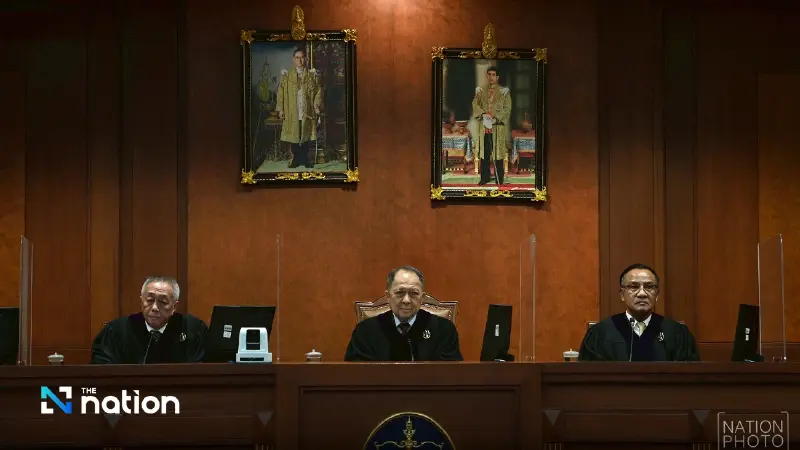


Full verdict revealed! The Supreme Administrative Court overturns the lower court’s ruling, ordering ‘Yingluck’ to pay over 10.03 billion baht in damages after allowing corruption in the G2G rice sales.
On May 22, 2025, the Administrative Court Office published the full summary of the Supreme Administrative Court’s judgment in the case seeking to revoke the order to pay compensation under the rice pledging scheme, as well as the orders to seize and auction assets, and the order denying the request for partition as a co-owner.
The case involved Ms Yingluck Shinawatra, former Prime Minister, and another person (Mr Anusorn Amornchat, her extramarital partner), as plaintiffs, against the Prime Minister and eight others (defendants during the government of Gen Prayut Chan-o-cha). The dispute concerned unlawful actions by administrative agencies or state officials and other liabilities arising from the exercise of legal powers, specifically a tort claim related to damages from the rice pledging scheme, totaling over 35 billion baht.
The Supreme Administrative Court delivered its verdict in case numbers AJ 163–166/2564 and AJ 160–163/2568, between Ms Yingluck Shinawatra as Plaintiff 1 and Mr Anusorn Amornchat as Plaintiff 2, versus the Prime Minister (Defendant 1), Minister of Finance (Defendant 2), Deputy Minister of Finance (Defendant 3), Permanent Secretary of the Ministry of Finance (Defendant 4), Office of the Prime Minister (Defendant 5), Ministry of Finance (Defendant 6), Department of Legal Execution (Defendant 7), Director-General of the Department of Legal Execution (Defendant 8), and the Enforcement Officer of the Civil Enforcement Office in Bangkok 6 (Defendant 9). Plaintiff 1 requested the court to revoke the Ministry of Finance’s order holding her liable to pay compensation amounting to 35,717,273,028.23 baht.

In the case of the rice pledging scheme involving compensation claims and the revocation of orders to seize and freeze assets, as well as the orders to auction the plaintiffs’ assets, Plaintiff 1 and Plaintiff 2 filed to revoke the order denying their request for partition as co-owners, and requested that Plaintiff 2 be recognized as having co-ownership rights. The Central Administrative Court ruled to revoke the Ministry of Finance’s order holding Plaintiff 1 liable to pay compensation, revoked all orders and announcements related to the seizure and freezing of Plaintiff 1’s assets for auction, and revoked the Ministry of Finance’s order denying the request for partition as co-owners. All nine defendants appealed.
The Supreme Administrative Court ruled that the rice pledging scheme’s actions by Plaintiff 1, in her capacity as Prime Minister and Chairperson of the National Rice Policy Committee (NRPC), should be divided into two parts: first, the policy actions announced to Parliament, for which there is no tort liability towards Defendant 6 (the Ministry of Finance); second, the administrative actions taken to implement the rice pledging policy, which are separate from the policy decisions. Plaintiff 1, therefore, is considered an official under Section 4 of the Official Liability for Tort Act B.E. 2539 (1996).

The Supreme Administrative Court, in a plenary session of its judges, noted that the Cabinet approved the implementation of the rice pledging scheme for the main rice crop of 2011/12, the off-season rice crop of 2012, the main crop of 2012/13, and the main crop of 2013/14. The project’s execution involved four key steps: (1) verifying and certifying farmers’ eligibility to participate; (2) pledging and storing the paddy rice; (3) milling and storing the processed rice; and (4) distributing the rice.
At that time, Plaintiff 1 held the position of Prime Minister and also served as Chairperson of the National Rice Policy Committee (NRPC), with authority under Section 11, Paragraph 1 (1) of the 1991 Administrative Procedures Act, responsible for overseeing the implementation of policies, measures, and approved projects.
Regarding the issue of rice stock management, the State Audit Office and the National Anti-Corruption Commission issued reports on the operation of the rice pledging scheme for previous production seasons addressed to Plaintiff 1. Both reports agreed that the project had significant problems causing major losses to the national budget, with policy-level corruption occurring at multiple stages. They recommended that related agencies act on these findings. However, Plaintiff 1 took no action, despite having appointed a subcommittee tasked with implementing the rice pledging policy and failing to follow up on whether the subcommittee reported any issues in executing the project.
Furthermore, during the implementation of the off-season rice pledging scheme for 2012, Members of Parliament questioned Plaintiff 1 in her capacity as Prime Minister on March 29, 2012, and a no-confidence debate was held on November 26, 2012, regarding issues of farmers being cheated on moisture content. Plaintiff 1, as Prime Minister and NRPC Chairperson, was aware of corruption problems at every stage but did not instruct the subcommittee she appointed to monitor and audit the project to investigate these allegations or report findings for further action.
Thus, Plaintiff 1 neglected the warnings and recommendations from oversight agencies and allowed the rice pledging scheme for the 2012/13 and 2013/14 seasons to continue. This neglect constituted a failure to exercise her authority to prevent corruption, enabling lower-level officials to commit fraud easily. This was deemed a tortious act causing damage to Defendant 6 (the Ministry of Finance) under Section 420 of the Civil and Commercial Code.
Regarding the extent of Plaintiff 1’s liability to compensate Defendant 6, the Court noted that Plaintiff 1 was aware of corruption issues specifically in the stage of rice sales through government-to-government (G to G) contracts but did not supervise or monitor these contracts properly. Notably, Plaintiff 1 attended only one NRPC meeting related to these matters, reflecting a lack of oversight.
It is clear that Plaintiff 1, as Prime Minister and Chairperson of the National Rice Policy Committee (NRPC), who had the duty to monitor and supervise policy implementation, neglected, ignored, and failed to follow up or instruct relevant agencies to report on the inspection results in order to clarify the facts and establish preventive measures to avoid damage. Given Plaintiff 1’s position, it was foreseeable that she should have considered the facts and details outlined in the audit agencies’ warnings to determine whether the reported damages had occurred or closely monitored the government-to-government (G to G) rice sales process. Instead, Plaintiff 1 disregarded or neglected these responsibilities, allowing corruption to occur during the G-to-G rice sales stage. This led to delayed rice sales, causing prolonged storage, quality deterioration, and loss. Furthermore, Plaintiff 1 ignored the objections and recommendations from agencies responsible for overseeing state projects and ensuring efficient and effective public budget spending.
Such conduct by Plaintiff 1 constitutes gross negligence in performing her duties, resulting in damage to Defendant 6 (the Ministry of Finance). Therefore, Plaintiff 1 is liable to compensate Defendant 6 under Section 10, paragraph one, in conjunction with Section 8, paragraph one, of the Official Liability for Tort Act B.E. 2539 (1996). The damages caused by corruption in the G to G rice sales involved contracts signed at prices below market value, allowing illicit profiteering from the price difference across four contracts, resulting in total damages amounting to 20,057,723,761.66 baht.
Upon learning of the corruption in the rice pledging scheme, Plaintiff 1 failed to investigate, monitor, or instruct relevant agencies to report clear findings on the problems highlighted by audit bodies. Plaintiff 1 merely informed the relevant officials to proceed and awaited their reports. When the officials reported no corruption, Plaintiff 1 accepted their reports despite significant discrepancies with the auditors’ findings. The damages from the G to G rice sales resulted from tortious acts by multiple officials, each liable only for their respective share of compensation.
As Prime Minister and NRPC Chairperson, Plaintiff 1 had direct authority to supervise and control the rice pledging policy implementation announced to Parliament and had legal power to halt or resolve corruption issues during rice distribution. However, Plaintiff 1 failed to take such actions due to gross negligence, causing damage to the government. Accordingly, Plaintiff 1’s liability should be set at 50% of the damages from the four G to G contracts, totaling 20,057,723,761.66 baht, meaning Plaintiff 1 is responsible for 10,028,861,880.83 baht.
Therefore, the Ministry of Finance’s Order No. 1351/2016 dated October 13, 2016, insofar as it requires Plaintiff 1 to pay compensation exceeding the amount of 10,028,861,880.83 baht, is an unlawful administrative order. Since this part of the order is unlawful, the seizure and freezing of Plaintiff 1’s assets beyond the amount of 10,028,861,880.83 baht for auction—an administrative enforcement measure under Section 57 of the Administrative Procedure Act B.E. 2539 (1996), effective at the time—are also unlawful acts.
Furthermore, those assets were acquired by Plaintiff 1 after she and Plaintiff 2 had been living together as husband and wife openly since November 1995, and they have children together. This conduct clearly establishes that the plaintiffs lived together continuously and intended joint ownership of their assets. Therefore, Plaintiff 2 is entitled to legal protection as a co-owner of those assets under Section 1357 of the Civil and Commercial Code, even though Plaintiff 2’s name does not appear as an owner on record.
Accordingly, Plaintiff 2 has the right to claim partition of the assets from the auction conducted by the Enforcement Officer of the Civil Enforcement Office Bangkok 6 (Defendant 9). Defendant 6, through the Permanent Secretary of the Ministry of Finance (Defendant 4), unlawfully denied Plaintiff 2’s request for partition as a co-owner of the seized and frozen assets from Plaintiff 1, constituting an unlawful act and a tort against Plaintiff 2.
The Supreme Administrative Court amended the judgment of the lower administrative court as follows:
To revoke the Ministry of Finance’s Order No. 1351/2016 dated October 13, 2016, concerning compensation, insofar as it requires Plaintiff 1 to pay compensation exceeding 10,028,861,880.83 baht, effective from the date of the order onward.
To revoke all orders, announcements, and actions by Defendants 7 through 9 relating to the seizure, freezing, and auction of Plaintiff 1’s assets, as administrative enforcement measures under Section 57 of the Administrative Procedure Act B.E. 2539, arising from the Ministry of Finance’s Order No. 1351/2016 dated October 13, 2016, but only in the portion exceeding 10,028,861,880.83 baht, effective from the date of the order onward.
To order Defendant 4 and Defendant 6 to proceed with the necessary actions to grant Plaintiff 2’s request for partition of 37 items of seized assets for auction, recognizing Plaintiff 2’s rights as a co-owner. They must instruct Defendant 7 to prepare accounts of receipts and expenditures for this partition and report the results to Plaintiff 2. This process must be completed within 60 days from the date of this judgment.
