
Hero Lt Gen Boonsin and his uncertain political future after retirement


Thai–Cambodian border conflict fuels nationalism as conservative forces eye political opportunity
- Lt Gen Boonsin has become a national hero due to his role in the Thai-Cambodian border clashes, but has publicly stated he has no plans to enter politics after retirement.
- Despite his public denials, a military-linked political party and other influential figures are reportedly attempting to recruit him for a future political role.
- His future remains uncertain as the article suggests Thailand's "deep state" could pressure him into a political mission, capitalizing on public dissatisfaction with the current government.
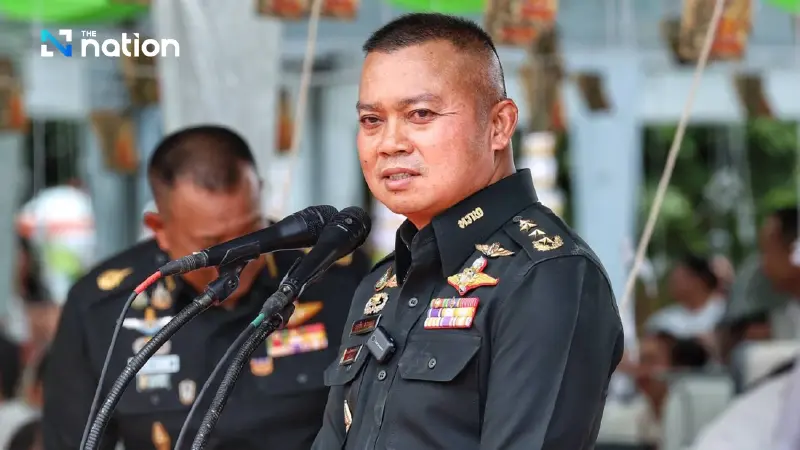
The clashes along the Thai–Cambodian border have ignited a surge of nationalism across Thailand, with Lt Gen Boonsin Padklang, Commander of the 2nd Army Area, emerging as the central figure.
His image as the “people’s general” has inspired patriotic sentiment across generations, from Baby Boomers to Gen Alpha, strengthening the conservative mood in society.
The key question now is how far conservative forces, often linked to Thailand’s “deep state”, can sustain and capitalise on this nationalist wave.
History suggests such momentum is rarely permanent.
The eight years of Gen Prayut Chan-o-cha’s government demonstrated how the right-wing tide can rise and fade, culminating in the May 14, 2023, election victory of the progressive Move Forward Party, a sign of public rejection of “camouflaged military government.”
On August 17, Lt Gen Boonsin attended the founding ceremony of Suan Tham Piti Temple in Chiang Khrua subdistrict, Kalasin.
Speaking to the press, he reiterated that after retirement, he would serve as a reservist and a good citizen, with no intention of entering politics. “I will continue to serve the nation where I can, but I do not seek political office,” he said.


His rising popularity stands in stark contrast to the political struggles of Prime Minister Paetongtarn Shinawatra, who faces a Constitutional Court ruling on August 29 over the leaked audio clip allegedly involving her and former Cambodian premier Hun Sen.
The scandal has dragged down both her approval ratings and support for the Pheu Thai Party.
A recent Nida Poll underscored the growing discontent: 32.29% of respondents said they were “not very satisfied” with political parties, 28.24% “not satisfied,” and 27.18% “not satisfied at all.” Only 11.60% expressed moderate satisfaction.
The survey reflects widespread disappointment with politicians, though not with democracy itself. However, the sharp decline in government popularity has raised fears among some observers that extra-parliamentary forces could intervene, a development seen as a serious warning sign for Thailand’s fragile political landscape.
Suwicha Paoaree, Director of Nida Poll, clarified that while Thai citizens remain committed to democracy, their disillusionment lies with politicians. “People do not support extra-constitutional power. It is almost like a national referendum: in times of war, citizens turn to the military and their commanders rather than elected politicians,” he said.

This sentiment has enabled right-wing activists to elevate Boonsin into the status of a national war hero after the five-day Thai–Cambodian border conflict. Some have even proposed extending his service and appointing him Defence Minister.
The brief conflict also shifted the balance of power inside the Ministry of Defence, effectively placing it under direct military command.
Field commanders now act with greater autonomy, no longer waiting for political instructions. Boonsin himself has shown little inclination to report to Deputy Prime Minister and Interior Minister Phumtham Wechayachai, reflecting the widening gulf between the military and the political leadership.
Behind the scenes, whispers suggest that elements within the armed forces may have deliberately engineered the border confrontation, raising suspicions among powerful figures linked to the ruling Pheu Thai Party. The growing prominence of the 2nd Army commander has reportedly unsettled political heavyweights.
At the same time, rumours persist that “big-name politicians” have attempted to recruit Boonsin into politics. A so-called “camouflage party” with longstanding military ties is said to be courting him, with retired generals and senior officers acting as intermediaries.
Publicly, Boonsin continues to reject political roles, but behind the curtain, efforts are underway to persuade him to help revitalise the party.
In a political culture often defined by the “deep state,” nothing can be ruled out.
With Thai–Cambodian tensions still high, the future of Gen Boonsin, who has pledged to serve only as a reservist and “good citizen”, may yet take an unexpected turn if the deep state decides he must shoulder a new mission.

