
Court explains reasons for acquitting Thaksin in lèse-majesté case
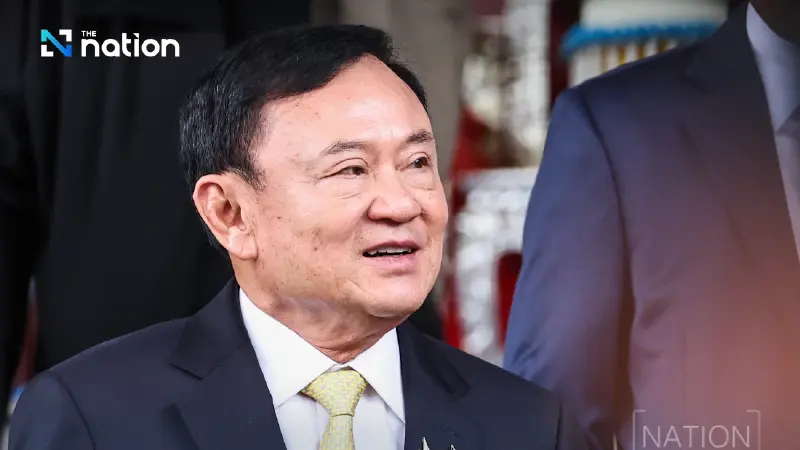


Court acquits Thaksin in lèse-majesté and Computer Crime Act case over May 2015 interview
- The court found that Thaksin's statements did not directly reference the King, instead using ambiguous terms like "Palace Circle," "councillors," and "people in the palace."
- The prosecution's evidence was ruled insufficient to prove that the statements amounted to defamation or insult of the monarchy, and their expert witnesses were considered unreliable due to potential bias.
- The court noted that the public's initial interpretation of the interview was as an attack on the military coup, not the monarchy, further weakening the lèse-majesté charge.
- Related charges of inciting harm and violating the Computer Crime Act were also dismissed due to a lack of evidence from the prosecution.
The Criminal Court delivered its verdict on Friday (August 22, 2025), on Case No. 1860/2567, filed by the prosecutors from the Criminal Litigation Office 8 against former Prime Minister Thaksin Shinawatra.
The charges relate to violations of Section 112 of the Penal Code (lèse-majesté law) and the Computer Crime Act, stemming from an interview Thaksin gave to South Korean media in May 2015.
After reviewing the evidence from both the prosecution and defence, the court focused first on whether Thaksin had indeed given the interview in the video clip presented as evidence, and whether the content of the statements matched the accusations in the indictment.

The prosecution presented testimony from police officers and Anant Laolerdvorakul, confirming that the clip indeed showed Thaksin speaking.
Although the full version of the interview was not provided as evidence, the court found that the video and testimony were sufficient to establish that Thaksin had given the interview, and there was no credible evidence to prove the clip had been doctored.
As for the content of Thaksin’s statements, the court examined whether they could be interpreted as defaming, insulting, or inciting hatred against King Bhumibol Adulyadej (King Rama IX).
The court noted that the statements did not directly reference the King by name or use royal language, but rather referred to third parties such as "he," "councillors," "soldiers," "Palace Circle," and "people in the palace."
The prosecution’s expert witness on language and other external witnesses were found to have potential biases against Thaksin, and thus their testimony was considered unreliable.
The court further noted that during the investigation, some witnesses, including police officers, had expressed doubts about the sufficiency of evidence to press charges, as the authenticity of the video clip could not be definitively confirmed.

In reviewing the statements, the court found that the video did not suggest that Thaksin was attacking or criticising the King or that the general public would interpret it as such.
Furthermore, upon reviewing Facebook pages and YouTube websites that shared the video interview, it was found that the person who initially shared the video had understood it to be an attack on the coup and the military takeover.


Therefore, the court ruled that the evidence presented by the prosecution was insufficient to prove that Thaksin’s statements amounted to defamation or insult of the monarchy.
Regarding the charge of inciting harm against the King, the prosecution failed to provide any relevant evidence, leading the court to dismiss this allegation.
Similarly, the charge of using the computer system to spread content harmful to national security was rejected, as the court found no grounds for considering Thaksin’s statements as an offence under the Computer Crime Act.
Thus, the court concluded that the charges against Thaksin for defamation and insults to the monarchy, as well as the charge under the Computer Crime Act, were unsubstantiated, and he was acquitted of all charges.
