
Pheu Thai bets on 20-baht flat fare to win back Bangkok voters


Pheu Thai’s central challenge is to restore public confidence if it hopes to remain competitive in the next election. The party still holds certain advantages in terms of state mechanisms and budgetary resources, but whether it can engineer a decisive turnaround in its approval ratings within the time left remains uncertain. It is by no means an easy task, as the Pheu Thai brand continues to carry glaring vulnerabilities that opponents are likely to exploit for a long time to come.
- The Pheu Thai Party is promoting its 20-baht flat fare for electric trains after other flagship policies, like the 10,000-baht digital wallet and an entertainment complex, have been scaled back or shelved.
- This policy is a key political strategy aimed at regaining support in Bangkok and its surrounding provinces, where the party suffered a crushing defeat in the 2023 election, losing most seats to the rival People's Party.
- The fare scheme is now considered a political lifeline and a test of whether providing tangible, immediate benefits can help the party rebuild trust and win back voters in its former strongholds.
All eyes are now on the Constitutional Court as it prepares to deliver a crucial ruling on August 29 in the case of Prime Minister Paetongtarn Shinawatra, daughter of former premier Thaksin Shinawatra.
The verdict, stemming from the leaked audio clip of her conversation with Cambodian Senate President Hun Sen, will decide not only her survival as Thailand’s 31st prime minister but also the trajectory of her political career.
While Paetongtarn awaits judgment, the ruling Pheu Thai Party, the driving force of the coalition, cannot afford to pause. It must push ahead with the policies promised on the campaign trail, despite the uncertainty over who may remain at the helm. Politics, as ever, must move forward.
Yet the party’s flagship digital wallet scheme, once billed as a universal 10,000-baht handout to 50 million Thais aged 16 and above, has been scaled back under pressure from fiscal constraints and political challenges.
So far, only two groups, the 14 million vulnerable citizens and around 3 million elderly people, are set to benefit. Even this limited rollout faces scrutiny after a petition was lodged with the National Anti-Corruption Commission, questioning whether reallocating funds from other agencies to finance the scheme could breach Article 144 of the Constitution.
Another high-profile initiative, the proposed entertainment complex project, has also been shelved indefinitely. Mounting opposition proved too strong for the government to risk pushing it through, given the potential political fallout that could further destabilise its standing.
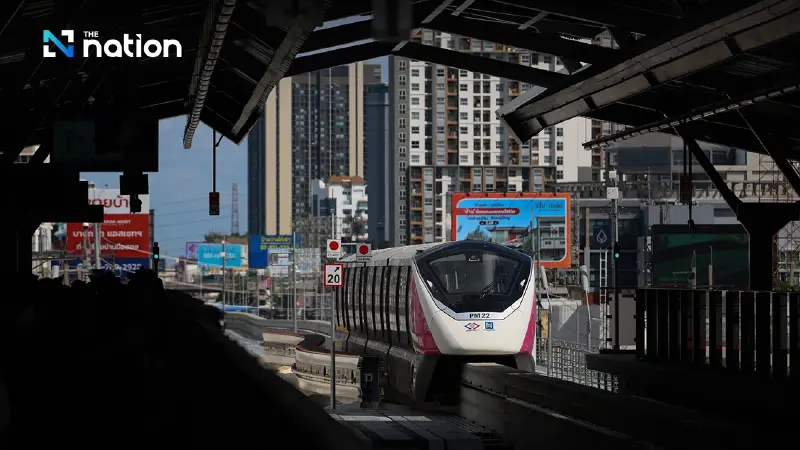
The timing has now put the spotlight on Pheu Thai’s 20-baht flat fare for electric trains, which opened for public registration on August 25.
Having been piloted in 2024 on the Red and Purple lines, the scheme is emerging as one of the party’s key hopes to revive its political fortunes ahead of the next general election.
The stakes are especially high in Bangkok and the surrounding provinces, where commuter rail lines cut through what has become the stronghold of the People’s Party, formerly Move Forward.
Pheu Thai suffered a crushing defeat in the 2023 election, winning only one of the capital’s 33 seats, in Lat Krabang. The rest went to the orange camp.
The party’s former bastions around Bangkok have also crumbled. In Samut Prakan, with its eight constituencies, the People’s Party swept the province, once a Pheu Thai and red-shirt stronghold.
The same was true in Nonthaburi, where Pheu Thai used to dominate, but this time lost all eight seats.
Pathum Thani, with seven constituencies, delivered just one MP for Pheu Thai, with the rest captured by the rival party.
Against this backdrop, the 20-baht flat fare, though not a flagship policy during the campaign compared to the digital wallet scheme, has suddenly taken centre stage.
Originally designed to address transport cost concerns, it has now become a political lifeline as other ambitious projects, such as the digital wallet and the entertainment complex, have either stalled or been shelved.
For Pheu Thai, the challenge is clear: rebuild trust and credibility before the next election. The party retains some advantages in state mechanisms and budgetary leverage, but whether this transport subsidy can shift public sentiment remains uncertain.
Restoring its approval ratings will not be easy, especially with the controversy surrounding Prime Minister Paetongtarn’s leaked audio clip with Hun Sen still overshadowing the party and providing ammunition for opponents.
The 20-baht policy, then, is more than just a fare scheme; it is Pheu Thai’s test of whether quick, tangible benefits can win back voters in a region where its political brand has lost much of its once formidable strength.
