
9 Facts about Thailand’s MotoGP
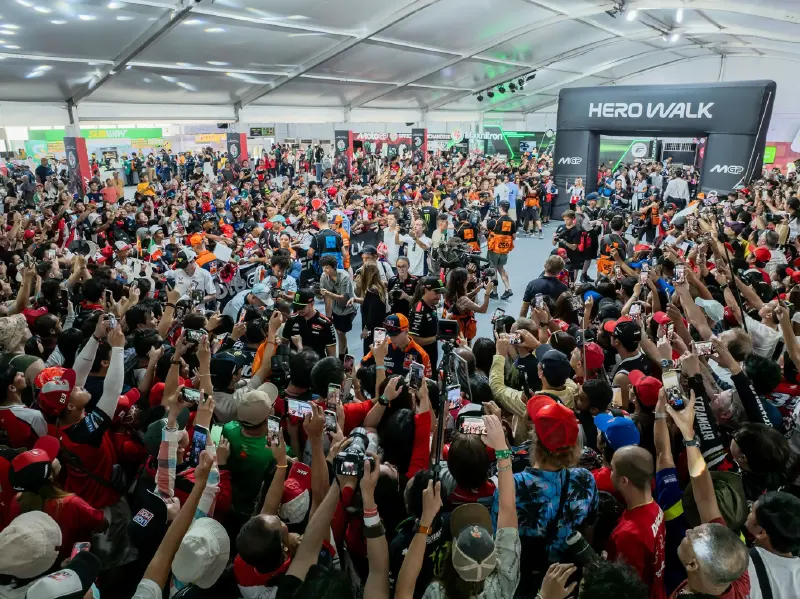


The Sports Authority of Thailand (SAT) has released a comprehensive clarification on every major question related to MotoGP Thailand — from the very first contract up to the current renewal process.
Here are the “9 Facts About MotoGP Thailand: Is It Really Not Worth It, Lacking Private Sponsors, or Losing Viewers?” backed by concrete economic data and official figures:
1. Where did the THB3.997 billion go, and was it all spent at once?
Dorna Sports, the global rights holder of MotoGP, requires contracts to be made directly with governments or state agencies to ensure stability and proper oversight. Therefore, the Sports Authority of Thailand (SAT), as a state entity, is the sole contracting party with Dorna.
All licensing fees are approved year by year and paid directly to Dorna Sports — with no middlemen or private beneficiaries.
Meanwhile, all revenues from ticket sales and private sponsorships are transferred directly to SAT to help reduce the government’s financial burden.
2. Licensing fees increased significantly — did Thailand negotiate?
Yes. Licensing fees have increased across all host countries, and Thailand’s fees remain lower than many others.
SAT attempted to maintain the previous rate, but competition among countries seeking to host MotoGP has intensified. Moreover, the new contract includes two competitive days — Saturday’s Sprint Race and Sunday’s Race Day — increasing the event's value and global audience reach.
Considering global price adjustments and Thailand’s relatively favourable rate, the negotiation serves the country’s best interest.

3. Is MotoGP funding more important than flood-relief budgets?
No — these are entirely separate budget categories.
Sports and global event hosting budgets fall under SAT’s annual operational budget.
Disaster relief funds come from the government’s central emergency budget.
Thus, the THB4 billion framework (for 2027–2031) does not affect or reduce the country’s emergency relief budget.
4. Was the contract renewal rushed?
On the contrary, the process is later than ideal.
The current contract ends in 2026. Dorna requires hosts to confirm renewal at least one year in advance, meaning Thailand must decide by 2025.
Given strong competition from other countries eager to replace Thailand, acting now is both timely and necessary to retain an event projected to generate over THB28 billion in economic value within the next 5 years.
5. Are viewership numbers dropping? Where is the value?
Actual data shows viewership has grown consistently, except during Covid restrictions:
2018: 222,535 (Highest of the season, winning “Best Grand Prix of the Year”)
2019: 226,655
2022: 178,463 (reduced due to health-based capacity limits)
Post-2022: numbers have continued to increase.
Economically, MotoGP Thailand generated THB24.9 billion (2018–2025) and is forecasted to generate an additional THB28 billion during the next contract period (2027–2031) — the highest among Thailand’s major events.

6. Is private-sector support declining, forcing the government to shoulder the costs?
Thailand is one of the few host countries where private-sector support plays a major role in funding the event.
Despite global economic slowdowns during Covid-19, SAT continued to secure sponsorships. In the new contract period (2027–2031), SAT targets over THB700 million in private sponsorship — reaffirming the model of private-driven funding.
7. Does revenue go to private operators? Why must the event be held in Buriram?
SAT does not have a contract hiring Buriram United International Circuit Co. Ltd.
In fact, the Chang International Circuit provides free use of the venue, valued at about THB12 million per year (72 million over 6 years). All revenues — ticket sales and sponsorships — go directly to SAT.
MotoGP cannot be held elsewhere because the Chang Circuit is the only FIM Grade A circuit in Thailand that meets MotoGP’s international standards.
8. Does the arrangement benefit the private owner of the circuit?
The financial structure prioritises state transparency and benefit:
All event revenues go to SAT
SAT deducts these from the licensing fees
The goal is to minimise public funding
The free use of the circuit further reduces costs, showing no special advantage to the private owner.
9. Has MotoGP been supported by every Thai government?
Yes. MotoGP has consistently been supported by all administrations due to its substantial economic impact and global branding benefits.
Contract 1 (2018–2020)
Gov’t: Gen. Prayut Chan-o-cha
Support: THB300 million (100 million/year)
Results:
Best Grand Prix of the Year (2018)
Economic impact (2 years): THB6.58 billion
Private sponsorship: THB 528 million
Contract 2 (2022–2026)
Gov’t: Gen. Prayut Chan-o-cha
Support: THB900 million (with priority on private funding)
Results:
Private sponsors: THB770+ million
National Sports Development Fund: THB800 million
Economic impact: THB24.9 billion (2018–2025)
Free track use: THB72 million savings
Contract 3 (2027–2031)
Current status: Cabinet approved hosting; yearly budgets to be proposed
Expected private sponsorship: THB700+ million
No impact on urgent national budgets
