
80 Years On: Hiroshima guide passing on stories of 2 tragedies
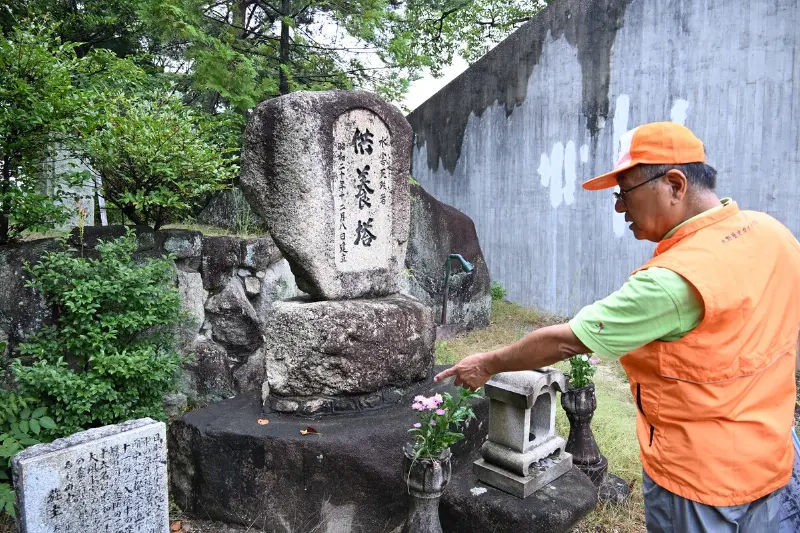


A local volunteer guide in Hiroshima Prefecture is working to pass down the stories of two tragedies--a US atomic bombing and a massive typhoon--that struck the western Japan prefecture in quick succession 80 years ago.
"I hope to provide an opportunity for people to think about disaster prevention and peace," a guide in the city of Hiroshima Hatsukaichi said.
Just a month after Hiroshima was devastated by an atomic bomb dropped by the United States on Aug. 6, 1945, toward the end of World War II, Typhoon Ida, better known in Japan as Typhoon Makurazaki, hit the country. The typhoon is regarded as one of the three biggest to hit Japan during the country's Showa era (1926-1989).
Of the 3,756 people who were killed or went missing in the typhoon, 2,012 were in Hiroshima.
At around 10:20pm on Sept. 17, 1945, a typhoon-caused mudslide hit Ono Army Hospital, located in what is now Hatsukaichi, killing over 150 people, mainly hibakusha, atomic bomb survivors who were receiving treatment and members of a team sent from Kyoto University to treat such patients and to research the impact of the atomic bombing.

"Tragically, those who survived (the atomic bombing) and were taken to the hospital died just a month later (in the typhoon disaster)," said 78-year-old Hironobu Mizukami, who has served as a local history guide for over 20 years.
Mizukami has taken people on guided tours to a memorial monument built near the hospital site, as well as informing people that cutting down trees during the war had increased the risk of a mudslide.
"Just talking about the extent of the damage isn't enough," Mizukami said. "How we apply the lessons from these tragedies to disaster prevention and peace-related efforts is of great importance."
Today, not many people with firsthand experience of the tragedies remain. When Mizukami asked those who were affected by the disasters about their stories, some said that they did not remember, while others said that they did not want to be reminded of them.
Mizukami said that he hopes people will learn from the struggles of the survivors.
A symposium was held in Hatsukaichi on Sunday about Typhoon Makurazaki.
"There are lessons we need to learn (from the disasters) even in this day and age," Kunio Yanagida, who wrote "Kuhaku no Tenkizu," a nonfiction book about the two tragedies, said.
Citing a massive flood caused by a collapsed dam in Ukraine amid Russia's ongoing invasion, he said, "Double disasters can strike at any moment."
With this year marking the 80th anniversary of the major typhoon, Yanagida said that "hardly anyone" remembers experiencing the disaster's damage firsthand.
"The challenge from now on is how we utilise the tragic memories for disaster prevention, while documenting such stories," he said.

[Copyright The Jiji Press, Ltd.]
