
Chanapatana Marks 25 Years, Championing Human Design Over AI
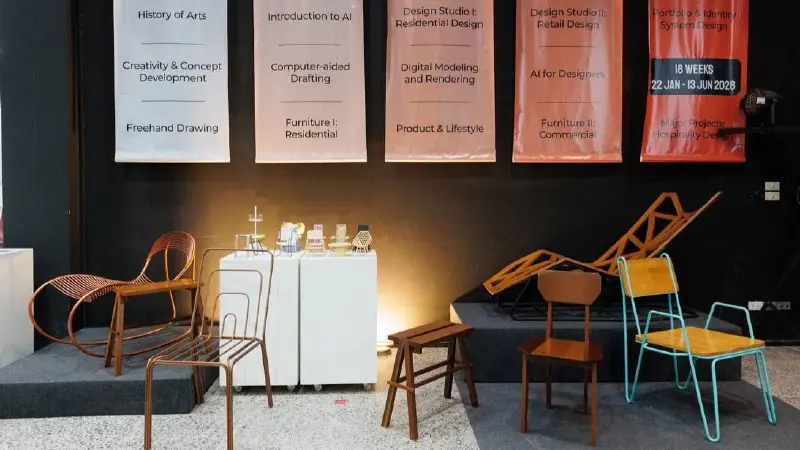


Celebrating 25 years and 1,235 alumni, Chanapatana Institute champions human identity over AI and invites aspiring designers to its August 2026 Open House.
Chanapatana Marks 25 Years of Creative Excellence, Positioning Human ‘Identity’ as the Core Driving Force in the AI Era
As Artificial Intelligence transforms the global tech landscape and automates visual content generation, Chanapatana International Design Institute (CIDI) is taking a firm stance on the future of design: while AI is a powerful workflow accelerator, human identity, emotional depth, and hands-on execution remain irreplaceable.

The announcement comes as the institute celebrates its 25th anniversary, highlighting a legacy of empowering over 1,235 alumni and fostering more than 350 design-driven brands since its founding in 2000.
Capitalizing on a 71.9 Trillion Baht Global Creative Economy
According to data from the Creative Economy Agency (CEA), the global creative industry has reached a valuation of over 71.9 trillion baht ($2 trillion USD), employing more than 50 million people worldwide. In Thailand, the creative economy has surged to 1.44 trillion baht, contributing nearly 390 billion baht in export revenue.
Chanapatana has established itself as a vital economic incubator within this sector. Over 85% of its graduates successfully launch creative careers or build independent commercial brands.
Standout alumni include Maythawee Angthong, founder of fashion brand Black Sugar (featured at Vienna Fashion Week), and Narong Ketkaew, designer behind high-profile Miss Universe stage garments under the brand Narong.
To mark this milestone, the institute held a memorial ceremony unveiling a statue of its founder, Somdet Phra Nyanavajirodom (Luangphor Viriyang Sirintharo), honoring his vision of a world-class educational society with full support from Prof. Sakorn Suksriwong, DBA, President of Chanapatana.

Tech vs. Touch: Why AI Cannot Replace Human ‘Design DNA’
As generative AI tools like Midjourney, DALL-E, and specialized CAD neural networks enter the design workflow, industry leaders are debating the longevity of human creative roles. Chanapatana’s leadership views AI as an efficiency amplifier rather than a substitute for human intuition.
"We view AI not as a replacement, but as another tool to accelerate the workflow," said Mr. Sittiphat Thanasarasin, President of Chanapatana. "However, foundational knowledge and personal identity remain paramount. If designers rely solely on AI without cultivating their own design DNA, the market becomes saturated with repetitive, generic work."
Sittiphat emphasized that modern consumers increasingly seek sensory, human-centric design. "Understanding emotional depth and drawing inspiration from inner human experiences are qualities that AI cannot replicate," he added.

Democratizing Design Education: August Open House
Operating under the philosophy "Different Dreams, One Place," Chanapatana offers specialized Italian-standard diploma programs in Fashion Design and Interior & Product Design. The curriculum is taught by international faculty and structured to accommodate career switchers and individuals with zero prior design background at an accessible tuition rate.
To introduce its practical methodology and human-first approach to design technology, Chanapatana is hosting two Open House events on August 1 and August 22, 2026, at its Sukhumvit 101 campus in Bangkok. Attendees will explore the curriculum, participate in hands-on workshops, and connect with industry leaders and successful alumni.
