
Trump signs order to ease US marijuana regulations, sparking industry hopes
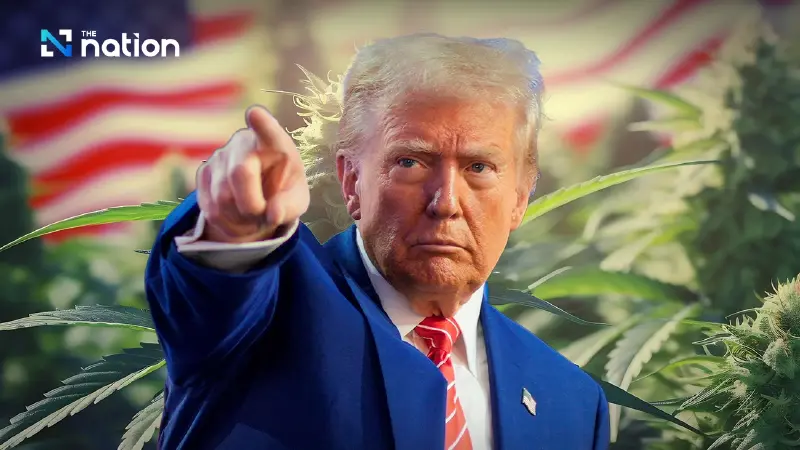


US President Donald Trump signed an executive order on Thursday (December 18) that could significantly shift federal marijuana regulations, loosening restrictions that have been in place for decades.
- President Trump signed an order directing the Attorney General to fast-track the reclassification of marijuana from a Schedule I substance to a less restrictive Schedule III.
- The move is intended to expand medical research and could potentially reshape the cannabis industry by unlocking research funding and allowing businesses to access banking services.
- Despite the change, the order clarifies that marijuana will remain illegal at the federal level, with the primary focus being on providing access for medical patients.
- The decision has generated a mixed political reaction, earning praise from some Democrats while facing strong opposition from many Republicans.
The order instructs the Attorney General to fast-track the reclassification of marijuana, potentially listing it alongside substances like ketamine and testosterone as a less dangerous drug.
This move would mark one of the most substantial changes in federal marijuana policy in years.
It has the potential to reshape the cannabis industry, unlock billions in research funding, and allow access to banking and investment for cannabis-related businesses.
While Democratic Senate leader Chuck Schumer praised the decision, many Republicans, including Trump’s own party members, voiced strong opposition.
Trump emphasised that although marijuana would remain illegal federally and subject to varying state laws, it was necessary to provide access for patients who require it.
"We have people begging for me to do this, people in great pain for decades," Trump said, adding that while he himself would not use the drug, he recognised the demand for it.
The order is primarily aimed at expanding medical research into marijuana and its derivatives.
The Centres for Medicare and Medicaid Services is expected to begin permitting some beneficiaries to use hemp-derived CBD (Cannabidiol) products starting in April.
Many Republicans have expressed concerns that reclassifying marijuana could send the wrong message, citing potential dangers such as enabling drug cartels and increasing road risks.
Despite its illegal status at the federal level, marijuana remains widely used, with nearly one in five Americans consuming it annually.
The Drug Enforcement Administration (DEA) is tasked with reviewing the reclassification, which would change marijuana’s status from a Schedule I substance, alongside drugs like heroin and ecstasy, to Schedule III, which includes drugs with medical uses and a lower risk of abuse.
While cannabis stocks saw an initial increase following the announcement, they experienced a drop by Thursday's close.
Despite this, analysts noted that expectations for banking provisions in the order, which were not included, might have led to some investor disappointment.
Cannabis businesses continue to face financial challenges, as federal restrictions prevent most banks and institutional investors from entering the sector.
Although marijuana legalisation enjoys broad public support, it remains a divisive issue in Congress.
Trump's administration has long been associated with a tough-on-crime stance, but his decision to ease cannabis restrictions marks a significant shift, with many seeing it as a step towards greater acceptance of the drug in the US.
Reuters
