
Home rebuilding lags in Noto 2 years after quake
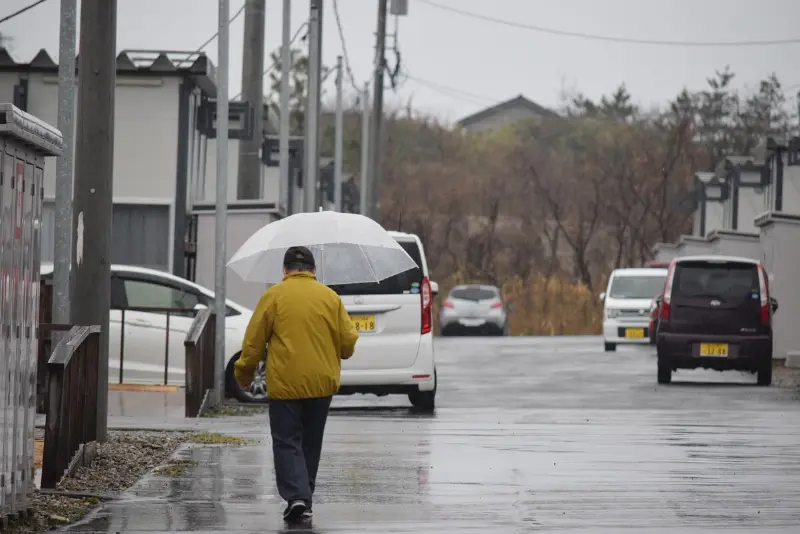


The proportion of households that received additional financial support on top of basic disaster relief for rebuilding homes damaged by the (January 1, 2024) earthquake stands at only about 30 per cent in six municipalities in the Noto Peninsula in central Japan, Jiji Press learned Wednesday (December 31).
Even two years after the earthquake struck the peninsula in Ishikawa Prefecture, the situation shows that reconstruction is not proceeding smoothly due to the high number of elderly residents in disaster-hit areas, a shortage of homebuilders and soaring construction costs.
The peninsula was also hit by heavy rain in September 2024.
The support consists of basic relief of up to 1 million yen, depending on the degree of damage to the house, and additional support of up to 2 million yen, depending on the reconstruction method, such as new construction or repairs.
The proportion of recipients of additional support funds is regarded as an indicator of the progress of reconstruction.
According to the Ishikawa prefectural government, as of the end of November 2025, 11,059 households in six cities and towns in the Noto region had received basic relief as their homes were heavily damaged by the disasters.
Additional support was provided to 3,247 households, or 29 per cent of them.
The proportion stood at 22 per cent in the city of Wajima and 25 per cent in the city of Suzu, showing delays in reconstruction in the Okunoto coastal area.
The proportion in municipalities in the prefecture other than the six cities and towns came to 44 per cent.
The delays in reconstruction are due to a shortage of homebuilders and soaring construction costs.
A municipal government official in the Okunoto coastal area said that construction costs are about three times higher than in the past.
"Home rebuilding is not progressing well because elderly people cannot get loans, and there is a shortage of contractors."
This is also partly because many disaster victims are waiting to move into the disaster public housing that is expected to take several more years to complete.
More than 8,000 households are still living in temporary housing, including units rented from private apartments.
Although they can live in temporary housing for up to two years in principle, extensions are allowed if home reconstruction is delayed.
According to a survey by the prefectural government, more than 80 per cent of responding households want to extend the period of stay.
A woman in her 70s living in temporary housing in Wajima was doubly affected by the earthquake and heavy rain, which forced her to demolish her house.
"When I hear people around me building new houses, I envy them, but the cost is very high," she said.
"In the end, disaster public housing may be the only option," she added with a sigh.

[Copyright The Jiji Press, Ltd.]
