
Trump says Iran crackdown deaths are decreasing, military action still possible
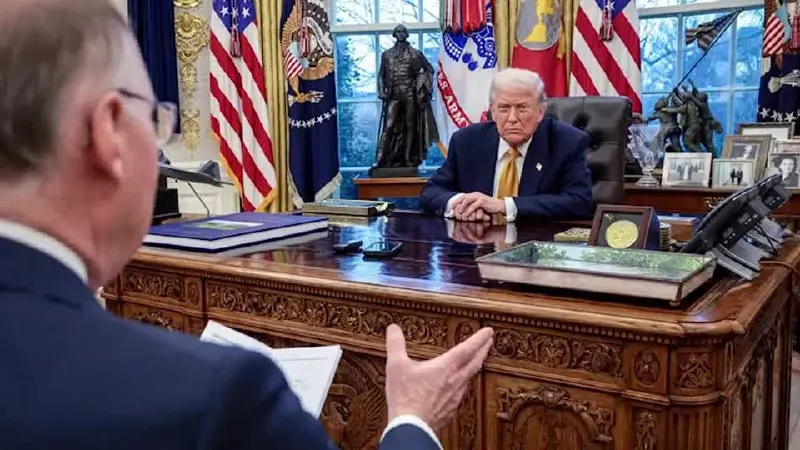


US President Donald Trump stated that the death toll in Iran's crackdown on protests is decreasing and dismissed large-scale executions for now, despite ongoing concerns of US military intervention.
- President Trump stated that the death toll from Iran's crackdown on protesters is decreasing and that he does not expect mass executions.
- Despite his comments on the subsiding violence, Trump confirmed that the possibility of U.S. military intervention has not been ruled out.
- Experts and diplomats warn that U.S. military action could have severe unintended consequences, such as intensifying the crackdown, provoking Iranian retaliation, or causing government collapse.
- While some Iranian opposition leaders support U.S. military action, analysts suggest that financial or cyber attacks could be more effective alternatives to a direct strike.
US President Donald Trump stated on Wednesday (January 14) that the death toll in Iran’s crackdown on nationwide protests was decreasing, and he believed there were no plans for large-scale executions of protesters.
His comments, made during an event in the Oval Office, came amid growing concerns in the Middle East about potential US military intervention, following Trump’s repeated threats to take action on behalf of the protesters.
However, he did not dismiss the possibility of military intervention outright.
Some experts and diplomats in the region caution that a US intervention could have unintended consequences, such as suppressing the protests, intensifying the crackdown on demonstrators, and provoking Iranian missile strikes on US bases in the Middle East.
In the worst-case scenario, they warn that military action could hasten the collapse of Iran’s government, potentially sparking widespread chaos, encouraging separatist movements from minority Kurdish and Baluch groups, and leaving Iran’s nuclear and missile programs vulnerable.
Despite these concerns, several US intelligence assessments this week indicated that while the protests represent a significant challenge to the government, it does not appear to be on the verge of collapse.
Sources familiar with the situation also highlighted Iran’s ongoing internal challenges, such as ethnic unrest, unregulated nuclear materials, and scattered missile stockpiles, which could exacerbate the risks of regime change.
The protests, which have escalated into the largest challenge Iran’s clerical leadership has faced since the 1979 Islamic Revolution, have seen massive crowds calling for the government’s removal.
The death toll has reportedly surpassed 2,600, though some experts believe the actual number is even higher.
Trump mentioned that sources had informed him the violence was subsiding and that he didn’t expect mass executions at this time.
However, he stopped short of ruling out US military intervention, stating that the administration would monitor developments closely.
In the Gulf, Arab governments are reportedly anxious about the possibility of US strikes, urging both American and Iranian officials to de-escalate tensions.
Meanwhile, some opposition leaders, like Abdullah Mohtadi of the Komala Party of Iranian Kurdistan, argue that only substantial US military action could halt the Iranian government’s violent suppression of protesters.
Trump, who authorised strikes on three Iranian nuclear facilities in June, has not disclosed his potential response should the crackdown intensify.
Some sources suggest that Trump’s advisors have been considering various options, including limited strikes on strategic military targets.
Experts point out that Trump's repeated threats of action may leave him with limited options if the crackdown continues, potentially forcing him to follow through to maintain his credibility.
However, the nature of the targets chosen for any military strike could significantly influence the protests’ outcome, either dampening them or fueling further unrest.
Some analysts suggest that Trump could have a more significant impact by targeting Iran’s financial resources or conducting cyberattacks, giving the protests more room to evolve.
A military strike, they warn, would likely create expectations of an immediate result, which could either fuel dissatisfaction or be seen as ineffective.
The Trump administration’s stance on Iran remains aggressive, with continued pressure on the regime, including the rhetoric and actions taken earlier in the year, such as the attack on Venezuela’s Nicolas Maduro.
Reuters
