
Middle East conflict disrupts Thai industrial supply chains
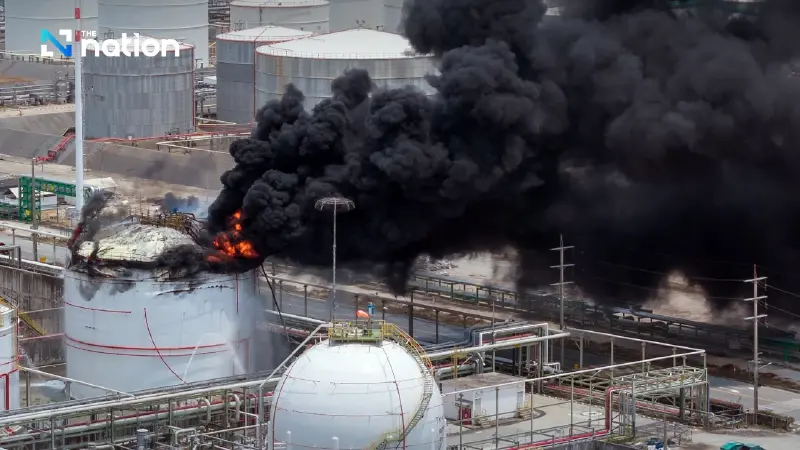


TOA says raw materials may last only 20 days, Mama flags packaging film shortages, and SCG has suspended its Rayong olefins plant.
- The conflict in the Middle East has disrupted shipments through the Strait of Hormuz, causing a shortage of petrochemical feedstocks like crude oil and natural gas for Thai industries.
- Major chemical producer SCG has temporarily suspended operations at its olefins plant in Rayong due to the inability to secure key raw materials like naphtha and propane.
- TOA Paint is experiencing a shortage of raw materials derived from petrochemicals, leaving it with only 20 days of inventory and an expected decline in first-quarter performance.
- Manufacturers of consumer goods, such as Mama instant noodles, are facing a scarcity of plastic resin, which threatens the production of essential product packaging.
The Thai industry has been hit by the Middle East war, leading to shortages of petrochemical feedstocks.
TOA said raw materials were in short supply, with inventory sufficient for only 20 days, and expected its first-quarter performance this year to decline.
Mama said plastic resin was becoming scarce, affecting film used to make packaging, while suppliers were refusing orders for one week.
SCG has halted its olefins plant in Rayong after running short of raw materials.
The war in the Middle East has led to the closure of the Strait of Hormuz, disrupting shipments of crude oil and liquefied natural gas.
This has affected the production chain in the petrochemical industry, causing factories in the sector in Thailand to suspend production, while many operators are concerned about shortages of raw materials.
Jatuphat Tangkaravakoon, chief executive officer of TOA Paint (Thailand) Public Company Limited, or TOA, said the fighting in the Middle East would affect the business in the first quarter of 2026 because most of the company’s products are by-products of the petrochemical business, where upstream producers have shut down operations and reallocated supply.
As a result, the company now has to monitor the situation day by day.
Therefore, the company expects the first-quarter profit in 2026 may decline due to higher energy costs and oil prices.
However, it expects the impact to become more visible from the second quarter of 2026.
At present, the company has raw material stocks for 20 days and must monitor how much additional supply will be received in the coming days to determine whether it will be sufficient to support sales in the following month.
One of the materials most affected is titanium dioxide.
The company also acknowledged that margins were quite volatile because it had not hedged its foreign exchange exposure, as it did not want to speculate on currency movements.
It has set this year’s investment budget at THB750 million, up from THB658 million last year.
Of the total, 33.6% will be allocated to expanding production capacity, including the expansion of its gypsum plant, construction chemicals plant, improvements to its plant in Vietnam, expansion of warehouses and offices in Laos, and upgrades to its research and development building.
Signs of a plastic resin shortage
Pun Paniangvait, general manager of Thai President Foods Public Company Limited, the manufacturer of Mama instant noodles, said signs of a shortage of plastic resin used to produce product packaging had begun to emerge since last week due to the fighting between the United States, Israel and Iran, which had pushed oil prices higher.
The company, which produces Mama instant noodles and has its own packaging printing plant, requires film to make packaging, and that film is made from plastic resin feedstock.
“The signal of a plastic resin shortage has already emerged. Mama’s packaging printing plant, which has to buy film for use, is no longer receiving orders, and orders are being rejected. What must be watched from now on is whether plastic resin will become scarce. No one can answer that. But the first impact we will face is that packaging prices will definitely surge, and operators will have to shoulder the burden.”
In the short term, higher film prices are not the main concern because the company can absorb them.
What is more worrying is a shortage of raw materials, because even if there is flour and palm oil to make the product, without packaging, the goods cannot be produced for sale.
As a result, the company has to manage its raw materials carefully, using film mainly for Mama sachet products and best-selling flavours such as tom yum shrimp and minced pork.
Slow-selling products will not be produced for stock to wait five to six months for sale.
Film will be used only as necessary to prevent product shortages.
However, regarding concerns that signs of a packaging shortage could affect the supply of goods to the market and lead to stockpiling, he said the issue could be viewed in two dimensions.
Stockpiling might occur, but on the other hand, purchasing power in the first two months has been quite weak, so the bigger concern is where people would find the money to buy goods in large quantities for hoarding.
“All types of products that use film for packaging are worrying, including consumer goods, instant noodles, soap, snacks and processed foods sold in sachets. If there is a shortage, production cannot continue because the raw materials or feedstocks all come from plastic resin.”
As for whether consumers will stockpile products, he said consumers may instead choose to save more rather than spend large sums or even a few hundred baht on stockpiling goods.
Overall, he was not concerned that panic buying would occur.
Regarding the outlook for higher production costs, he said in the short term, operators of consumer goods or essential products would likely absorb the burden first, while hoping the fighting between the United States and Iran would end quickly.
Concerns over plastic resin pushing up costs
Earlier, Srichand, a beauty products manufacturer, expressed concern that energy prices would affect product packaging because plastic resin is used as a feedstock, which would lead to higher costs.
In the short term, however, the company would not be able to pass the burden on to consumers.
Osotspa has an energy price contract with PTT Public Company Limited running until 2028-2029, while energy prices will rise or fall in line with the oil price formula.
In addition, PTT has informed the company of a 90-day energy price freeze to help manage costs, while reiterating that even if costs rise, the company has no policy of increasing product prices.
SCG olefins plant affected
Thammasak Sethaudom, president and CEO of SCG, informed the Stock Exchange of Thailand on March 10, 2026 that the company had to temporarily suspend operations at the olefins plant of Rayong Olefins Company Limited (ROC), a subsidiary in its chemicals business, after tensions linked to the Iran war in the Middle East, particularly around the Strait of Hormuz, disrupted the supply chain for key production feedstocks.
Tensions in the Middle East around the Strait of Hormuz, a vital global shipping route for oil and natural gas, have affected supply chains and created constraints in securing key raw materials for the chemicals business’s olefins plant.
The affected feedstocks include naphtha and propane, which are critical to the olefins production process.
The company’s assessment found uncertainty and signs that the problem could drag on, with some raw materials unable to be delivered to destination countries as planned.
As a result, in order to cope with this force majeure event, the company has had to temporarily shut down the ROC plant, and Rayong Olefins Company Limited has declared force majeure to trading partners and customers in accordance with the rights set out in relevant contracts.
The impact of the plant shutdown will raise costs by THB150 million per month.
However, ROC is a highly efficient plant that uses automation and digitalisation technology in its operations, allowing it to manage costs to some extent.
The chemicals business is continuing to monitor the situation closely and adjust its operating plans in line with the uncertainty, with due regard for customers and all stakeholders.
Apart from the shutdown of the ROC plant, operations at other plants in the chemicals business, as well as SCG’s other businesses, continue as normal, although operating models have been adjusted to suit the uncertain situation.
SCG remains in a strong financial position and has sufficient cash on hand to cope with a prolonged situation.
In 2025, it recorded adjusted EBITDA of THB55.012 billion, of which THB4 billion came from the chemicals business.
The temporary shutdown of the ROC plant does not have a significant impact on SCG’s overall business.
