
Tokyo’s Global Talent Enriches the City
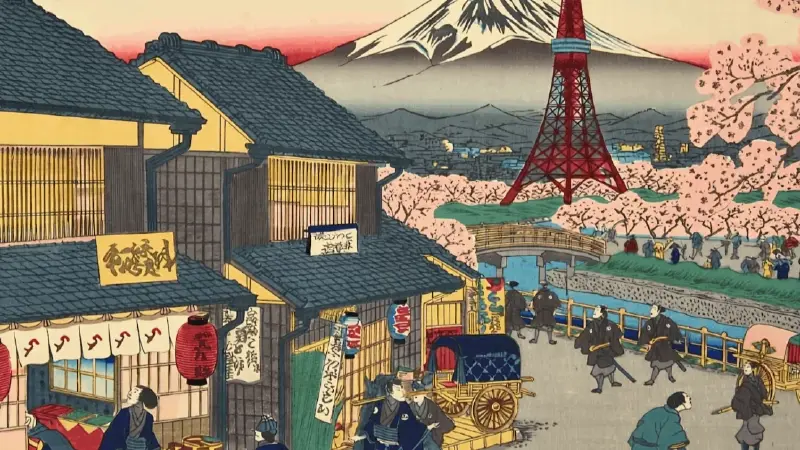


Tokyo’s combination of business and research opportunities, along with a high standard of living, a blooming cultural scene, and safety make it a popular city for highly skilled talent from around the world.
Learn about three people from different fields of expertise, who have each put down roots in Japan’s capital, building not only their careers but also a community and fulfilling life in this city of possibilities.
A Gardener Captivated By the “Two Sides” of Tokyo
Swedish-born Murasame Tatsumasa’s fascination with Japanese history began in middle school, when he was especially drawn to the Warring States period (15th century to early 17th century) warlord Uesugi Kenshin. Right after finishing high school, he made the bold decision to move to Japan.
"When I started looking for work, I wanted something that really connected me to the essence of Japan—something rooted in its history and traditions. I was also fascinated by the idea of an apprenticeship. As I kept researching, it hit me: Japanese gardens are the perfect place to experience a culture that has carried on since the time of the samurai."
At first, Murasame held a string of short-term jobs, spending his days performing menial tasks and asking every master gardener he met to take him on as an apprentice, only to be turned down time and again. At last, he was accepted. Five years of training later, at the age of 26, he became a Japanese citizen and changed his name.
Now working as a master gardener and actor, he says that gardens in Tokyo, right in the heart of a huge metropolis, have a unique charm you cannot find anywhere else. "It's the duality—you can step into Japanese gardens of all sizes and feel surrounded by nature, even while you're in the middle of a city of skyscrapers. Throughout central Tokyo, you'll also find numerous shrines and temples, where the natural setting is carefully preserved,” he says. “That striking contrast—the unexpected beauty of old and new side by side—is something you can only experience in Tokyo."
A Researcher “Upgrading” Her Dreams in Tokyo
Sujata Saini is a researcher from India pursuing her PhD at Tokyo Metropolitan University (TMU), focusing on information visualisation and applying AI to digital humanities. She first visited Tokyo in 2018, seeking a place where innovative ideas and practical research were actively supported. Feeling like the city offered the right balance of resources, professionalism, and openness, she applied for scholarships and was awarded the MEXT (Ministry of Education, Culture, Sports, Science and Technology) scholarship, which allowed her to begin her PhD in September 2021.
At TMU, Saini received both academic and personal support. The university, established and operated by the Tokyo Metropolitan Government (TMG), offers multiple avenues of funding, and when her first scholarship term ended, she was able to continue thanks to another TMG program.
Saini found the language barrier less challenging than expected. While learning Japanese helps, Tokyo's international environment and the willingness of people to assist made the transition smooth. She observed that even those who speak little Japanese are able to live and work comfortably in the city. Daily life in Tokyo also impressed her with its safety and convenience, noting "it's really a safe place... I can even go home on the last train around 1:00 a.m."
Looking ahead, Saini plans to continue her academic career in Japan, having already been offered an assistant professor role. Her guiding philosophy reflects her journey: "Don't replace your dreams, upgrade them." For her, Tokyo has been the city where those upgraded dreams became reality. She encourages young researchers from abroad to experience the city themselves, "when people are young, they must explore the world to have a different perspective. And nowhere is more inspiring than Japan and Tokyo."
Uncovering Japanese Culture Through AI Technology
Originally from Thailand, Tarin Clanuwat is a research scientist at Sakana AI, a Japanese startup which has attracted AI researchers and developers from around the world. She is leading the development of AI models specialised for Japanese culture, focusing specifically on ways to connect culture and technology, such as creating tools to assist in deciphering the hard-to-read handwritten texts of ancient documents, as well as a project to recreate the language and worldview of the Edo period (1603-1868).
Her app Miwo, an optical character recognition (OCR) model that scans handwritten text and converts it to modern Japanese, has already been downloaded over 200,00 times and has proven helpful for researchers. She hopes to continue developing Miwo to be able to process a wider range of documents, translate into other languages, and even answer questions about the text. “I want to make the AI able to access minor works that have not yet received significant, if any, scholarship. I really want to make the books that no one has read accessible.”
According to Clanuwat, being able to conduct research in Tokyo is important, as she thinks that to create AI with a deep understanding of cultural background, it is essential to be in a city where culture is alive and well. She notes that in Tokyo, there are many places where you can come into contact with Edo culture in everyday life, such as the used bookstore district of the Jimbocho area and shopping streets that have been bustling since that period, and this adds depth to the learning and development of AI models.
Clanuwat praises the people of Japan for carefully preserving documents and art across hundreds of years, passing on valuable knowledge to the people of today. With the help of AI, she believes we will not let their efforts go to waste.
Towards a city where people can put down roots and thrive
The journeys of these three people demonstrate that Tokyo is not just a destination, but a city where people can create a life filled with learning, work, and contributing to community and society.
Murasame Tatsumasa sought out the essence of Japanese culture and is now a respected leader in his field. Sujata Saini paves the way for the future through research and nurturing the next generation. Tarin Clanuwat connects culture and AI to share the wonders of Japanese culture with the world.
From culture to research and technology (and beyond), in Tokyo, people from different fields naturally intersect, shaping the future and creating a community where talent from around the world can take on new challenges.
By Chiara Terzuolo for Jiji Press

[Copyright The Jiji Press, Ltd.]
