
European allies say Navalny was poisoned by dart frog toxin; Russia rejects claims
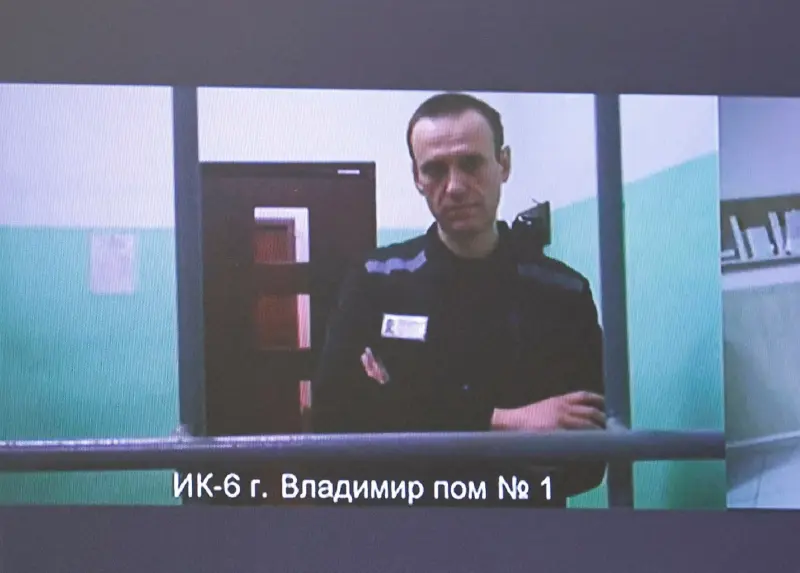


Five European countries said on Saturday (February 14) they believe Russia killed the late Kremlin critic Alexei Navalny with a toxin linked to poison dart frogs while he was held in an Arctic prison colony, an allegation Moscow dismissed as propaganda.
In a joint statement, Britain, France, Germany, Sweden and the Netherlands said tests on samples taken from Navalny’s body had “conclusively” detected epibatidine, a toxin found in poison dart frogs in South America and not naturally present in Russia.
Russia, which has repeatedly denied responsibility for Navalny’s death, rejected the allegation.
The state news agency TASS cited officials describing it as “a Western propaganda hoax”, while the Russian embassy in London mocked the claim.
Britain said the suspected poisoning reflected “an alarming pattern of behaviour”.
The UK previously held a public inquiry into the 2018 poisoning in Britain of former Russian double agent Sergei Skripal, and last year concluded Russian President Vladimir Putin must have ordered the Novichok nerve agent attack.
TASS quoted Russian Foreign Ministry spokesperson Maria Zakharova as saying Moscow would comment once test results were available and the substance formulas disclosed, adding that, until then, such claims were propaganda intended to distract from Western problems.
The report also said she referred to Navalny as a blogger “officially designated as a terrorist and extremist in Russia”.
The British government declined to answer questions from Reuters about how the samples were obtained or where they were tested. Foreign Minister Yvette Cooper told reporters that UK scientists had worked with European partners to pursue the truth about Navalny’s death.
Navalny died in February 2024 in an Arctic penal colony after being convicted of extremism and other charges, all of which he denied.
His death was announced shortly before the opening of the 2024 Munich Security Conference, which adjusted its schedule to allow his widow, Yulia Navalnaya, to address delegates and call for Putin to be held accountable.
Speaking on social media on Saturday while attending this year’s Munich conference, Navalnaya said she had believed from the first day that her husband had been poisoned and that there was now proof, thanking the European states for their work over two years.
The Russian embassy said the European move was not a search for justice but a mockery of the dead, adding that London and European capitals were refusing to let a Russian citizen “rest in peace”.
The joint statement, issued almost exactly two years after Navalny’s death, said Russia had the means, motive and opportunity to administer the poison, and argued that while Moscow said Navalny died of natural causes, poisoning was highly likely given epibatidine’s toxicity and the reported symptoms.
It added that Navalny’s death was followed by memorial gatherings and protests across Europe, including in London, Berlin, Vilnius and Rome, and said the latest findings reinforced calls for Russia to be held accountable for repeated violations of the Chemical Weapons Convention and, in this case, the Biological and Toxin Weapons Convention.
Reuters
