
China to grant zero-tariff access for 53 African nations from May 1
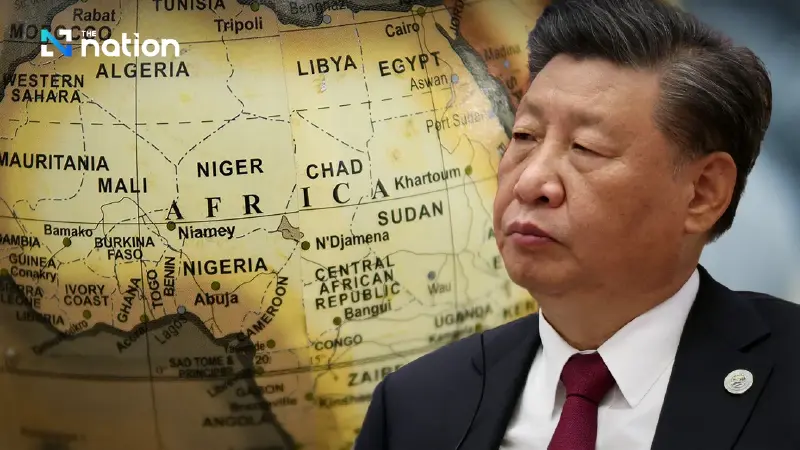


China will implement zero-tariff treatment for imports from the 53 African countries with which it has diplomatic relations, starting May 1, 2026, Chinese state media reported on February 14, 2026.
The move expands Beijing’s duty-free regime to almost the entire continent, with Eswatini excluded because it maintains diplomatic ties with Taiwan.
The announcement comes as African trade partners recalibrate amid shifting Western trade frameworks.
It follows the United States’ extension of the African Growth and Opportunity Act (AGOA) and continued frictions between African countries and the European Union over Economic Partnership Agreements (EPAs).
China’s approach also contrasts with the EU’s “Everything But Arms” scheme, which grants duty-free access only to least developed countries (LDCs).
Expansion from LDC-focused benefits to near-continent coverage
Until now, China’s duty-free access applied to selected African countries.
Beijing had previously granted zero-tariff treatment on 97%–98% of tariff lines for 33 African LDCs, before expanding in 2024 to cover all products originating from African LDCs.
The latest decision broadens the arrangement to nearly all African economies that recognise Beijing diplomatically.
Diplomacy and South Africa’s “early harvest” track
The policy shift follows sustained engagement by African leaders.
South African President Cyril Ramaphosa recently travelled to China to advance trade talks.
Afterwards, South Africa’s Minister of Trade, Industry and Competition, Parks Tau and China’s Minister of Commerce, Wang Wentao, signed a non-binding framework agreement at a Joint Economic and Trade Commission meeting, making South Africa the 33rd African country to conclude such a framework.
Negotiations on an Early Harvest Agreement are expected to be finalised by March 2026.
Once concluded, it would provide zero-tariff access for South African exports entering the Chinese market.
Separately, Ugandan President Yoweri Museveni has repeatedly urged action to address structural trade imbalances between China and African economies.
Trade rising, but deficits widening
Trade between China and Africa has expanded quickly but remains lopsided.
China’s General Administration of Customs reported bilateral trade of $222.05 billion between January and August 2025, up 15.4% year-on-year.
Chinese exports to Africa jumped 24.7% to $140.79 billion, while imports from Africa rose 2.3% to $81.25 billion.
Africa’s trade deficit with China widened to $59.55 billion in the first eight months of 2025, nearly matching the full-year 2024 deficit of $61.93 billion.
The imbalance reflects Africa’s heavy reliance on primary commodities, such as crude oil, copper, cobalt and iron ore, while importing higher value-added manufactured goods from China.
In 2023, mineral resources made up roughly 40% of China’s imports from African LDCs, followed by non-edible raw materials and semi-processed goods.
On the export side, China ships products such as machinery, electronics and renewable energy equipment.
Africa imported 15,032 megawatts of Chinese solar panels between July 2024 and June 2025, up 60% from the previous 12 months.
Strategy, “green channel”, and limits beyond tariffs
Beijing says the expanded zero-tariff regime is intended to boost African exports and rebalance trade flows.
Economists estimate China will forgo around $1.4 billion in tariff revenue under the new scheme, an economic diplomacy trade-off that may strengthen its influence and soft power across the continent.
China also said it will continue pushing for the negotiation and signing of joint economic partnership pacts, while expanding market access for African exports via upgraded mechanisms such as a “green channel”.
However, analysts caution that eliminating tariffs alone may not narrow the gap, citing non-tariff barriers including regulatory standards, logistics constraints and financing gaps.
Beijing has pledged further trade facilitation, including dedicated funds and financial products to support enterprises operating in Africa, yet the long-term impact will depend on whether African economies can diversify beyond commodities and build competitive manufacturing capacity.
Reuters
Business Inside Africa
