
Iran drones target Saudi diplomatic quarter, Kuwait fuel depot


The assault occurred just hours after Iran's president had apologized for previous attacks, while still claiming a right to self-defense against US and Israeli targets.
- Iran launched a drone attack targeting the Diplomatic Quarter in Riyadh, with Saudi Arabia's air defence system intercepting and destroying at least 15 drones.
- A fuel storage facility at Kuwait International Airport was also targeted; Kuwait's military intercepted several drones and three ballistic missiles.
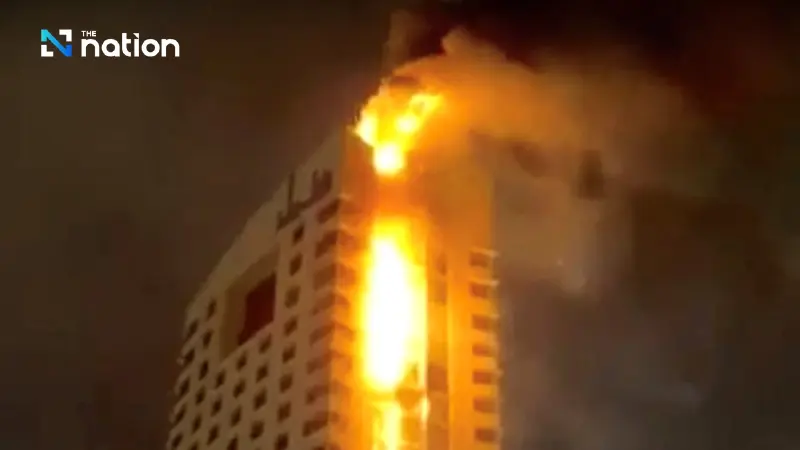
- Debris from the interceptions over Kuwait struck civilian areas, causing a major fire in a high-rise building in Kuwait City.
Foreign news agencies reported an emergency in the Gulf region in the early hours of Sunday (March 8), when the Iranian military launched attack drones into the airspace of Saudi Arabia and Kuwait in a major assault, forcing the air defence systems of both countries to work intensively to intercept threats aimed at critical infrastructure.
Saudi Arabia: 15 drones intercepted over Riyadh’s Diplomatic Quarter
Saudi Arabia’s defence ministry said in a statement on X that it had intercepted and destroyed at least 15 Iranian drones within the kingdom’s airspace.
The report stated that the drones were attempting to target the Diplomatic Quarter in Riyadh, a tightly controlled area that houses embassies from around the world.
Kuwait: Crisis at airport fuel storage facility and high-rise fire
The situation in Kuwait was no less difficult, with Kuwait’s defence ministry confirming that a fuel storage facility at Kuwait International Airport had been directly targeted in the attack.
- Interception: The Kuwaiti military said it had destroyed three ballistic missiles and several drones that had penetrated its airspace.
- Damage: Debris from the interceptions fell on civilian structures.
Images circulated on social media showed a high-rise building in Kuwait City engulfed in flames after being struck heavily by fragments from the attack.

A contradictory apology: Iranian president’s stance
What shocked the international community was that the operation on Sunday morning took place only hours after Iranian President Masoud Pezeshkian had apologised to neighbouring countries over the earlier attacks.
However, Pezeshkian continued to insist that Iran had a legitimate right to self-defence against US and Israeli aggression, stressing that the broader retaliatory operation was primarily aimed at Israel and US military bases, as well as other facilities linked to combat operations in the region.
