
Iran fires missiles at city near Israeli nuclear facility, injuring more than 100
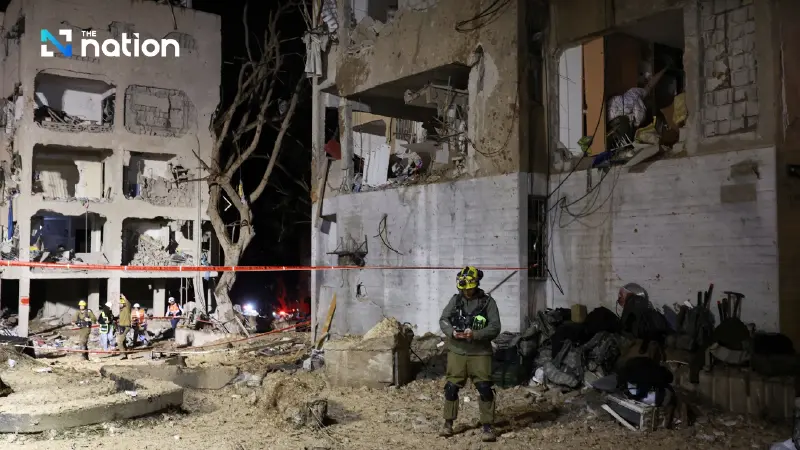


Foreign media reported that Iran launched missile attacks on the southern Israeli cities of Dimona and Arad on Saturday, leaving more than 100 people injured in what was one of the most severe attacks since the war between the US and Israel on one side and Iran on the other erupted.
What makes the attack especially alarming is that Dimona is home to the Shimon Peres Negev Nuclear Research Centre, a key pillar of Israel’s nuclear programme, which has been in operation since 1958.
The secretive nuclear facility lies only 13 kilometres to the south-east.
Air defences fail
Israeli military spokesperson Brig Gen Effie Defrin acknowledged that the air defence system was operating but was unable to intercept all of the missiles.
Fire officials said two guided missiles carrying warheads weighing several hundred kilograms struck their targets directly after interceptor missiles missed.

Damage and casualties
In Arad, at least 88 people were injured, including 10 in serious condition, with extensive damage reported in the city centre.
In Dimona, a further 39 people were injured, including a 10-year-old boy who was seriously wounded by shrapnel after several residential buildings collapsed.
IAEA watches closely, says no abnormal radiation detected
The International Atomic Energy Agency (IAEA) said there were so far no signs of damage to the nuclear facility itself and no abnormal radiation levels in the area.
However, Director General Rafael Grossi called on all sides to exercise “maximum military restraint, in particular in the vicinity of nuclear facilities”.

Retaliation not over
Iranian state television said the attack was retaliation for a strike on Iran’s Natanz nuclear enrichment facility earlier the same morning, marking a new phase of tit-for-tat escalation in a war that has now entered its fourth week.
Prime Minister Benjamin Netanyahu said it had been “a very difficult evening indeed”, while reiterating that Israel would not halt its attacks on Iran.
Since February 28, more than 1,500 people have been killed in Iran in attacks by the US-Israeli side, according to Iranian state media.
