
China tax changes weigh on Thailand’s solar investment plans
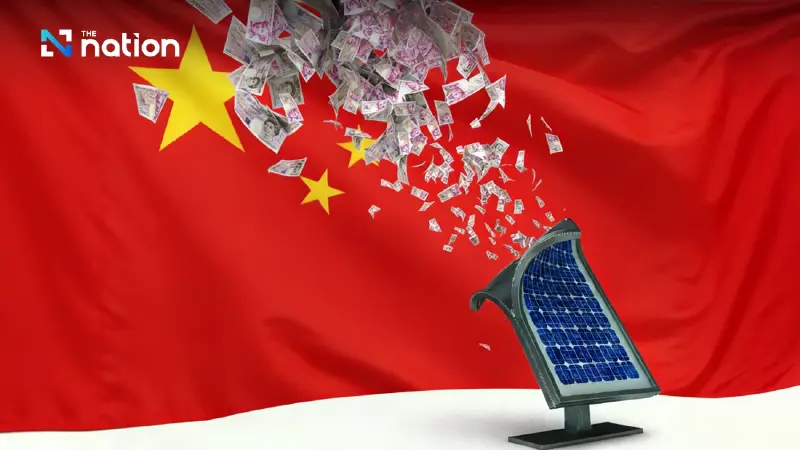


Kasikorn Research Center warns that China’s tax changes could raise Thailand’s solar equipment import costs by 9–15% in 2026 and weigh on investment plans.
- China is eliminating value-added tax (VAT) export rebates for solar panels starting in April 2026 and phasing out rebates for battery products by 2027.
- This policy change is expected to increase Thailand's import prices for solar equipment by 9–15% in 2026.
- The higher costs will negatively affect Thailand's solar investment projects by increasing capital expenditure (CAPEX) and lengthening payback periods.
- Thailand is particularly vulnerable because it relies heavily on China for 47–51% of its solar equipment imports.
Kasikorn Research Centre estimates that Thailand’s solar industry is facing mounting cost pressure after China scrapped value-added tax (VAT) export rebates for photovoltaic (PV) products, including solar panels, from April 1, 2026.
In addition, China has cut the tax rebate rate for battery products from 9% to 6% for the rest of 2026, before removing it entirely in 2027. This will raise export costs for Chinese manufacturers and is likely to push up prices in global markets.
Kasikorn Research Centre expects Thailand’s import prices for solar equipment to rise by 9–15% in 2026, directly affecting investment projects, particularly new projects and those still under development, through higher capital expenditure (CAPEX) and longer payback periods.
A key factor is China’s role as the dominant player in the global solar supply chain, accounting for more than 80% of manufacturing capacity. As a result, changes in China’s tax policy have a significant impact on pricing trends in global markets, even though production bases have become more diversified in recent years.
For Thailand, dependence on solar equipment imports from China remains high at 47–51% of total import value, equivalent to about THB16.3 billion. This includes THB15 billion worth of photovoltaic (PV) products, including solar panels, accounting for 51.4%, and THB1.3 billion worth of battery products, accounting for 47%. This means policy changes in China are passed directly through to Thai costs.
Overall, the picture reflects that China’s tax policy adjustment will not only affect manufacturers but also send shockwaves across the global clean energy supply chain, including Thailand, which is accelerating investment in renewable energy and may face higher costs and adjustments to investment plans in the next phase.
