
Thai youth lead the call for urgent, inclusive climate action ahead of COP30
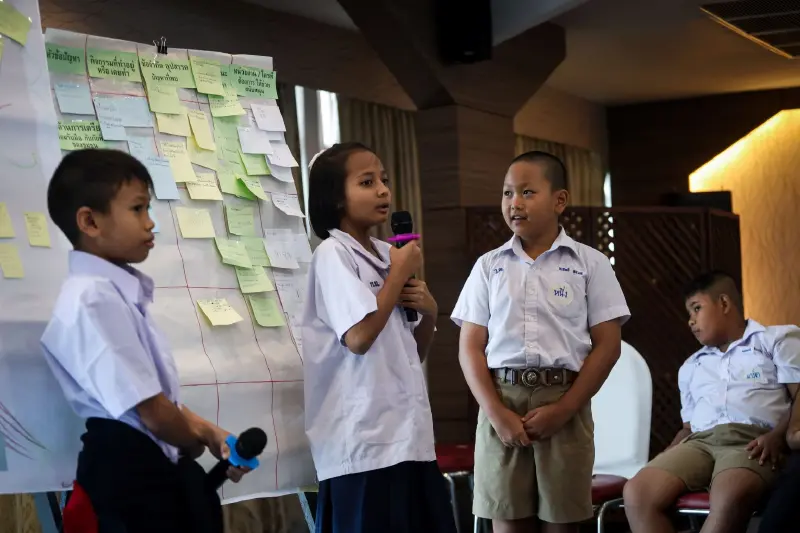


As the world gathers for the COP30 summit in Brazil, 360 children and young people from across Thailand, including youth activists and advocates for the environment and climate change, are calling for urgent and inclusive climate action.

Their voices, gathered through a series of youth consultations organised earlier this year by UNICEF Thailand and the Department of Climate Change and Environment (DCCE), highlight how climate change is already reshaping their lives and how they are determined to be part of the solution.
These young leaders represent 97 youth networks, including student groups, ethnic youth communities working to protect forests and nature, and environmental advocates from across the country.
Held in four regions, the consultations gave young people a platform to share their experiences, ideas, and recommendations for Thailand’s climate policies. The findings reveal that while children and youth are among those most affected by the climate crisis, they are also eager to help shape the solutions.

“In my community, rising heat and drought are making it harder for families to grow food and earn a living,” said Chairat Dipho (Alex), 19, a youth from an ethnic minority in Chiang Mai. He joined the consultation in the North and is among nine Thai children and youth representatives who will join the Thai delegation at COP30 in Brazil from 10-21 November 2025. “When crops fail, children are often the first to suffer; some even have to leave school to help their families. We want leaders to listen to our stories and take actions that protect our future.”

Nunnapus Pongwitoon, a 23-year-old member of the Local Conference of Youth (LCOY) Thailand network, will also join the delegation. She said LCOY has discovered that the key to stronger climate action is increased collaboration across generations and sectors. “We’ve learned that while young people are increasingly passionate about climate action, what’s often missing is meaningful collaboration between generations. Young people are not only interested in environmental policy; we are ready to take action, and our commitment extends beyond the local all the way to the global stage.”
Across Thailand, young participants identified six urgent priorities to protect health and livelihoods, secure access to clean water, and ensure no child is left behind. These actions are:
- Health systems that respond to climate risks, including heat stress, PM2.5 air pollution, increased risk of dengue fever and the mental health impacts of disasters;
- Climate education for every student, so children gain practical skills in disaster preparedness, sustainable farming, and waste management;
- A just and sustainable economy, where polluters are held accountable while local livelihoods, from tourism to agriculture, are strengthened against climate shocks;
- Resilient, community-driven disaster planning, with inclusive early warning systems and child-sensitive evacuation measures;
- Water security for all, through stronger watershed protection, better pollution control, and recognition of indigenous knowledge; and
- Real progress toward a reuse and recycle economy, including a national plastic tax and support for community enterprises that turn waste into value.


“These voices are a nationwide call to action,” said Severine Leonardi, Deputy Representative for UNICEF Thailand. “Young people have made it clear that they are not only concerned about the climate crisis, but they are ready to lead and contribute. It’s vital that Thailand’s climate policies, including the National Adaptation Plan and Nationally Determined Contribution, reflect these ideas and priorities. As we head toward COP30, this is a key moment for Thailand to show leadership by putting children’s needs and voices at the heart of climate decisions.”
Among their recommendations, young people also proposed the establishment of government-mandated Regional Youth Climate Networks, the creation of a national Youth Climate Action Fund, and policies that ensure children’s rights and protection during the transition to a low-carbon economy.
In September, UNICEF released its report “Between Generations, One Planet”, which highlights that while young people are mobilising communities, raising awareness, and advocating for solutions, they remain largely excluded from key decision-making processes. UNICEF also launched the #CountMeIn campaign, amplifying youth-led climate initiatives across Thailand and urging stronger recognition of young people as essential partners in national climate policies.


UNICEF is supporting Alex, Nunnapas and young representatives to bring their voices and recommendations to COP30, ensuring that the perspectives of children in Thailand are reflected in global climate negotiations.
Leonardi emphasised that giving young people real opportunities to take part in climate action is not only the right thing to do, but also essential for a lasting climate solution. A 2024 U-Report poll found that while nearly 90 per cent of Thai youth want to take part in climate action, only 34 per cent have had the opportunity to do so. “Children and youth are already at the frontline of the climate crisis,” Leonardi said. “Their insights and leadership are essential to building a climate-resilient Thailand.”

