
EXAT deploys robotic inspection for Rama IX Bridge ahead of 2026 overhaul
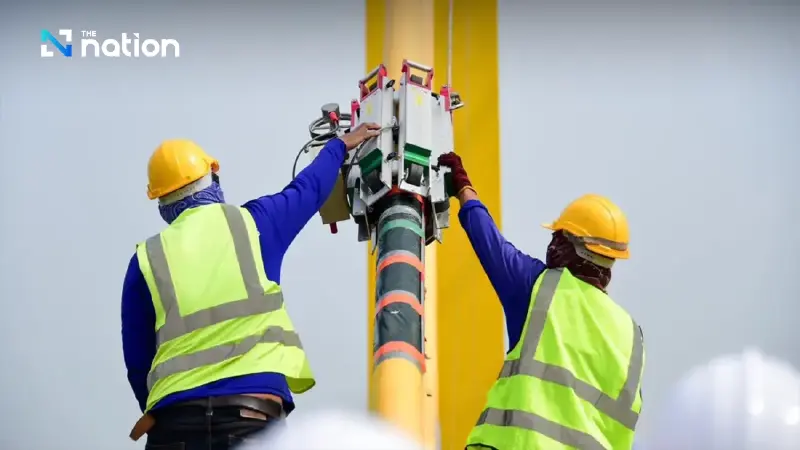


The Expressway Authority (EXAT) uses robotic magnetic induction inspection to assess the 35-year-old Rama IX Bridge before its major 2026 repair programme.
The Expressway Authority of Thailand (EXAT) is upgrading its smart infrastructure capabilities by deploying Robotic Magnetic Induction Inspection (RMI) technology for an in-depth assessment of the Rama IX Bridge’s cable system, which has been in service for 35 years. The inspection aims to evaluate structural safety and guide precise maintenance plans before a major overhaul begins in 2026.
Smart City innovation: RMI robot scans critical bridge cables
EXAT has accelerated its move towards smart-city management by integrating robotic technologies into critical infrastructure inspections. The agency recently signed a contract with Norseef Engineering Co Ltd to conduct a detailed assessment using the RMI system, supported by drones and specialist engineers, to examine the “cable pendels”, a vital component of the bridge’s cable structure.

The in-depth inspection focuses on detecting internal rust, corrosion and potential fractures in the cables, which are essential to the safety of the bridge. Norseef demonstrated the RMI robot’s capabilities on November 13, 2025, to representatives from EXAT and Bangkok Expressway and Metro PCL (BEM).
Major overhaul set for 2026
EXAT plans to open bidding for a full-scale refurbishment of the Rama IX Bridge, with repairs expected to begin in 2026. The work is estimated to take about one year and will cost no more than 1 billion baht. The agency previously considered replacing all cables but opted for targeted repairs to reduce costs.


Traffic mitigation measures
To minimise disruption during the repair period, EXAT will wait until the Rama III–Dao Khanong–Western Outer Ring Expressway opens, expected by mid-2026. The 18-kilometre route will serve as the primary diversion for motorists while repair work is underway on the Rama IX Bridge.
EXAT will also implement staggered lane closures rather than shutting the bridge entirely. Detailed coordination with contractors and relevant agencies will ensure traffic impacts are managed as efficiently as possible.

