
Siriraj's private hospital set to open


Play
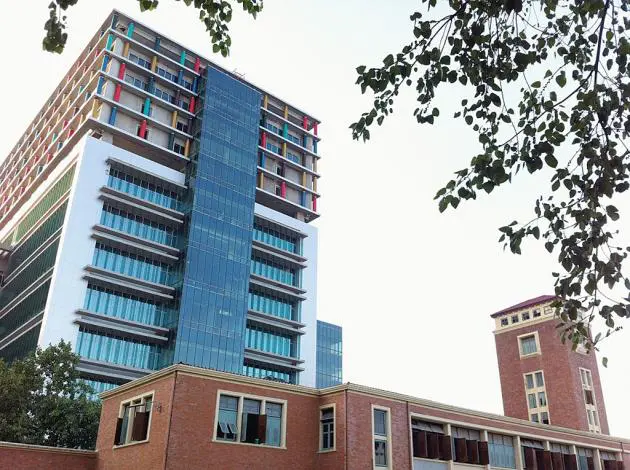
The renowned Siriraj Hospital will officially open its private facility, Siriraj Piyamaharajkarun Hospital (SiPH), on April 26.
SiPH’s director, Associate Professor Dr Pradit Panchavinnin, said yesterday that the new hospital aimed to generate its own income without financial aid from the government. The income generated will be contributed to the faculty of medicine of Siriraj Hospital for medical education.
“Our main target is to seek income to develop medical education, not for expansion to serve the Asean market, although this can be an opportunity in the future,” he said.
Siriraj Hospital is subsidised by the government to the tune of about Bt1.5 billion per year, as it has to bear the cost derived from general patient treatments, which results in an operating loss amounting to 10 per cent of income.
“The new hospital will serve as an alternative quality healthcare service for patients with the ability to pay, by using our strong points of high-quality treatment, experienced doctors and medical excellence to attract new patients. Although the new hospital will be privatised, its main target is to serve patients at a reasonable price, with a profit target of only 10-12 per cent under a concept of ‘receivers and givers’,” Pradit said.
The concept means patients will be better served with speedy service and highly efficient management and administration, as in other private hospitals, while they also have the chance to give back to society, as their payments will be contributed to Siriraj Hospital to help other people, he explained.
With an initial investment of Bt7 billion for building construction and about Bt2 billion for equipment, the hospital is targeted to break even in three years. It then aims to make earnings for another five to six years to cover its overall Phase I and II investment costs, and make profits within eight or nine years for funding the operation of Siriraj Hospital.
Pradit said service fees would be higher than those offered at Siriraj Hospital, but as much as 20-25 per cent lower than at other private hospitals. Treatment services will cover both general and complicated diseases.
Next month, SiPH will transfer about 8,000 patients from The Heart Project of Siriraj Hospital, which is a pilot project providing extra service for special patients.
SiPH will share the services of the 800 doctors at Siriraj Hospital, but this will not affect normal working hours at the main hospital.
About 256 nurses will be transferred from Siriraj in the initial phase. The new hospital will also recruit its own staff.
In the first phase, about 30 per cent of SiPH’s space, covering 30 rai (4.8 hectares) in a 14-floor building, will be opened for service in April.
The hospital will initially provide 284 inpatient rooms, 177 outpatient rooms, 17 operating theatres and 61 intensive-care units, as well as a parking lot for about 1,000 cars.
Under Phase II, the hospital will be equipped with state-of-the-art medical and information-technology equipment such as MRI (magnetic resonance imaging) machines and linacs (linear particle accelerators), the latest radiation technology for precise cancer treatment in all parts of the body.
Its five specialised clinics will cover cancer, cardiopathia, orthopaedic, gastroenterology and nephropathy treatment.
