
Three baht scenarios as oil spikes: what currency swings could mean for Thailand’s exports and tourism
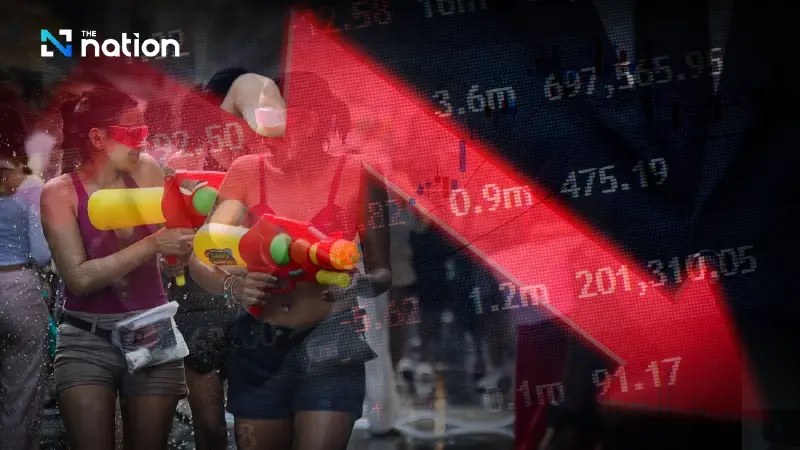


Former TAT governor Yuthasak Supasorn outlines three exchange-rate scenarios amid soaring oil prices, warning Thailand’s status as a net oil importer makes the baht, inflation and tourism costs tightly linked.
Yuthasak Supasorn, chairman of the Industrial Estate Authority of Thailand and former governor of the Tourism Authority of Thailand (TAT), said Thailand is a net oil importer, relying on crude imports for around 86% of domestic consumption. He added that energy imports account for about 6.5% of GDP, leaving the economy highly exposed when oil prices surge.
A sensitivity analysis by financial institutions, he said, suggests that every US$10 per barrel increase in global crude prices could reduce Thailand’s trade balance by around 0.9% of GDP, because the country must spend substantial US dollars to pay for energy. That outflow can quickly weaken both the trade balance and the current account, raising the risk of flipping from surplus to deficit.
Yuthasak said that capital outflows and higher import bills put downward pressure on the baht under market forces. The interaction between the exchange rate and global oil prices also feeds directly into pump prices and domestic transport costs. For example, if crude is US$100 a barrel and the baht is strong at 32 per US dollar, the import cost is about 3,200 baht. If the baht weakens to 37 per US dollar, the same barrel costs around 3,700 baht—meaning expensive oil combined with a weaker baht can sharply worsen energy costs and living expenses.

Tourism hit through airfares, logistics and operating costs
He said oil and baht volatility hits tourism across multiple channels, particularly aviation. Airfares could rise by 15-20% as jet fuel costs climb, pushing airlines to raise fuel surcharges and affecting foreign travellers’ decisions. Logistics costs for tourists could rise by as much as 40%, while hotels and related services could see operating costs increase by around 25%, ultimately undermining Thailand’s price competitiveness.
Three baht scenarios and what they could mean
Yuthasak said assessing three exchange-rate bands against the US dollar helps quantify risks and clarify policy direction.
Scenario 1: Baht stronger than 30 per US dollar
This is described as a crisis scenario that could occur if speculative capital surges into Thai risk assets, global gold prices jump, or the US dollar weakens sharply due to US public debt problems.
A baht stronger than 30 would severely damage tourism competitiveness. If sustained, he said tourism revenue could fall by 15-17%, with long-haul markets contracting abruptly as overall trip costs exceed acceptable budgets. Short-haul markets could shift permanently to alternatives such as Vietnam, the Philippines or Indonesia.
He also warned of a potential price war among hotels of around three-star and below, due to oversupply. Thailand’s legally registered rooms and alternative supply on platforms such as Airbnb together exceed 200,000 rooms (about 15% of total supply).
Exports would also risk losing market share to ASEAN competitors in ways that may be difficult to recover. If crude stays above US$80 per barrel, as projected by Bank of America for the second quarter, Thailand could face a current account deficit, further weakening stability.
Scenario 2: Baht at 30-32 per US dollar
This is presented as the current situation and a likely baseline for 2026. Bank of America forecasts the baht could weaken towards 33 by mid-2026 before strengthening back towards 31 by year-end.
In this range, Thailand is not expected to lose global appeal, but visitor composition could shift meaningfully. Price-sensitive travellers may decline, while higher “economic resilience” markets become more important—such as higher-income visitors from nearby markets including Singapore, Japan, South Korea, Hong Kong, Australia, and Gulf Arab countries, who prioritise experience, safety, health and gastronomy over price alone.
Yuthasak noted average spend per trip by foreign visitors in Thailand is around US$1,300, below Japan (US$1,600) and Singapore (US$1,700)—suggesting Thailand still has room to move upmarket. In this scenario, the economy could grow below potential at roughly 1.8-2.0%, with travellers more cautious in spending. Mid-tier businesses without a clear value proposition may struggle, while higher-value services—such as medical tourism, spa and wellness—could adapt better by targeting stronger-spending visitors.
Scenario 3: Baht at 32-34 per US dollar
This band is described as a “strategic balance” most aligned with economic realities. A further weakening towards 35 per US dollar—as seen in 2019 before Covid—would be an even stronger positive tailwind.
At 32-34, Thailand’s price competitiveness would match or exceed key peers such as Vietnam and Japan. Foreign travellers would feel better value, supporting a fuller tourism rebound, including renewed momentum from Chinese visitors and stronger income distribution to local SMEs. He noted tourism income remains concentrated in six main provinces: Bangkok, Phuket, Pattaya, Surat Thani, Chiang Mai and Krabi.
At a macro level, he said 32-34 would help restore export margins, curb excessive import penetration without triggering unmanageable inflation, and could help Thailand push GDP growth above 2.5%.
Three restructuring strategies for a sustainable tourism path forward
To break out of the cycle of volatility, the Thai tourism industry should accelerate adaptation in three key areas:
- Shift from volume to value by focusing on the silver economy and medical and wellness tourism, in order to increase spending per visitor.
- Strengthen local supply chains by reducing reliance on imported inputs and supporting domestic farmers, helping to lower exposure to exchange-rate risk.
- Adopt an integrated management approach, with the government closely coordinating monetary and fiscal policy to support SME operators and keep the exchange rate stable in a way that reflects true economic fundamentals.
The baht exchange rate is therefore not just a number—it is a critical test that is pushing Thailand to build a more resilient and higher-value tourism ecosystem, ready to meet the challenges of the modern world sustainably.
